June 2025 in “British Journal of Dermatology” This reported case of lichen planopilaris in siblings suggests a potential genetic predisposition, supporting the hypothesis of inherited susceptibility in this condition.
 April 2026 in “Zenodo (CERN European Organization for Nuclear Research)”
 In this study, Dodatek A operationalizes the Functional Androgen Axis framework by defining three system-level indices and an efficiency metric to describe androgen function, incorporating key methodological improvements and acknowledging significant limitations for future empirical validation.
March 2005 in “Journal of the American Academy of Dermatology” This study found that key amino acids lost from hair due to weathering can be successfully reintroduced through cosmetic treatments, improving hair strength and aesthetics.
54 citations
,
November 2007 in “Actas Dermo-Sifiliográficas” Early diagnosis of frontal fibrosing alopecia is crucial to prevent permanent hair loss.
January 2018 in “Journal of analytical, bioanalytical and separation techniques” February 2013 in “Journal of the American Academy of Dermatology”  19 citations
,
April 2018 in “International Journal of Dermatology”
19 citations
,
April 2018 in “International Journal of Dermatology” This study found that female patients with frontal fibrosing alopecia are significantly more likely to have systemic lupus erythematosus compared to controls.
 April 2021 in “BMJ Case Reports”
 This case report discusses a rare instance of pseudolymphomatous folliculitis in a 19-year-old man, highlighting the challenge in diagnosing PLF due to its low clinical suspicion index and variable initial clinical diagnoses.
 August 2016 in “Journal of the Portuguese Society of Dermatology and Venereology”
 This article discusses two cases of the rare combination of frontal fibrosing alopecia and lichenoid pigmentation in women, but reports no new clinical results.
 1 citations
,
January 2021 in “Journal of biological chemistry/The Journal of biological chemistry”
1 citations
,
January 2021 in “Journal of biological chemistry/The Journal of biological chemistry” This study found that loss of the folliculin protein delays transferrin receptor recycling, leading to iron deficiency and suggesting a role in the mechanisms of Birt-Hogg-Dubé syndrome.
475 citations
,
October 2006 in “Proceedings of the National Academy of Sciences” This study suggests that folliculin, mutated in Birt–Hogg–Dubé syndrome, and its partner FNIP1 may play a role in energy and nutrient sensing through the AMPK and mTOR pathways.
 1 citations
,
October 2023 in “Journal of the Pakistan Medical Association”
1 citations
,
October 2023 in “Journal of the Pakistan Medical Association” This source describes a case of a 12-year-old male diagnosed with folliculotropic mycosis fungoides, presenting with an asymptomatic, erythematous plaque. Histology and immunohistochemistry confirmed FMF, which is typically rare in children and marked by follicular infiltration by CD4+ lymphocytes.
 8 citations
,
July 2020 in “Journal of The American Academy of Dermatology”
8 citations
,
July 2020 in “Journal of The American Academy of Dermatology” Patients with Lichen Planopilaris are more likely to have rosacea and skin cancer but less likely to have congestive heart failure, stroke, and glaucoma.
February 2025 in “Archives of Dermatological Research” This study observed that fibrosing alopecia in a pattern distribution shows varied histological features and may resemble lichen planopilaris with initial diffuse distribution, potentially leading to scarring alopecia.
February 2026 in “Indian Dermatology Online Journal” This study reports that oral tofacitinib treatment in a patient with refractory lichen planus pigmentosus and frontal fibrosing alopecia resulted in near-complete resolution of hyperpigmentation and cessation of hairline recession over 18 months, and suggests it may be a promising therapy for these challenging conditions.
 17 citations
,
November 2018 in “Dermatology”
17 citations
,
November 2018 in “Dermatology” The authors concluded that Hispanic/Latino ethnicity, facial papules, and premenopausal status in patients with frontal fibrosing alopecia may indicate a susceptibility to more severe disease, potentially necessitating early treatment.
November 2012 in “Annales de Dermatologie et de Vénéréologie” This report describes the first known pediatric cases of frontal fibrosing alopecia, a condition typically affecting postmenopausal women, highlighting its occurrence in children including female twins.

In this retrospective study, researchers at a Spanish hospital found that the severity of frontal fibrosing alopecia, primarily affecting postmenopausal women, was correlated with the duration of the disease, though inflammatory signs were not linked with its progression.
 37 citations
,
October 2015 in “Anais Brasileiros de Dermatologia”
37 citations
,
October 2015 in “Anais Brasileiros de Dermatologia” This study found diverse clinical presentations of lichen planopilaris, with classic lichen planopilaris being the most common, highlighting the importance of recognizing this variability for accurate diagnosis.
325 citations
,
June 1994 in “Archives of Dermatology” This study observed that progressive frontal recession in postmenopausal women may exhibit features of fibrosing alopecia, suggesting a distinct reaction pattern from typical lichen planopilaris.
 46 citations
,
December 2001 in “Journal of Endocrinology/Journal of endocrinology”
46 citations
,
December 2001 in “Journal of Endocrinology/Journal of endocrinology” This study found that mouse FLRG protein, a secreted glycoprotein, is expressed in certain tissues and plays a role distinct from follistatin during wound healing, suggesting different functions in vivo.
1 citations
,
January 2025 in “Dermatology Practical & Conceptual” This review describes trichoscopy features of lichen planopilaris and frontal fibrosing alopecia, identifying distinct patterns that help differentiate the two conditions.
 52 citations
,
February 2006 in “Archives of Dermatology”
52 citations
,
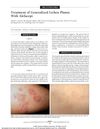
February 2006 in “Archives of Dermatology” This case report describes a 25-year-old woman with widespread lichen planus who did not respond to multiple systemic treatments, including antihistamines, hydroxychloroquine sulfate, and corticosteroids.
 41 citations
,
July 2017 in “Journal of The American Academy of Dermatology”
41 citations
,
July 2017 in “Journal of The American Academy of Dermatology” This study observed that frontal fibrosing alopecia also occurs in men, with clinical features and areas of involvement similar to those seen in women, but often affecting sideburns and facial hair.
12 citations
,
January 2016 in “Skin Appendage Disorders” This study reports an association between frontal fibrosing alopecia and lupus erythematosus, noting progressive alopecia in the frontotemporal hairline despite treatment with hydroxychloroquine.
 May 2024 in “Journal of Cosmetic and Laser Therapy”
 This study found that three sessions of injectable platelet-rich fibrin (i-PRF+) significantly improved hair follicle density, hair volume, and thickness, as well as patient satisfaction in women with female pattern hair loss, with only minor self-limited adverse effects reported.
 2 citations
,
January 2022 in “Hair transplant forum international”
2 citations
,
January 2022 in “Hair transplant forum international” This article introduces the Follicular Unit Excision-Linear Ellipse (FUE-LE) technique, which integrates both FUE and the linear ellipse method for optimal hair restoration, but presents no new clinical results.
This chapter provides dermatology trainees with insights on managing lichen planopilaris, emphasizing treating active disease to prevent further hair loss and recommending a tapered course of oral steroids for disease stabilization.
4 citations
,
September 2011 in “Journal of the American Academy of Dermatology” This case report describes a 46-year-old man who developed folliculotropic mycosis fungoides, a form of post-transplant lymphoproliferative disorder, following renal transplantation.
 91 citations
,
August 2015 in “Anais Brasileiros De Dermatologia”
91 citations
,
August 2015 in “Anais Brasileiros De Dermatologia” This review discusses the clinical, epidemiological, and pathophysiological aspects of female pattern hair loss, reporting no new research findings.