 August 2021 in “Acta Haematologica Polonica”
 This paper discusses the diagnostic challenges and treatment options for folliculotropic mycosis fungoides, emphasizing the differing prognoses between its indolent and aggressive subtypes and reporting no new clinical results.
January 2014 in “Ghent University Academic Bibliography (Ghent University)” FGF18 may influence hair loss in dogs.
August 2020 in “Research Square (Research Square)” This study found that PD-MSCs overexpressing PRL-1 inhibited adipogenesis in orbital fibroblasts from Graves' ophthalmopathy patients, potentially offering a new therapeutic approach for degenerative diseases.

The researchers reported a case where treatment with tofacitinib improved both hair loss and skin lesions in a patient with Graham-Little-Piccardi-Lassueur Syndrome and hidradenitis suppurativa over six months, with no recurrence or adverse events during two-year follow-up.
 1 citations
,
June 2024 in “British Journal of Dermatology”
1 citations
,
June 2024 in “British Journal of Dermatology” In this case study, a woman with frontal fibrosing alopecia and associated hyperpigmentation showed significant improvement in skin pigmentation and itch after 9 months of treatment with mycophenolate mofetil, highlighting its therapeutic potential for lichen planus pigmentosus linked to this condition.
 May 2025 in “The Journal of Rheumatology”
 This study highlights the efforts of the Oyemam Autoimmune Foundation in raising awareness and supporting lupus patients in Ghana, amid challenges like misdiagnosis and insufficient healthcare resources, revealing the impact of their advocacy and counseling initiatives on patients' lives.
 11 citations
,
February 2020 in “Dermatology and therapy”
11 citations
,
February 2020 in “Dermatology and therapy” This study reported that four patients with lichen planopilaris showed dramatic improvement, including symptom reduction and hair regrowth, after treatment with low-level light therapy.
January 2022 in “SSRN Electronic Journal” This study found that lncRNA RP11-818024.3 transfection promoted hair growth in AGA mice and increased cellular proliferation in vitro, potentially involving the FGF2 and PI3K-Akt pathways.
 119 citations
,
November 2014 in “Trends in Cell Biology”
119 citations
,
November 2014 in “Trends in Cell Biology” This review discusses the mechanisms and pathways of FGFR signalling and its roles in development, disorders, and therapeutic targeting, but reports no new clinical results.
 49 citations
,
January 2003 in “Clinical and Experimental Dermatology”
49 citations
,
January 2003 in “Clinical and Experimental Dermatology” This report from the UK reviews the literature on post-menopausal frontal fibrosing alopecia and highlights its under-recognition and distinctive characteristics compared to lichen planopilaris, but does not provide new results.
October 2022 in “Hair Transplantation” This article discusses the establishment and global adoption of standardized terminology for follicular unit excision (FUE) by the ISHRS, which aids effective communication among hair restoration practitioners.
 10 citations
,
June 2019 in “Case reports in dermatology”
10 citations
,
June 2019 in “Case reports in dermatology” This paper presents a case of a young male with linear and annular lupus panniculitis of the scalp, detailing trichoscopic findings and their correlation with histopathological features, but reports no new generalizable results.
This study demonstrated that Reverse Protein Engineering can decrease the size of Firefly Luciferase from 550 to less than 80 amino acids, but further research is needed to ensure these smaller peptides retain bioluminescent activity.
 April 2018 in “The journal of investigative dermatology/Journal of investigative dermatology”
 This study found that in a mouse model of Focal Dermal Hypoplasia, treatment with lithium carbonate improved skin disease symptoms compared to controls, though disease severity varied and posed interpretation challenges.
6 citations
,
October 2023 in “Animal Biotechnology” This study found that a 22-bp InDel polymorphism in the FGF7 gene was significantly associated with growth traits in goats, with genotypes ID and/or II linked to better growth compared to genotype DD, indicating its potential as a molecular marker in breeding programs.
April 2024 in “African Journal of Biological Sciences” In this case report, a 38-year-old woman with Degos disease and non-scarring alopecia experienced significant hair regrowth with the current treatment protocol, highlighting its potential effectiveness in such complex conditions.
October 2025 in “Lasers in Medical Science”  13 citations
,
March 2020 in “Genes”
13 citations
,
March 2020 in “Genes” This study found that FGF5-/- rabbits exhibited a significant long hair phenotype by prolonging the anagen phase, suggesting FGF5 acts as a negative regulator of hair growth.
 August 2015 in “Advances in Small Animal Medicine and Surgery”
 Low-level laser therapy may help regrow hair in dogs with non-inflammatory hair loss.
October 2025 in “Dermatology Practical & Conceptual” In this study, UVFD and sUVRD techniques revealed distinctive characteristics of GD lesions, suggesting that GD might be more common in younger individuals and females than previously thought, possibly due to underdiagnosis. Incorporating dermatoscopy in exams may help improve GD detection and management.
 1 citations
,
December 2017 in “Anais Brasileiros de Dermatologia”
1 citations
,
December 2017 in “Anais Brasileiros de Dermatologia” This article discusses the DOAJ, a comprehensive index of international open access journals, and emphasizes its role in providing free quality content online without presenting new research findings.
February 2026 in “JEADV Clinical Practice” This report describes a rare case of scarring alopecia, diagnosed as lichen planopilaris (LPP), affecting solely the limbs, highlighting the necessity for thorough evaluation of LPP beyond the scalp.
 21 citations
,
August 2013 in “Journal of Dermatological Treatment”
21 citations
,
August 2013 in “Journal of Dermatological Treatment” This review discusses the mixed evidence and high risk of bias in studies on low-level light therapy for treating androgenetic alopecia and calls for rigorous randomized controlled trials to assess its efficacy.
36 citations
,
March 2014 in “Annals of the Rheumatic Diseases” This study found that activating liver X receptors with an agonist reduced skin fibrosis in experimental models, particularly in inflammation-driven conditions, by inhibiting macrophage infiltration and interleukin-6 release.
 2 citations
,
January 2023 in “Curēus”
2 citations
,
January 2023 in “Curēus” In this study, low-dose naltrexone significantly reduced erythema in patients with frontal fibrosing alopecia and lichen planopilaris after one year, but no significant improvements were seen in other symptoms.
4 citations
,
December 2017 in “Journal of zoo and wildlife medicine” This study proposes that seasonal alopecia and reproductive changes in six female fossas at the San Diego Zoo may be linked to hormonal changes associated with reproductive activity.
14 citations
,
February 2003 in “Journal of the American Academy of Dermatology” This case report describes the first use of laser capture microdissection to confirm that atypical lymphocytes in a folliculotropic mycosis fungoides case involving the central nervous system were part of the same tumor clone.
 52 citations
,
February 2006 in “Archives of Dermatology”
52 citations
,
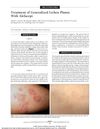
February 2006 in “Archives of Dermatology” This case report describes a 25-year-old woman with widespread lichen planus who did not respond to multiple systemic treatments, including antihistamines, hydroxychloroquine sulfate, and corticosteroids.
 5 citations
,
November 2014 in “Hair transplant forum international”
5 citations
,
November 2014 in “Hair transplant forum international” This article introduces a series on low level laser light therapy, focusing on its science, regulatory aspects, and controlled trial methodologies, but reports no new clinical results.
32 citations
,
July 2017 in “Oncotarget” This study found that intermittent treatment with FTI lonafarnib and sulforaphane may be a promising therapeutic approach for children with Hutchinson-Gilford progeria syndrome, as it improved the cellular phenotype.