 7 citations
,
February 2019 in “Journal of pharmacological sciences”
7 citations
,
February 2019 in “Journal of pharmacological sciences” This study found that Bazhengsan significantly reduced inflammation and hyperplasia in male rats with nonbacterial prostatitis, indicating potential as a treatment for chronic prostatitis.
 7 citations
,
January 2010 in “Pharmacognosy Research”
7 citations
,
January 2010 in “Pharmacognosy Research” This study evaluated the hair growth potential of a microbial biotransformed extract of tobacco leaves in male albino wistar rats, but no new results are provided in the abstract.
 5 citations
,
January 2004 in “Biochimie”
5 citations
,
January 2004 in “Biochimie” This review discusses arsenic trioxide therapy in acute promyelocytic leukemia and introduces a novel method using hair analysis to monitor arsenic exposure and correlate it with treatment timing, but reports no new clinical results.
 4 citations
,
August 2017 in “Cosmetics”
4 citations
,
August 2017 in “Cosmetics” This study observed that Biota orientalis L. leaf extract may promote hair growth and suppress sebum production in human cells, suggesting potential benefits for hair restoration.
 3 citations
,
November 2019 in “Cosmetics”
3 citations
,
November 2019 in “Cosmetics” In this clinical study, researchers observed that a shampoo formulated with Inula helenium and Caesalpinia Sappan extracts significantly increased total hair count after 16 and 24 weeks in patients with androgenetic alopecia, suggesting it may help prevent hair loss and promote hair growth.
 2 citations
,
January 2025 in “International Journal of Pharmaceutical Research and Applications”
2 citations
,
January 2025 in “International Journal of Pharmaceutical Research and Applications” This study formulated an herbal shampoo using natural extracts and compared its physicochemical properties, such as pH and foam consistency, with commercial shampoos, finding that both performed similarly in conditioning tests conducted with twenty volunteers.
 2 citations
,
August 2021 in “Journal of pharmaceutical research international”
2 citations
,
August 2021 in “Journal of pharmaceutical research international” This study concluded that fenugreek seed extract loaded solid lipid nanoparticles demonstrated enhanced skin retention and extended release, suggesting potential as a future alternative treatment for alopecia.
 1 citations
,
January 2023 in “AYUSHDHARA”
1 citations
,
January 2023 in “AYUSHDHARA” This paper reviews the Ayurvedic formulation Nilibhringadi Taila, which is claimed to improve hair quality and treat issues such as split hairs, premature greying, and baldness, and emphasizes the need for further research on its uses and effectiveness.
 1 citations
,
August 2021 in “International journal of scientific research in science and technology”
1 citations
,
August 2021 in “International journal of scientific research in science and technology” This study evaluated a polyherbal hair oil, containing natural ingredients like Hibiscus and Aloe Vera in a coconut oil base, for its phytochemical properties, antimicrobial activity, and potential to reduce dandruff and hair loss while promoting hair growth.
 1 citations
,
August 2020 in “Food Research”
1 citations
,
August 2020 in “Food Research” This review discusses management strategies for androgenic alopecia using plant derivatives and highlights the need for prolonged efficacy but reports no new clinical findings.
 1 citations
,
May 2017 in “InTech eBooks”
1 citations
,
May 2017 in “InTech eBooks” This study suggests that while complementary and alternative treatments for hair loss are becoming more popular, their effectiveness and mechanisms remain largely unverified.
 June 2026 in “International Journal of Drug Delivery Technology”
 This study developed EGCG-loaded nanohydrogels using ethyl cellulose and polyvinyl alcohol to enhance the stability and delivery of the hydrophilic drug in aloe vera gel, optimizing encapsulation efficiency and drug release properties.
 April 2026 in “Frontiers in Pharmacology”
 In this study, a comprehensive literature review identified 181 plant species traditionally used for hemorrhoid treatment in Thailand, highlighting key species with pharmacological activities such as anti-inflammatory and analgesic effects, which are poised for potential pharmaceutical development.
![Asl Us Soos [Glycyrrhiza Glabra (Linn)]: An Evidence-Based Review on Its Phytopharmacological, Therapeutic Potential and Gastroduodenal Ulcer Activity](/images/assets/6967bbcb-3ed8-4b8e-a417-ed1c34019505/small/62125.jpg) January 2026 in “International Journal of Unani and Integrative Medicine”
January 2026 in “International Journal of Unani and Integrative Medicine” This study evaluated the antiulcer potential of Glycyrrhiza glabra and found that its hydroalcoholic extract demonstrated dose-dependent protective effects against various ulcer models, comparable to standard drugs like omeprazole and cimetidine, by enhancing mucosal defenses and reducing stomach acid production.

This study discusses the potential of phytochemicals, such as isoflavones and polyphenols, to manage PCOS symptoms by improving insulin resistance, regulating hormones, and reducing cyst size, highlighting their promise as alternative treatments given the limitations of current pharmacological options.
 November 2025 in “Journal of Ayurveda and Integrated Medical Sciences”
 This study evaluated an herbal hair dye made from plant-based ingredients, finding it stable, non-toxic, and effective in providing lasting color, improving hair texture, and reducing hair fall, making it a viable and eco-friendly alternative to chemical dyes.
 September 2025 in “International Journal for Research in Applied Science and Engineering Technology”
 In this study, researchers developed an herbal hair tonic using ingredients like coconut oil, aloe vera, and neem, and evaluated its antibacterial, antifungal, and hair strength-enhancing properties, though specific results are not reported.
 July 2025 in “Journal of Ayurveda and Integrated Medical Sciences”
 This study reviews the therapeutic potential of Yashtimadhu (Glycyrrhiza glabra Linn.), highlighting its efficacy in managing diseases affecting the head and neck, based on a conceptual and analytical synthesis of Ayurvedic literature and contemporary scientific perspectives.
 July 2025 in “International Journal of Pharmacy and Pharmaceutical Science”
 This review highlights the potential of herbal remedies as complementary options for breast cancer care, noting benefits like immune modulation and reduced chemotherapy side effects, in contrast to conventional treatments that often cause significant side effects and long-term health issues.
 June 2025 in “INTERANTIONAL JOURNAL OF SCIENTIFIC RESEARCH IN ENGINEERING AND MANAGEMENT”
 This study assessed a herbal dry shampoo comprising natural ingredients like Shikakai and Reetha, finding it effectively passed physicochemical tests but highlighted the need for more research to optimize product quality and safety.
In this study, researchers developed and tested an herbal hair serum containing natural ingredients like banana flower extract and orange oil, which was stable and pH-balanced, with preliminary user feedback suggesting improved hair texture, reduced hair fall, and increased hair density.
 January 2025 in “International Journal For Multidisciplinary Research”
 In this study, the researchers developed and evaluated eco-friendly poly-herbal soap strips using plant extracts from Lantana camara, Moringa Oleifera, and Corn silk, finding that the strips exhibited superior physicochemical properties and significant anti-fungal activity compared to conventional anti-fungal soaps.
 January 2025 in “International Journal of Advanced Research in Science Communication and Technology”
 Results are not reported for this study exploring how herbal hair dye, made from natural plant-based ingredients, might promote glossier, longer, and thicker hair while covering gray.
 January 2025 in “International Journal for Research Trends and Innovation”
 This study assessed a herbal hair oil made from various plant ingredients, observing it supported hair growth and maintained stability for 45 days, with the phytochemical profile indicating the presence of saponins, sulfur, and ascorbic acid.
 January 2025 in “International journal of Indian medicine”
 This review discusses nine Ayurvedic medicinal herbs listed in the Dhanvantari Nighantu as beneficial for hair, detailing their properties like promoting hair growth, enhancing hair thickness, and maintaining dark hair color, alongside supporting research on these effects.
 August 2024 in “Bionatura journal :”
 This study found that the hydromethanolic extract of Carthamus caeruleus L. rhizome demonstrated significantly higher antioxidant and cytotoxic activities compared to the chloroformic extract, particularly against NCI-H460 lung carcinoma cells, suggesting its potential use as a traditional treatment for burns.
 July 2024 in “Annals of Phytomedicine An International Journal”
 In this study, the authors reviewed various herbal ingredients used in hair care products and found that components like aloe vera, hibiscus, amla, and fenugreek have traditional and scientifically validated benefits for addressing hair issues such as hair loss, dandruff, and damage.
 April 2024 in “Pharmacognosy research”
 In this study, researchers developed a herbal hair dye using henna and other natural ingredients that achieved a color similar to natural black on blonde hair, though further testing on various hair shades is needed to explore its full benefits.
 March 2024 in “International Research Journal Of Modernization In Engineering Technology And Science”
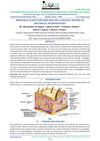
 This review highlights the beneficial effects of certain herbal drugs in treating skin diseases, such as their healing, antifungal, antiviral, antibacterial, anti-inflammatory, and antitumor-promoting activities, emphasizing recent technical advancements in the field over the past 17 years.
 February 2024 in “International Journal For Multidisciplinary Research”
 This study introduced a unique herbal hair oil formulation that combines natural extracts such as coconut oil, sesame seeds, and hibiscus to hydrate the scalp, stimulate hair follicles, and improve overall hair appearance, aiming to address issues like thinning, dryness, and dandruff.