1 citations
,
July 2007 in “Journal of Investigative Dermatology” The mutation causes hairless mice due to mislocalized and dysfunctional HR protein.
 81 citations
,
July 2008 in “The Journal of Clinical Endocrinology and Metabolism”
81 citations
,
July 2008 in “The Journal of Clinical Endocrinology and Metabolism” This study found that cortisone reductase deficiency is caused by inactivating mutations in the H6PD gene, affecting cortisol metabolism by preventing 11β-HSD1 enzyme function.

In this case study, a 70-year-old male with lymphoid variant hypereosinophilic syndrome presented with rare isolated pulmonary involvement, which improved with prednisone treatment.

This case study reports an unusual presentation of erosive lichen planus of the scalp linked to hepatitis C in a patient, highlighting challenges in establishing a definitive correlation between the two conditions.
3 citations
,
April 2012 in “Journal of the American Academy of Dermatology” Men with Addison disease should be screened for X-linked adrenoleukodystrophy if they have hair loss.
 12 citations
,
March 2004 in “International Journal of Dermatology”
12 citations
,
March 2004 in “International Journal of Dermatology” A woman with X-linked chronic granulomatous disease developed lupus-like skin lesions, improved with treatment, suggesting a unique skin condition in carriers.
13 citations
,
February 2012 in “International Journal of Dermatology” This case report identifies a novel nonsense mutation in the CDH3 gene associated with hypotrichosis and juvenile macular dystrophy.

This study found that the Lim-homeodomain transcription factor Lhx2 regulates Sonic Hedgehog signaling during early retinal neurogenesis in mice by controlling the expression of pathway genes in retinal progenitor cells.
 74 citations
,
January 2006 in “The journal of investigative dermatology/Journal of investigative dermatology”
74 citations
,
January 2006 in “The journal of investigative dermatology/Journal of investigative dermatology” This study identified novel compound heterozygous mutations in the DSG4 gene in a Japanese patient with congenital hypotrichosis, suggesting overlap between localized autosomal recessive hypotrichosis and monilethrix.
 30 citations
,
January 2009 in “Nuclear Receptor Signaling”
30 citations
,
January 2009 in “Nuclear Receptor Signaling” This study identified the Hairless (Hr) gene-encoded protein as a corepressor that plays a crucial role in maintaining skin and hair by regulating epithelial stem cell differentiation and gene expression via chromatin remodeling, which may impact both development and disease.
 1 citations
,
February 2009 in “Clinical and Experimental Dermatology”
1 citations
,
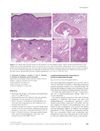
February 2009 in “Clinical and Experimental Dermatology” This study reports an improvement in lymphomatoid papulosis type A in a 52-year-old patient who concurrently used hormone-replacement therapy.
7 citations
,
August 2008 in “Immunogenetics” A gene mutation in mice causes increased mast cells and disorganized hair follicles in their skin.
April 2023 in “Journal of Investigative Dermatology” In this study, researchers developed a mouse model of scarring alopecia and observed significant reductions in CD200R expression in affected skin, potentially linking this signaling pathway to immune attacks on hair follicles and suggesting new treatment targets for scarring hair loss.
 17 citations
,
October 2006 in “Molecular and Cellular Endocrinology”
17 citations
,
October 2006 in “Molecular and Cellular Endocrinology” This study found that the L457(3.43)R mutation in the human luteinizing hormone receptor increases phosphodiesterase activity, reducing hormonal response despite elevated basal cAMP levels.
 January 2017 in “Open Journal of Endocrine and Metabolic Diseases”
 This case report identifies an adolescent with symptoms indicative of Dunnigan-type partial lipodystrophy, emphasizing the need for early diagnosis to manage associated metabolic complications and improve self-esteem.
 9 citations
,
February 2019 in “Journal of Clinical Research in Pediatric Endocrinology”
9 citations
,
February 2019 in “Journal of Clinical Research in Pediatric Endocrinology” In this study, children with classical congenital adrenal hyperplasia were found to have increased epicardial fat thickness, which was associated with subclinical atherosclerosis markers and left ventricular dysfunction, especially in poorly controlled cases.
 October 2023 in “Pediatric blood & cancer”
 This report discusses a potentially underdiagnosed form of multisystem Langerhans cell histiocytosis in infants, demonstrating the use of thymic sonography for staging, highlighting a case where thymic and cutaneous involvement was confirmed, and suggesting thymic ultrasound may aid in better diagnosis and management of LCH.
 13 citations
,
July 2014 in “The Journal of Dermatology”
13 citations
,
July 2014 in “The Journal of Dermatology” Dermoscopy helped diagnose discoid lupus erythematosus in two patients without needing skin biopsies.
July 2025 in “Journal of Cutaneous Pathology” In this case report, a newborn with Conradi-Hünermann-Happle syndrome was diagnosed through early skin biopsy, which revealed unique histopathological features, including dystrophic calcifications, confirming a pathogenic variant in the EBP gene.
3 citations
,
April 2020 in “American Journal of Case Reports” This case report describes the first instance of juvenile hemochromatosis type 2A associated with secondary hypothyroidism, linked to a novel mutation in the HJV gene.
5 citations
,
November 2021 in “The journal of investigative dermatology/Journal of investigative dermatology” This study found that inhibiting Wnt/β-catenin signaling disrupted hemidesmosome organization in keratinocytes, suggesting potential therapeutic targets for HD-defective diseases like epidermolysis bullosa.
 2 citations
,
June 2012 in “Dermatologica Sinica”
2 citations
,
June 2012 in “Dermatologica Sinica” Dermoscopy is useful for diagnosing and monitoring discoid lupus erythematosus by showing specific skin patterns.
 September 2016 in “Journal of Dermatological Science”
 This study reports a case of GGCX syndrome in a 55-year-old Japanese male, characterized by PXE-like symptoms and coagulation deficiency, with an unreported phenotype of possible spinocerebellar degeneration.
 December 2024 in “Journal of Clinical Research in Pediatric Endocrinology”
 This study explains that congenital adrenal hyperplasia due to 21-hydroxylase deficiency presents as a continuous phenotype and involves symptoms ranging from virilization to accelerated growth in children, with diagnosis relying on clinical, biochemical, and genetic evaluation.
May 2011 in “Journal of Clinical Neuroscience” This article discusses a case of Vogt-Koyanagi-Harada disease, detailing symptoms, diagnostic features, and treatment with corticosteroids, but it reports no new clinical findings.
6 citations
,
December 2021 in “Journal of Clinical Medicine” This study introduced the Lichen Planus Activity and Damage Index (LiPADI), which effectively assesses the severity and progression of lichen planus, aligning well with other clinical indicators.
 8 citations
,
July 2020 in “Medicine”
8 citations
,
July 2020 in “Medicine” In this study, low-level light therapy using a new helmet-type device significantly increased hair density and thickness in patients with androgenetic alopecia, showing no adverse events or side effects, suggesting it may be a safe and effective treatment option for both sexes.
1 citations
,
May 2013 in “Hair transplant forum international” Non-classical 21 hydroxylase deficiency is an underdiagnosed cause of female hair loss and polycystic ovarian syndrome.
 April 2020 in “Journal of the Endocrine Society”
 This case report highlights Leydig cell hyperplasia as a rare cause of increased testosterone and postmenopausal hirsutism, resolved after bilateral salpingo-oophorectomy in a 64-year-old woman.