 13 citations
,
January 2019 in “Skin appendage disorders”
13 citations
,
January 2019 in “Skin appendage disorders” This study reported that fibrosing alopecia in a pattern distribution can occur in patients of color, with clinical and histopathological features allowing for an accurate differential diagnosis.
 October 2025 in “Jurnal Medisains Kesehatan”
 This experimental study found that leaf extracts from Averrhoa bilimbi and Muntingia calabura significantly inhibited the growth of Staphylococcus aureus, with M. calabura demonstrating stronger antibacterial activity, suggesting potential for acne treatment.
 October 2025 in “Cermin Dunia Kedokteran”
 This review discusses personalized treatment strategies and management approaches for chronic obstructive pulmonary disease (COPD), emphasizing the need for multi-aspect assessments, but reports no new clinical findings.
 December 2022 in “Jurnal Kesehatan Jompa”
 This article reviews the causes and current treatment options for androgenetic alopecia, reporting no new clinical findings and highlighting the need for more therapeutic choices.
 9 citations
,
February 2018 in “Journal of Pharmaceutical and Biomedical Analysis”
9 citations
,
February 2018 in “Journal of Pharmaceutical and Biomedical Analysis” This study validated a highly selective and fast LC–MS/MS method for accurately measuring levels of tadalafil and finasteride in human plasma, adhering to international bioanalytical guidelines.
 4 citations
,
September 2018 in “Rendiconti lincei. Scienze fisiche e naturali”
4 citations
,
September 2018 in “Rendiconti lincei. Scienze fisiche e naturali” This study concluded that spikenard specimens in Renaissance Italian herbaria are attributed to Nardostachys jatamansi, a plant used in traditional medicine and cosmetics.
 1 citations
,
April 2024 in “Veterinary Science and Medicine Journal”
1 citations
,
April 2024 in “Veterinary Science and Medicine Journal” In this study, a mixed breed dog with Malassezia fungal dermatitis and tick infestation showed notable improvement after 14 days of treatment with itraconazole, loratadine, fish oil, sebasol shampoo, and multivitamins, with reduced skin symptoms and hair regrowth observed.
 January 2026 in “Bandung Conference Series Medical Science”
 In this study, researchers observed no significant association between hijab use and telogen effluvium among female medical students, despite a relatively high incidence of hair loss in this population.
 January 2026 in “RIGGS Journal of Artificial Intelligence and Digital Business”
 This study evaluated formulations of a cream containing turmeric and ginger extracts for inhibiting underarm hair growth, finding that the formulation with 15% stearic acid and 3% triethanolamine had the most optimal physical characteristics and potential for cosmetic development.
 February 2025 in “Intisari Sains Medis”
 This article explores the potential mechanisms by which polydeoxyribonucleotide (PDRN) could improve skin quality, slow aging, and enhance skin regeneration, but reports no new clinical findings.
 May 2024 in “ABDIKAN Jurnal Pengabdian Masyarakat Bidang Sains dan Teknologi”
 This study identified a high prevalence of Enterobiasis among children in Indonesia, linked to poor sanitation and healthcare access, and found that a holistic family medicine approach improved patient understanding and treatment compliance, thereby enhancing their quality of life.

This review reports that extracts from the plant Eclipta alba, traditionally used in herbal medicine, may promote hair growth by inhibiting TGF-β1 expression and functioning as a 5α-reductase inhibitor, potentially benefiting androgenic alopecia treatment.
 June 2023 in “Journal of Pharmaceutical and Health Research”
 In this study with guinea pigs, a hair tonic containing 0.001% caffeine significantly stimulated hair growth, showing higher effectiveness with an average hair length of 18.294 mm compared to a tonic with 0.005% caffeine concentration, which resulted in an average hair length of 16.610 mm.
 August 2022 in “MEDICINUS”
 This case study reports a 22-year-old homosexual man coinfected with secondary syphilis, condyloma acuminata, and HIV, highlighting the coexistence and increased STI risks associated with HIV and HPV infection.
 October 1890 in “Science”
 Pilocarpin can cause hair regrowth and color change in some cases but not in others, and it may have side effects in animals.
April 2014 in “DOAJ (DOAJ: Directory of Open Access Journals)” This study identified 64 chemical compounds in the L. luteus L. plant, including several fatty acids and coumarin, highlighting the pharmacognostic potential of yellow lupine.
October 2025 in “Frontiers in Pharmacology” This review explores the immunopharmacological potential of A. lappa for inflammatory musculoskeletal disorders (IMSDs) but reports no new clinical results, emphasizing the need for standardized research methodologies.
2 citations
,
April 2025 in “Plants” This study found that lambertianic acid from Platycladus orientalis leaves may protect against dexamethasone-induced skeletal muscle atrophy by reducing atrophy-related proteins without affecting cell viability.
 5 citations
,
January 2018 in “Indian Dermatology Online Journal”
5 citations
,
January 2018 in “Indian Dermatology Online Journal” This case report describes a strong dermoscopic and histopathological correlation in lichen nitidus, helping differentiate it from other similar conditions.
 11 citations
,
August 2010 in “Pediatric dermatology”
11 citations
,
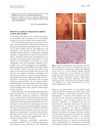
August 2010 in “Pediatric dermatology” This report details two cases of Lichen spinulosus in the submental area, treated effectively and safely with topical tacalcitol cream.
 7 citations
,
June 2010 in “Journal of The American Academy of Dermatology”
7 citations
,
June 2010 in “Journal of The American Academy of Dermatology” This paper reports a single case of lichenoid cutaneous sarcoidosis that was unresponsive to standard treatments but showed marked improvement with the administration of oral tranilast.
 6 citations
,
May 2022 in “Chemistry & biodiversity”
6 citations
,
May 2022 in “Chemistry & biodiversity” This study identified compounds from Laportea bulbifera with potential inhibitory effects on human steroid 5α-reductase 2, suggesting their application in treating benign prostatic hyperplasia.
 September 2024 in “Journal of the American Academy of Dermatology”
 In this case report, a 53-year-old woman with Little-Graham-Piccardi-Lassueur-Syndrome responded well to a treatment regimen of hydroxychloroquine, methotrexate, and other therapies, effectively halting the progression of this rare dermatosis characterized by alopecia and hyperkeratotic eruptions.
This report presents a rare case of lichen spinulosus in a 52-year-old woman, featuring hyperkeratotic follicular papules and a dense lymphohistiocytic infiltrate in affected skin areas.
4 citations
,
November 2019 in “Dermatology - Open Journal” This study reports that Lichen planus pigmentosus is present in Moroccan patients but remains challenging to treat, with only some experiencing complete resolution of lesions after therapy.
 155 citations
,
June 2009 in “International Journal of Dermatology”
155 citations
,
June 2009 in “International Journal of Dermatology” This extensive review discusses the clinical manifestations, potential associations, and treatment approaches for lichen planus, but reports no new clinical results, highlighting gaps in evidence for therapeutic strategies.

This case report highlights that tumid lupus erythematosus should be considered in the differential diagnosis of annular scalp lesions with non-scarring alopecia, emphasizing histopathological examination for accurate diagnosis.
6 citations
,
December 2021 in “Journal of Clinical Medicine” This study introduced the Lichen Planus Activity and Damage Index (LiPADI), which effectively assesses the severity and progression of lichen planus, aligning well with other clinical indicators.
June 2023 in “International Journal of Dermatology” This study reviewed 41 cases of lichen planus pigmentosus in patients from southeastern Tunisia, highlighting its prevalence among older individuals and notable differences compared to patterns observed in an Indian cohort.
5 citations
,
May 2022 in “Diagnostics” This study found that certain lncRNA gene polymorphisms in HOTAIR and MALAT1 are associated with increased susceptibility to systemic lupus erythematosus, potentially informing clinical applications.