57 citations
,
December 2011 in “Lasers in Surgery and Medicine” This study suggests that selective photothermolysis of sebaceous glands using free electron laser pulses may offer a novel approach to treating acne by causing targeted thermal damage without affecting the epidermis.
 25 citations
,
August 2017 in “Lasers in Medical Science”
25 citations
,
August 2017 in “Lasers in Medical Science” This literature review reported that fractional lasers, like the 1550-nm nonablative erbium-glass laser, may enhance hair regrowth by stimulating a wound healing process, but more randomized controlled trials are needed to confirm their effectiveness and optimize treatment parameters.
 2 citations
,
October 2014 in “International Journal of Trichology”
2 citations
,
October 2014 in “International Journal of Trichology” Low-level laser therapy may increase hair density in pattern hair loss.
This study observed increased proliferation and certain gene expressions in dermal papilla cells exposed to an 808 nm laser diode array at doses above 0.5 J/cm².
 4 citations
,
May 2015 in “Hair transplant forum international”
4 citations
,
May 2015 in “Hair transplant forum international” The review concluded that better studies are needed to prove if Low-Level Laser Therapy devices for hair growth really work.
 April 2026 in “International Journal of Research in Dermatology”
 This meta-analysis found that laser-based therapies showed promising clinical benefits in treating scarring alopecias, such as disease stabilization and symptom improvement, but highlighted the need for high-quality randomized controlled trials due to serious risk of bias and methodological limitations in existing studies.
 26 citations
,
April 2011 in “Skin Research and Technology”
26 citations
,
April 2011 in “Skin Research and Technology” This study found that in vivo confocal scanning laser microscopy accurately quantifies neogenic hair follicles in mice, producing results similar to histology while avoiding fixation artifacts.
 8 citations
,
January 1989 in “Journal of The American Academy of Dermatology”
8 citations
,
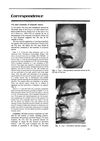
January 1989 in “Journal of The American Academy of Dermatology” This report suggests that CO2 laser treatment may be an effective alternative for removing traumatic tattoos caused by firearms, based on two successful patient cases.
 November 2023 in “Journal of medical and health studies”
 In this study, combining low-level laser therapy with microneedling showed statistically significant improvement in hair growth for three adult patients with androgenetic alopecia over three months, suggesting it may be a promising management approach.
 February 2010 in “Journal of The American Academy of Dermatology”
 This study found that NB-002 demonstrated clear antifungal activity and clinically significant nail clearing in subjects with distal subungual onychomycosis and ≤50% nail involvement, compared to a vehicle treatment.
 February 2009 in “Journal of The American Academy of Dermatology”
 Fractional infrared technology is effective and safe for treating cervical laxity.
3 citations
,
August 2024 in “Skin Research and Technology” In this study, LC-OCT imaging was found to noninvasively identify specific features of cicatricial alopecia due to lupus erythematosus, such as hyperreflective collagen fibers, which may aid in distinguishing it from other types of scarring alopecia.
47 citations
,
March 1987 in “The Journal of dermatologic surgery and oncology” Carbon dioxide laser treatment effectively removed facial hair cysts without scarring or them coming back.
 112 citations
,
July 1998 in “Journal of Investigative Dermatology”
112 citations
,
July 1998 in “Journal of Investigative Dermatology” This study found that anagen-phase hair follicles in mice are particularly sensitive to damage by ruby laser pulses, resulting in alopecia without scarring, suggesting enhanced laser hair removal strategies.
February 2023 in “Default Digital Object Group” This study demonstrated that a single multimode fiber can be used for single-shot wide-field reflectance imaging, achieving high correlation with the ground truth and enabling real-time microendoscopy at up to 180 frames per second.
 1 citations
,
July 2015 in “European Journal of Dermatology”
1 citations
,
July 2015 in “European Journal of Dermatology” This article discusses timed exposure settings with ablative lasers for treating benign dermal tumors and highlights their potential to reduce treatment time and scarring risk, but it reports no new clinical results.
13 citations
,
January 2022 in “Microvascular Research” This study found that high-resolution laser speckle contrast imaging devices provide good reproducibility for assessing skin perfusion in mice but not for measuring haemoglobin oxygenation.
January 2025 in “SSRN Electronic Journal”  June 1999 in “Proceedings of SPIE”
 The study suggests that CO₂ laser creates hair transplant channels with significantly less lateral thermal damage than Ho:YAG laser in the human scalp.
 1 citations
,
January 2018 in “Journal of Cosmetic and Laser Therapy”
1 citations
,
January 2018 in “Journal of Cosmetic and Laser Therapy” The editorial introduces various topics on laser and cosmetic treatments in a medical journal.
May 2014 in “Hanbang an'i'bi'in'hu pibu'gwa haghoeji” This study reviewed and analyzed existing research on laser therapy for alopecia, suggesting both low-level and high-level lasers may serve as effective treatment alternatives.
 3 citations
,
July 2003 in “PubMed”
3 citations
,
July 2003 in “PubMed” This study found that laser-based goniophotometry can effectively monitor changes in hair surface reflection related to color and cuticle cell tilt across different ethnic origins.
 March 2020 in “Journal of lasers in medical sciences”
 This study found that HERC6 and its neighboring genes play a significant role in the cellular response of human skin to CO2 laser therapy, highlighting key biological processes related to gene expression changes post-treatment.
 May 2017 in “Journal of The American Academy of Dermatology”
 595 nm pulsed dye laser is a cost-effective treatment for nonmelanoma skin cancer with a low recurrence rate.
 June 2001 in “Proceedings of SPIE”
 The authors concluded that low energy laser therapy may serve as a useful complementary treatment for skin diseases such as lichen planus, infectious finger pulpits, scalp alopecia, and crural ulcers.
 2 citations
,
January 2022 in “Lasers in Medical Science”
2 citations
,
January 2022 in “Lasers in Medical Science” This pilot study reported significant improvement in hair restoration and patient satisfaction with the use of fractional carbon dioxide laser followed by platelet-rich plasma, showing greater hair density increases using higher laser pulse energy settings in individuals with androgenetic alopecia.
15 citations
,
January 2008 in “PubMed” This article reviews considerations and requirements for performing laser hair removal and reports no new clinical results.
 January 2024 in “RSC pharmaceutics”
 This source discusses using stratum corneum ablation as a promising method to enhance transdermal drug delivery by temporarily removing the skin's outermost barrier to improve medication absorption.
 15 citations
,
May 2017 in “Lasers in Medical Science”
15 citations
,
May 2017 in “Lasers in Medical Science” This study found that low-level laser treatment may promote hair regrowth in mice by activating the Wnt10b/ß-catenin pathway and inducing the anagen phase of hair follicles.
 April 2018 in “Journal of Investigative Dermatology”
 This study found that 1550-nm Er:Glass fractional laser treatment significantly increased hair density and shaft diameter in patients with androgenetic alopecia, though the mechanism may not involve Wnt10A or IGF-1 expression.