
This study in diabetic db/db mice found that treatment with the antihypertensive agents minoxidil or nebivolol stimulated elastogenesis and inhibited elastolysis, leading to restored elastic fibers, reduced aortic stiffening, and normalized blood pressure.
 3 citations
,
May 2023 in “Precision clinical medicine”
3 citations
,
May 2023 in “Precision clinical medicine” This study analyzed gene expression data to identify key genes involved in severe forms of alopecia areata, discovering four immune monitoring genes (LGR5, SHISA2, HOXC13, S100A3) with potential for early diagnosis and better understanding of the disease's biological mechanisms.
 260 citations
,
January 2019 in “Pharmaceutics”
260 citations
,
January 2019 in “Pharmaceutics” This study highlights that niosomes, or non-ionic surfactant based vesicles, offer an advantageous drug delivery system due to their stability, cost-effectiveness, and ability to enhance drug bioavailability and targeting efficiency for various therapeutic agents.
 140 citations
,
August 2011 in “Biomaterials”
140 citations
,
August 2011 in “Biomaterials” This study observed that keratose, derived from human hair, integrated well in mouse tissue and remodeled with collagen, suggesting potential as a non-toxic biomaterial for regenerative applications.
 74 citations
,
October 1998 in “Journal of biological chemistry/The Journal of biological chemistry”
74 citations
,
October 1998 in “Journal of biological chemistry/The Journal of biological chemistry” This study discovered nine human type I hair keratin genes, including a transcribed pseudogene, in a 190 kbp genomic region, revealing three gene subclusters based on sequence homologies.
 55 citations
,
June 2013 in “Dermatologic Surgery”
55 citations
,
June 2013 in “Dermatologic Surgery” This review discusses the use of ablative and nonablative fractional resurfacing for enhanced topical drug delivery in dermatology and reports no new clinical results; further studies are needed to explore these methods.
 54 citations
,
January 2013 in “Journal of Biological Macromolecules”
54 citations
,
January 2013 in “Journal of Biological Macromolecules” This study proposes a new method to selectively isolate keratin-associated proteins and keratin from human hair, suggesting that KAPs may support keratin fibers in hair structure.
 45 citations
,
December 2006 in “Biopolymers”
45 citations
,
December 2006 in “Biopolymers” This study found that permanent waving treatment induces structural changes in the cortex proteins of white human hair, significantly reducing its tensile strength without altering the S-S band intensity.
 40 citations
,
November 1998 in “The journal of investigative dermatology/Journal of investigative dermatology”
40 citations
,
November 1998 in “The journal of investigative dermatology/Journal of investigative dermatology” This study found that the S100A3 gene is exclusively expressed in hair follicle cells differentiating into hair shaft components in mice, suggesting its important role in hair formation.
 24 citations
,
July 2017 in “Structure”
24 citations
,
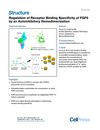
July 2017 in “Structure” In this study, researchers found that ligand homodimerization controls the receptor binding specificity of the FGF9 subfamily, preventing off-target activation of FGFR "b" isoforms.
 24 citations
,
November 2008 in “Arquivos Brasileiros de Endocrinologia & Metabologia”
24 citations
,
November 2008 in “Arquivos Brasileiros de Endocrinologia & Metabologia” In this study, mutations in the vitamin D receptor were identified in Brazilian children with rickets and alopecia, leading to impaired receptor activation and reduced 24-hydroxylase expression.
 23 citations
,
January 2012 in “International Food Research Journal”
23 citations
,
January 2012 in “International Food Research Journal” This case report describes a 39-year-old woman whose dermatomyositis-systemic lupus erythematosus overlap syndrome symptoms resolved after switching to tofacitinib.
 18 citations
,
April 2019 in “Archives of Dermatological Research”
18 citations
,
April 2019 in “Archives of Dermatological Research” This study found that bovine lactoferrin promotes hair growth in mice by enhancing dermal papilla cell proliferation through the Erk/Akt and Wnt signaling pathways.
 15 citations
,
July 2004 in “Journal of morphology”
15 citations
,
July 2004 in “Journal of morphology” This study analyzes the fine structure and protein distribution in monotreme hairs, finding similarities with other mammals and detailing unique immunocytochemical features in their inner root sheaths.
 13 citations
,
October 2021 in “The Journal of Microbiology”
13 citations
,
October 2021 in “The Journal of Microbiology” This study found that human placenta hydrolysate reduced SARS-CoV-2 replication and improved immune response in ferret models, suggesting potential as a COVID-19 treatment.
 12 citations
,
January 2014 in “Cell structure and function”
12 citations
,
January 2014 in “Cell structure and function” This study suggests that specific combinations of human type I and II hair keratins, particularly K35-K85 and K36-K81, have distinct in vitro assembly properties that are significant for macrofibril formation.
 12 citations
,
August 1984 in “Genetics Research”
12 citations
,
August 1984 in “Genetics Research” In this study, researchers found that the naked (N) gene in mice indirectly affects the synthesis of structural proteins in mouse hair, resulting in reduced high tyrosine protein content and unusual amino acid compositions.
 10 citations
,
September 2020 in “Biopolymers”
10 citations
,
September 2020 in “Biopolymers” This study found that bleached hair showed optimal protein structural integrity and tensile strength at pH 5, with significant changes in cross-linking, water content, and diameter at more alkaline or acidic levels.
 10 citations
,
July 2019 in “Journal of Asia-Pacific Entomology”
10 citations
,
July 2019 in “Journal of Asia-Pacific Entomology” This study suggests that ultra-fine powders of steamed and lyophilized mature silkworms may have enhanced pharmacological effects compared to fine powders, possibly due to their smaller particle size.
 10 citations
,
June 2005 in “The journal of investigative dermatology/Journal of investigative dermatology”
10 citations
,
June 2005 in “The journal of investigative dermatology/Journal of investigative dermatology” This study identified FP-1 as a highly specific extracellular matrix protein in follicular papilla cells, which may play a role in hair growth regulation during specific hair cycle phases.
 8 citations
,
January 1996 in “Springer eBooks”
8 citations
,
January 1996 in “Springer eBooks” This article discusses the minimal research on hair growth physiology and highlights Dr. Masumi Inaba's contributions to understanding androgenetic alopecia, but reports no new experimental results.
 6 citations
,
November 2017 in “Scientific reports”
6 citations
,
November 2017 in “Scientific reports” This study found that a novel R343H mutation in the vitamin D receptor gene impairs its transcription activity, contributing to hereditary vitamin D-resistant rickets and alopecia in the affected family.
 6 citations
,
January 2013
6 citations
,
January 2013 This chapter reviews hyperadrenocorticism in ferrets, covering its causes, symptoms, diagnosis, and treatment options, but reports no new research findings.
5 citations
,
July 2019 in “Research Square (Research Square)” This study identified key genes and pathways involved in the seasonal hair cycle regulation of yak, uncovering molecular mechanisms that may aid in understanding their adaptation to alpine environments.
 4 citations
,
August 2025 in “Scientific Reports”
4 citations
,
August 2025 in “Scientific Reports” This study found that hair analysis is an effective non-invasive method for assessing metabolic fluctuations, showing stable advanced glycation end products levels that correlate with age and differ significantly between diabetic and non-diabetic rats.
 4 citations
,
January 2007 in “Sen'i Gakkaishi”
4 citations
,
January 2007 in “Sen'i Gakkaishi” This study found that permanent wave treatment accelerates hair degradation after protease exposure, showing significant morphological differences compared to untreated hair and linked to damage from Alpha-helical region denaturation.
 3 citations
,
March 2024 in “Discover Applied Sciences”
3 citations
,
March 2024 in “Discover Applied Sciences” In this study, researchers found that a protein-enriched cream made from Spirulina platensis improved the physical structure of natural hair, as evidenced by more intact and smoother cuticles compared to a control cream without protein, suggesting its potential for hair care applications.
 3 citations
,
January 2007 in “Journal of health science”
3 citations
,
January 2007 in “Journal of health science” This study found that an enzymatic method effectively identified chemical treatments like perming and dyeing by detecting higher degradation in treated hair compared to untreated hair.
 1 citations
,
January 2015 in “Journal of clinical and investigative dermatology”
1 citations
,
January 2015 in “Journal of clinical and investigative dermatology” This study suggests that IGF-1, a component of human placenta hydrolysate, promotes hair growth by increasing the number and size of hair follicles in mice.
 January 2026 in “RSC Advances”
 This study found that the natural polymer-based hydrogel Gel/SA@PL released growth factors in a controlled way, which enhanced tissue regeneration and minimized scarring in the healing of diabetic wounds.