 1 citations
,
October 2022 in “Molecular therapy”
1 citations
,
October 2022 in “Molecular therapy” This study found that betibeglogene autotemcel significantly improved transfusion independence in 89% of patients with transfusion-dependent beta-thalassemia, although the high cost and manufacturing challenges may limit widespread adoption.
 January 2026 in “Dermatology and Therapy”
 This study found that patients with alopecia areata receiving ritlecitinib showed immune responses to meningococcal and tetanus vaccines, achieving significant antibody levels after vaccination, and no vaccine-related adverse events or disease exacerbations were reported despite a small sample size.
April 2010 in “Cancer Research” This study found significant upregulation of IDO-1 and IDO-2 in human basal cell carcinomas, suggesting that IDO production may confer immune privilege characteristics to the tumors, potentially impacting their growth.
 555 citations
,
July 2001 in “Genes & Development”
555 citations
,
July 2001 in “Genes & Development” This study found that Tcf3 and Lef1 differently regulate cell differentiation in multipotent skin stem cells, with Tcf3 promoting follicle-like features and Lef1, when modified, promoting sebocyte differentiation.
1 citations
,
July 2024 in “Journal of Investigative Dermatology” TAK-279 effectively reduces psoriasis symptoms and is safe.
71 citations
,
January 2011 in “Journal of cutaneous pathology” This case report describes the first confirmed instance of trichodysplasia spinulosa in a child with Down syndrome and leukemia, linking it to the TS-associated polyomavirus.
 March 2026 in “International Journal of Molecular Sciences”
 In this laboratory study, researchers observed that mouse vascular endothelial cells exhibit dynamic changes after exposure to ionizing radiation, including a transient endothelial subpopulation that facilitates vascular-epidermal communication and skin repair, with shifting roles in angiogenesis and immune surveillance over time.
 9 citations
,
May 2005 in “Expert Review of Clinical Immunology”
9 citations
,
May 2005 in “Expert Review of Clinical Immunology” This article examines anticytokine therapies for autoimmune diseases, highlighting the potential of anti-interferon-γ as a universal treatment for certain conditions and noting varying effectiveness of tumor necrosis factor-α inhibitors.
15 citations
,
October 2014 in “The journal of investigative dermatology/Journal of investigative dermatology” This study suggests that erlotinib exacerbates inflammation in a mouse model of skin disease and that IL-1 inhibition could mitigate skin-related side effects of EGFR inhibitors.
 February 2025 in “International Journal of STD & AIDS”
 In this case report, a patient with HIV developed hirsutism after starting tofacitinib for alopecia areata, which resolved upon medication discontinuation and laser hair removal.
 93 citations
,
May 2010 in “European Journal of Cancer”
93 citations
,
May 2010 in “European Journal of Cancer” This phase II trial found that BI 2536 demonstrated limited antitumor activity across five solid tumor types, with no confirmed objective responses observed.
 May 2025 in “Journal of Inflammation Research”
 This study found that NK and CD8+ T cell infiltration may drive inflammation in androgenetic alopecia, suggesting that targeting IL-15 signaling could offer a new therapeutic approach for hair regeneration.
July 2022 in “Journal of Investigative Dermatology” 23 citations
,
July 2022 in “Nature Cell Biology” Targeting THY1 can improve skin repair and healing.
25 citations
,
November 2020 in “Cell Reports Medicine” Developing human skin has immune cells with memory-like features.
 4 citations
,
November 2023 in “Frontiers in immunology”
4 citations
,
November 2023 in “Frontiers in immunology” In this narrative review, researchers outlined the role of T cells in the autoimmune pathogenesis of alopecia areata and highlighted ongoing research into therapeutic pathways, beyond current JAK inhibitors, aimed at developing new treatments for the disease.
1 citations
,
July 2025 in “Journal of Investigative Dermatology” IL-27 may help prevent hair loss by creating immune-suppressing cells.
11 citations
,
March 2021 in “Molecular Carcinogenesis” This study found that deleting the transcription factor Twist1 in keratinocytes significantly reduced UVB-induced skin carcinogenesis in mice, suggesting a potential target for preventing cutaneous squamous cell carcinoma.
2 citations
,
August 2024 in “JID Innovations” This study suggests that keratinocytes derived from hair follicles of patients with atopic dermatitis provide a useful model for investigating AD-related inflammation, as they showed greater expression changes of AD markers when stimulated with type 2 cytokines compared to those from healthy donors.
5 citations
,
May 2023 in “Microbial Cell Factories” This study found that a newly produced version of KGF-1 with 135 residues maintained biological activity and could serve as an alternative to the standard 140-residue KGF-1.
12 citations
,
August 2013 in “Journal of Dermatological Science” This article shares the researchers' challenging journey in exploring the pathobiology of alopecia areata and reports no definitive clinical advances.
 5 citations
,
January 2021 in “iScience”
5 citations
,
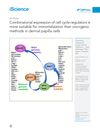
January 2021 in “iScience” Using a combination of specific cell cycle regulators is better for safely keeping hair root cells alive indefinitely compared to cancer-related methods.
 14 citations
,
February 2020 in “Scientific reports”
14 citations
,
February 2020 in “Scientific reports” This study found that telocytes in human scalp tissue were located around hair follicles and glands and may be involved in skin regeneration and homeostasis.
 3 citations
,
September 2020
3 citations
,
September 2020 This study found that the medication dyclonine has a potent inhibitory effect on the TRPV3 channel, effectively rescuing cell death and alleviating pruritus symptoms in a mouse model with gain-of-function TRPV3 mutations, suggesting potential for treating skin inflammation.
 11 citations
,
September 2011 in “Biochemical journal”
11 citations
,
September 2011 in “Biochemical journal” This study found that neurotrophin-4 regulates Cav3.2 T-current expression in D-hair neurons via TrkB receptor activation, highlighting its role in mechanosensitive function.
 11 citations
,
September 1999 in “Journal of the European Academy of Dermatology and Venereology”
11 citations
,
September 1999 in “Journal of the European Academy of Dermatology and Venereology” This review examines various immunomodulatory therapies for cutaneous lymphoma and notes that they are most effective in the disease's early stages.
January 2003 in “Hepatology” 
This study found that expressions of TLR-3, TLR-7, TLR-8, and TLR-9 were significantly higher in alopecia areata patients compared to healthy controls, indicating a potential role in disease autoimmunity.
 January 2024 in “Inflammation and regeneration”
 This study identified Th22 cells as key effectors in hair regeneration driven by thymosin beta 15, suggesting they could be potential targets for hair regrowth therapies.
22 citations
,
September 2020 in “The journal of investigative dermatology/Journal of investigative dermatology” This review highlights the possible role of T regulatory cells in the immune-related mechanisms of alopecia areata but reports no new clinical findings.