176 citations
,
February 2006 in “Cancer Research” This study found that loss of Ptch1 function in mouse skin's basal cells is sufficient to rapidly induce tumors resembling human basal cell carcinoma, suggesting Ptch1 as a key tumor suppressor.
February 2009 in “Journal of Investigative Dermatology” EGFR is essential for organized skin nerve growth and branching.
 2 citations
,
September 2020 in “Biomedical materials”
2 citations
,
September 2020 in “Biomedical materials” This study found that recombinant human hair keratin proteins K31 and K81 show greater potential for inducing skin cell differentiation compared to natural keratin coatings.
 76 citations
,
May 2011 in “Cell death and differentiation”
76 citations
,
May 2011 in “Cell death and differentiation” This study found that the enzyme A20 helps regulate EDAR-induced NF-κB signaling in mice, preventing ectodermal abnormalities like disheveled hair and assuring proper skin and appendage development.
198 citations
,
March 1999 in “Journal of Investigative Dermatology” This study found that keratin 15 expression is downregulated in hyperproliferative conditions like psoriasis and hypertrophic scars, suggesting it is not compatible with keratinocyte activation.
 February 2025 in “Biomolecules”
 This study found that activation of RORA significantly promotes the level of autophagy in rat hair follicle stem cells, suggesting a potential target for research on hair follicle development and treatments for conditions like alopecia.
 3 citations
,
August 2021 in “Research Square (Research Square)”
3 citations
,
August 2021 in “Research Square (Research Square)” This study found that increased mRNA expression of the Ectodysplasin-A2-Receptor, observed across multiple species and tissues, may exacerbate inflammation during aging, suggesting potential benefits of blocking EDA2R/EDA-A2 signaling.
 September 2025 in “Experimental & Molecular Medicine”
 This study observed that the small molecules KY19382 and KY19334 inhibited cancerous traits in human cutaneous squamous cell carcinoma cells by suppressing the Wnt/β-catenin pathway, indicating their potential as treatments for cancers involving CDK1 overexpression and diseases related to CXXC5 accumulation.
 1 citations
,
January 2025 in “Frontiers in Oncology”
1 citations
,
January 2025 in “Frontiers in Oncology” This review highlights REV7's crucial roles in maintaining genome stability, its implication in several cancers, and its association with poor prognoses and treatment resistance, while also noting that REV7 suppression may improve chemotherapy sensitivity.
 133 citations
,
May 2016 in “Cell Host & Microbe”
133 citations
,
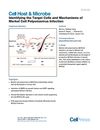
May 2016 in “Cell Host & Microbe” In this study, human dermal fibroblasts were identified as natural host cells that support productive Merkel cell polyomavirus infection, and the MEK antagonist trametinib was introduced as an effective inhibitor to control the virus.
18 citations
,
October 2009 in “Endocrinology” This study demonstrated that both HR isoforms are expressed in keratinocytes, but HRDelta1072-1126 lacks corepressor activity and may act as a coactivator by inhibiting HDAC recruitment to the VDR transcriptional complex.
3 citations
,
January 2005 in “Photochemistry and Photobiology” This study found that overexpression of PKCɛ in mouse epidermis increased sensitivity to metastatic squamous cell carcinoma, suggesting that a PKCɛ-mediated microenvironment may promote cancer development through specific cytokines like TNFα.
 137 citations
,
October 2009 in “The American journal of pathology”
137 citations
,
October 2009 in “The American journal of pathology” This study found that matriptase, a membrane serine protease, is crucial for maintaining multiple types of epithelial tissues in mice, with its absence leading to severe organ dysfunction and increased permeability.
1 citations
,
January 1992 in “DNA sequence” This study found that a cuticle keratin gene in sheep is a pseudogene due to gene duplication and mutations, lacking expression in vivo.
84 citations
,
September 2008 in “Developmental biology” This study found that cellular retinoic acid-binding proteins and fatty acid-binding proteins are dynamically expressed in skin development and respond differently to retinoic acid, β-catenin, and Notch signaling.
November 2025 in “PLoS ONE” This study found that synthetic RNA and DNA trigger significant increases in certain chemokines in human keratinocytes, predominantly via NF-κB activation, without evidence of alternative splicing, suggesting other regulatory pathways may be involved.
33 citations
,
September 1990 in “Proceedings of the National Academy of Sciences” This study found that a 671-base pair promoter sequence from the ultra-high-sulfur keratin gene is sufficient to direct tissue-specific and development-specific expression of a reporter gene during hair growth in transgenic mice.
82 citations
,
December 2011 in “Journal of Biological Chemistry” This study discovered that a network controlled by the gene p63 is crucial for keratinocyte differentiation and is linked to MYC through cell adhesion-related pathways.
 June 2022 in “Research Square (Research Square)”
 This study revealed that nestin-expressing progenitor cells capable of becoming ORS keratinocytes are present during both hair follicle development and in adult hair follicles.
 September 2019 in “The journal of investigative dermatology/Journal of investigative dermatology”
 This study found that deleting all three Tet genes in mice led to shorter hair shafts and altered hair types, with associated changes in gene expression and DNA hydroxymethylation.
126 citations
,
October 1998 in “Experimental Dermatology” This review provides an overview of the hairless gene in mice and humans, discussing its structure, expression, and implications for understanding skin physiology and human disorders related to gene disruption, but it reports no new empirical findings.
11 citations
,
September 2023 in “Nature Communications” In this study, researchers found that the cell surface protein Lrig1 plays a crucial role in regulating the suppressive function of regulatory T cells, suggesting it as a potential target for treating autoimmune diseases, as evidenced by experiments in mouse models.
50 citations
,
December 2005 in “European Journal of Immunology” This study found that a specific mutation in the mouse RXRalpha gene significantly impacts immune responses and causes hair loss and skin cysts.
43 citations
,
October 2006 in “Journal of Cell Science” In this study, researchers found that contrary to expectations, keratin 10 domains did not reduce cell proliferation and instead increased tumor development in genetically modified mice.
January 2022 in “International journal of dermatology and venereology” This case study reports a 36-year-old man with KID syndrome caused by an N14Y GJB2 mutation, expanding the mutation spectrum of this condition in the Chinese population.
44 citations
,
August 1990 in “PubMed” This study provides evidence for K1 and K10 derivatives' presence in the inner root sheath and hair cuticle, suggesting that these hair follicle parts may follow familiar keratinization principles.
September 2016 in “Journal of dermatological science” This study identified TSC2 as an important regulator of hair follicle morphogenesis and patterning, with Tsc2cKO mice showing altered hair patterns and frequencies compared to controls.
 16 citations
,
January 2017 in “Physical chemistry chemical physics/PCCP. Physical chemistry chemical physics”
16 citations
,
January 2017 in “Physical chemistry chemical physics/PCCP. Physical chemistry chemical physics” This study presents computational modeling and experimental analysis of the HGT protein KAP8.1, identifying key structural features that may influence hair's response to environmental conditions.
January 2026 in “Journal of Materials Chemistry B” This study concluded that the KNPs@M/G microneedle system offers a promising strategy for treating radiation-induced skin injury by promoting antioxidative, anti-inflammatory, and regenerative effects.
 April 2013 in “Developmental Cell”
 This study found that the chromatin remodeler Brg1 plays a crucial role in hair follicle maintenance and epidermal repair by regulating the Shh signaling pathway and forming a positive feedback loop.