 1 citations
,
April 2018 in “Journal of Investigative Dermatology”
1 citations
,
April 2018 in “Journal of Investigative Dermatology” In this study, researchers found that the variability in growth factor expression, particularly TGFβ1, in PRP samples could influence patient responses to hair loss treatment with PRP therapy.
 1 citations
,
January 2018 in “Acta dermatovenerologica Alpina, Pannonica et Adriatica (Tiskana izd.)”
1 citations
,
January 2018 in “Acta dermatovenerologica Alpina, Pannonica et Adriatica (Tiskana izd.)” This study found that a herbal shampoo and solution were more effective than placebo in reducing hair loss and improving hair growth in participants with androgenetic alopecia and telogen effluvium.
 1 citations
,
January 2017 in “Evolutionary studies”
1 citations
,
January 2017 in “Evolutionary studies” This chapter discusses genetic polymorphisms related to phenotypes that differentiate between populations and reports no new results; it highlights the role of DNA technology in understanding human adaptation history.
 1 citations
,
January 2015 in “Der pharmacia lettre”
1 citations
,
January 2015 in “Der pharmacia lettre” This study found that neurosteroids might play a role in the neuroprotective effects of ischemic postconditioning by reducing brain infarct size and improving motor performance and memory in mice.
 1 citations
,
June 2012 in “Actas Dermo-Sifiliográficas”
1 citations
,
June 2012 in “Actas Dermo-Sifiliográficas” This article discusses primary cicatricial alopecia, highlighting the need for early and precise diagnosis to effectively manage and treat these complex inflammatory hair disorders, but presents no new clinical results.
 1 citations
,
April 2010 in “Expert Review of Dermatology”
1 citations
,
April 2010 in “Expert Review of Dermatology” This review discusses primary cicatricial alopecias, detailing their classification, pathogenesis, clinical features, histopathologic findings, and treatment, without reporting new experimental results.
 1 citations
,
August 2006 in “International forensic science and investigation series”
1 citations
,
August 2006 in “International forensic science and investigation series” Hair testing is a reliable method for detecting workplace drug use when done with proper sample preparation and confirmation.
 May 2026 in “Journal of Wildlife and Conservation Medicine”
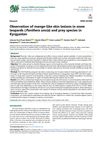
 This study found that camera trap images revealed mange-like skin lesions in snow leopards and other species in Kyrgyz reserves, with detection rates varying widely and raising concerns about disease spread.
 March 2026 in “Tissue Engineering and Regenerative Medicine”
 In this review, the authors discuss recent advancements in underwater adhesion technologies, specifically highlighting mussel-inspired catechol-based adhesives, which offer strong underwater bonding through various interfacial interactions and the influence of dopamine-modified polymeric tissue adhesives.

In this expert consensus, the authors aimed to address the challenges of diagnosing and treating uncommon dermatophytoses due to their distinct characteristics and lack of standardized protocols, by providing scientific guidance on their epidemiology, clinical features, diagnosis, and treatment.
 February 2026 in “Clinical Cosmetic and Investigational Dermatology”
 This study highlights how combining genetic and environmental risk assessments could advance early screening and personalized prevention for vitiligo, given its genetic complexity and environmental interactions.
 December 2025 in “Frontiers in Nutrition”
 This review suggests that although hydrolyzed collagen peptides with certain supplements may improve skin elasticity and joint function, evidence for collagen's anti-aging and regenerative benefits remains inconsistent.
 November 2025 in “Biological Trace Element Research”
 This pilot study found no significant relationship between blood and hair mineral concentrations in generally healthy adults, though hair analysis may have potential for assessing long-term mineral trends.
 November 2025 in “Open Repository of the University of Porto (University of Porto)”
 Pharmacists play a crucial role in customizing treatments and ensuring medication safety.
 October 2025 in “Editora Pasteur eBooks”
 The abstract discusses the multidisciplinary nature and advancement of dermatology and aesthetic procedures within the health sciences, emphasizing the integration of diagnostic, corrective, preventive, and therapeutic approaches, but does not provide specific study results.
 August 2025 in “Libyan Medical Journal”
 This study found that patients with vitiligo or alopecia areata have higher levels of anxiety and depression compared to healthy individuals, though no significant differences were observed between the two patient groups, highlighting the psychological impact of these dermatological conditions.
 June 2025 in “SAS Journal of Medicine”
 This case study highlights an unusual presentation of folliculitis decalvans by age and sex, emphasizing early diagnosis due to its chronic nature and irreversible consequences.
 February 2025 in “Plastic and Aesthetic Research”
 In this study, after long-term observation of human scalp hair follicles over 16 years, the researchers found that a topical 5% minoxidil solution could stimulate hair regrowth after a period of dormancy, though with reduced growth rates and hair diameter.
 January 2025 in “RSC Pharmaceutics”
 Smart microneedles using advanced tech could improve psoriasis treatment.
 January 2025 in “Surgical & Cosmetic Dermatology”
 In this case study, a 35-year-old man with recalcitrant folliculitis decalvans was successfully treated with Erbium-YAG laser, showing rapid improvement without hair loss, though further clinical studies are needed to define its benefits more comprehensively.
 December 2024 in “World s Veterinary Journal”
 This case study from Ukraine describes a 5-year-old Akita dog diagnosed with sebaceous adenitis, presenting with pruritus, alopecia, and inflammation; treatment over 30 days led to complete restoration of affected areas, implicating potential heritability in Akitas.

This study explored new molecular structures as potential COVID-19 treatments, identifying a compound called Hit15 that inhibited viral infection in lab settings and reduced inflammation markers in human neutrophils, suggesting further development is warranted.
 August 2024 in “Bioscience of Microbiota Food and Health”
 In this review, researchers examined the link between microorganisms and vitiligo, highlighting how microbes might impact the disease's development and suggesting avenues for better treatment strategies based on these interactions.

This study in diabetic db/db mice found that treatment with the antihypertensive agents minoxidil or nebivolol stimulated elastogenesis and inhibited elastolysis, leading to restored elastic fibers, reduced aortic stiffening, and normalized blood pressure.
 April 2024 in “Journal of cancer research and clinical oncology”
 This review discusses the isolation, characterization, and potential clinical applications of tissue-derived extracellular vesicles in cancer diagnosis, prognosis, and treatment, noting their significance but highlighting the risks and need for appropriate protocols.
 March 2024 in “Journal of Experimental & Biomedical Sciences/Biomedical Science Letters”
 In this study, BCC therapy reduced oxidative stress and cell damage in cardiomyocyte cells, suggesting it may serve as a new treatment alternative for heart disease.
 March 2024 in “International Journal of Drug Delivery Technology”
 This study reviews the potential of electrospun nanofiber mats as innovative drug delivery systems for wound healing, emphasizing their ability to enhance drug release, improve cell adhesion, and promote tissue regeneration by incorporating antibiotics, growth hormones, or stem cells.
 February 2024 in “International Journal of Research in Dermatology”
 In this study, researchers examined thyroid function and autoantibody levels in patients with alopecia areata and vitiligo, finding similar rates of thyroid dysfunction and autoantibody presence in both groups, with no significant differences based on ethnicity or gender.

This study examined the molecular communication in psoriasis cells, highlighting unique immune cell interactions and identifying new features of the hair follicle cell-psoriasis axis. It suggests the potential for targeted therapies at the single-cell level to improve psoriasis treatment.
In this review of autonomous robotic surgery, the authors explore the integration of AI and machine learning in surgical procedures, detailing both the advancements and challenges of these technologies, including ethical concerns and current regulatory frameworks.