 33 citations
,
March 2017 in “Dermatologic Surgery”
33 citations
,
March 2017 in “Dermatologic Surgery” In this clinical study, low-level laser therapy using the HANDI-DOME LASER device increased hair counts by 51% compared to controls, indicating its potential as a safe and effective treatment for androgenetic alopecia in women aged 18 to 60.
8 citations
,
September 2023 in “International Journal of Nanomedicine” In this study, researchers developed an in vitro airway-organoid model using human lung-derived cell lines on RADA16-I hydrogels to serve as a potential tool for studying adenovirus isolation, pathogenesis, and antiviral drug screening.
 63 citations
,
May 2011 in “Clinical cancer research”
63 citations
,
May 2011 in “Clinical cancer research” In this study, topical CUR61414 was effective in inhibiting basal cell carcinomas in mice, but no clinical activity was observed in human trials.
34 citations
,
January 2004 in “Genomics” In this study, researchers identified a cluster of hair-specific keratin-associated protein genes within the 21q22.3 region, revealing a novel transcription mechanism involving TSPEAR/C21orf29 that may bypass typical transcriptional termination sites.
4 citations
,
July 2024 in “Radiotherapy and Oncology” This study highlights that variations in clinical outcome reporting can undermine the validation of NTCP models for RIA, stressing the need for a standardized and objective scoring system.
This study identified a 14,883 bp genomic deletion affecting the Plcd1 and Vill genes as likely responsible for the abnormal phenotype observed in snthr-1Bao mice.
 January 2024 in “Editora In Vivo eBooks”
 This study reports a case of dermatophytosis in an 11-month-old spayed female dog, which exhibited alopecia in the neck and ear tip regions, a condition common in tropical and temperate climates and caused by fungi affecting both animals and humans.
May 2025 in “International Journal of Biological Macromolecules” In this study, an innovative microneedle platform loaded with IGF-1 and modified collagen was reported to significantly promote hair regeneration, enhance neovascularization, and reduce inflammation in a mouse model of androgenetic alopecia, outperforming the commonly used minoxidil treatment.
July 2024 in “Journal of Investigative Dermatology” OR101 may effectively treat atopic dermatitis and similar skin conditions.
2 citations
,
July 2021 in “Genes” This study identified a new genetic variant in the KRT71 gene responsible for a breed-specific form of hypotrichosis in Hereford cattle, potentially serving as a model for similar human conditions.
October 2025 in “Phytomedicine” This study demonstrates that Bazi Bushen capsules may have therapeutic potential against skin photoaging in mice by enhancing NRF2 expression and targeting the KEAP1-NRF2 pathway.

This study found that the long non-coding RNA lnc056 promotes the proliferation of hair follicle stem cells by upregulating TRIP6 expression through interaction with the transcription factor HNRNPUL1, suggesting a potential target for hair loss treatment.
January 2021 in “대한미용학회지” In this study, Boswellia administration improved symptoms of DNCB-induced dermatitis in mice and altered hair-related gene expressions, which might positively affect hair cycle disturbances caused by dermatitis.
 September 2023 in “Journal of The American Academy of Dermatology”
 This study aimed to describe the distribution of eyebrow and eyelash hair loss in patients with varying severities of scalp hair loss from alopecia areata but does not report results.
 53 citations
,
June 1993 in “Proceedings of the National Academy of Sciences of the United States of America”
53 citations
,
June 1993 in “Proceedings of the National Academy of Sciences of the United States of America” This study identified LY191704 as a specific noncompetitive inhibitor of human 5 alpha-reductase type 1, which may be useful in treating endocrine disorders related to DHT overproduction.
July 2022 in “British Journal of Dermatology” 13 citations
,
April 2010 in “Journal of dermatological science” This study reports that chemotherapy-induced alopecia in mice may be linked to decreased laminin-511 and increased laminin-332 around hair follicles, suggesting a potential mechanism for abrupt hair loss.
 February 2020 in “International Journal of Current Microbiology and Applied Sciences”
 This study found that canine hair follicle stem cells in vitro expressed markers associated with multipotency, suggesting their potential role in the hair cycle.
 April 2017 in “The journal of investigative dermatology/Journal of investigative dermatology”
 This study observed that mice lacking epidermal HSD11b1 had increased non-histaminergic itch and changes in skin nerve fibers, potentially linked to higher TSLP expression.
 25 citations
,
November 2022 in “British journal of dermatology/British journal of dermatology, Supplement”
25 citations
,
November 2022 in “British journal of dermatology/British journal of dermatology, Supplement” In this analysis, safety data from two clinical trials showed that baricitinib for severe alopecia areata had predictable side effects like infections and elevated CPK, with some serious adverse events noted at low incidence rates; no deaths were reported.
 1 citations
,
January 2001 in “Cosmetics and toiletries”
1 citations
,
January 2001 in “Cosmetics and toiletries” This study found that purified apple juice containing procyanidin B-2 promoted hair growth in both mouse models and human clinical trials for male pattern baldness.
June 2026 in “British Journal of Dermatology” This audit of ritlecitinib prescribing for severe alopecia areata found that regional practices largely followed national guidelines but highlighted the need for better psychological assessments and more consistent use of SALT scoring to inform treatment continuation decisions after 36 weeks.
 August 2023 in “Journal of analytical & pharmaceutical research”
 In this study, microneedle-assisted human basic fibroblast growth factor therapy was reported to significantly improve hair regeneration in both male and female patients with androgenetic alopecia, alopecia areata, and telogen effluvium, showing greater effectiveness in males.
3 citations
,
October 1994 in “Journal of Dermatological Science” This study developed a novel monoclonal antibody, TYHF-1, which specifically reacts with hair keratins but not with epidermal keratins or various other tissue cells.
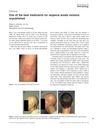 1 citations
,
June 2018 in “International Journal of Dermatology”
1 citations
,
June 2018 in “International Journal of Dermatology” DNCB is highly effective for treating alopecia areata with minimal long-term side effects.
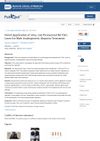
In this pilot study, researchers found that fractional picosecond laser therapy may promote hair regrowth in men with mild-to-moderate androgenetic alopecia, with significant improvements in expert assessments and patient satisfaction observed over a four-month period, though further research is needed to confirm these findings.
 April 2023 in “Journal of Investigative Dermatology”
 This pilot study suggests that topical melatonin may protect hair follicle stem cells from paclitaxel-induced damage, potentially preventing chemotherapy-induced alopecia and enhancing the effects of scalp cooling caps.
17 citations
,
January 2010 in “PubMed” CD10 helps distinguish between basal cell carcinoma and benign hair follicle tumors.
July 2022 in “Zenodo (CERN European Organization for Nuclear Research)” This advertisement does not provide new research findings and focuses on promoting consultations for hair replacement options.
January 2011 in “The Chinese Journal of Dermatovenereology” This study found that shorter GGN repeat lengths (≤23) in the androgen receptor gene are associated with androgenetic alopecia among Chinese males, whereas two specific SNPs studied were not present in this population.