 May 2024 in “International Journal of Science and Research (IJSR)”
 This study evaluated the treatment of dandruff in a 19-year-old female using Tankan Bhasma mixed with coconut oil twice weekly, finding it effective and safe in reducing symptoms and improving scalp health.
June 2022 in “Journal of Holistic and Health Sciences (Jurnal Ilmu Holistik dan Kesehatan)” This study found that a powder made from papaya seeds and celery leaves remained stable for 3 weeks when stored at room or cold temperatures, suggesting potential for hair health applications.
 2 citations
,
January 2022 in “International Journal of Medical Sciences”
2 citations
,
January 2022 in “International Journal of Medical Sciences” In this study, kartogenin promoted hair growth by enhancing cell proliferation and migration in vitro and extended hair length in mice, suggesting its potential as a treatment for hair loss.
1 citations
,
August 2019 In this study, a hair tonic formulation with 25% ethanol extract of mangkokan leaves showed effectiveness in promoting hair growth, as measured by significant differences in hair length and weight compared to the control.
August 2019 in “Pharmacoscript” This study found that a combination of pandanus and sansevieria leaf extracts at a 3:2 ratio showed improved hair growth activity compared to individual extracts and controls.
2 citations
,
August 2018 in “Journal of pharmacopolium” This study found that a combination extract of pandanus and sansevieria leaves at a 3:2 ratio showed better hair growth activity than either extract alone.
In this study, applying a 5% concentration of pomegranate peel extract significantly enhanced hair growth on male rabbits, showing results comparable to the positive control using 2% Minoxidil, but higher concentrations or lower concentrations did not perform as well.
This study found that an ethanolic extract of Semicarpus anacardium nuts reduced blood glucose levels and improved enzyme activities related to carbohydrate metabolism in normal rats.
 June 2026 in “Zenodo (CERN European Organization for Nuclear Research)”
 In this review, researchers highlighted E. alba (bhringraj) for its traditional uses in treating liver and hair growth issues, skin conditions, and digestive health, emphasizing its purported benefits like hair growth promotion and liver function enhancement.
 December 2025 in “Jurnal Farmasi Tinctura”
 This study found that a hair tonic containing 15% ethanol extract of cocoa leaves effectively stimulated hair growth in rabbits, outperforming minoxidil 2%, and was safe with no skin irritation observed.

In this study, researchers found that cosmetic formulations containing guaraná extract effectively controlled oiliness in oily skin and hair by reducing sebaceous gland activity and lipid content without compromising skin barrier function, making them promising for managing excessive sebum production.
 4 citations
,
October 2022 in “Evidence-based complementary and alternative medicine”
4 citations
,
October 2022 in “Evidence-based complementary and alternative medicine” This study found that Ficus carica extract enhanced fertility markers, including hormone levels and reproductive organ activity, in rats of both sexes, suggesting potential benefits for managing fertility issues.
research Amla
December 2024 in “Apple Academic Press eBooks” This source highlights the nutraceutical potential of amla, noting its traditional use in Ayurvedic and Unani medicine and its reported benefits, including antidiabetic and cardioprotective properties, which could drive market growth for food and beverage applications.
 March 2026 in “Journal of Medicinal Plants Studies”
 This source reviews the traditional and contemporary medicinal uses of Murraya koenigii, reporting its significant pharmacological activities, including antioxidant and anticancer effects, supported by both preclinical and clinical research.
 June 2023 in “MPI (Media Pharmaceutica Indonesiana)”
 This systematic literature review identified kale leaf hair tonic (Ipomoea aquatica Forsk.) at 5% concentration as an effective herbal cosmeceutical preparation for enhancing hair growth, showing an average increase in hair length over 21 days, while meeting established pharmaceutical standards.
 January 2025 in “International journal of Indian medicine”
 This review discusses nine Ayurvedic medicinal herbs listed in the Dhanvantari Nighantu as beneficial for hair, detailing their properties like promoting hair growth, enhancing hair thickness, and maintaining dark hair color, alongside supporting research on these effects.
 December 2023 in “Medical & Clinical Case Reports Journal”
 This case study reported significant hair regrowth in a young female patient with alopecia areata after 60 days of Ayurvedic treatment, including leech therapy and herbal medicines, demonstrating its potential effectiveness according to the authors' observations.
December 2018 in “Jurnal Farmamedika (Pharmamedica Journal)” This study found that a combination of ethanol extract from watermelon white skin and liquid from kepok banana tree trunk resulted in greater hair growth length in rats compared to Minoxidil.
August 2020 in “Prosiding Farmasi” This review explores the potential of Arabian Bidara leaves as a hair growth enhancer based on its shared chemical compounds with other known hair-fertility-promoting plants, but it reports no new experimental results.
 December 2024 in “Journal of Population Therapeutics and Clinical Pharmacology”
 This review highlights the potential benefits of using rosemary and kalonji seeds for hair health, focusing on their phytochemical properties, mechanisms of action, and therapeutic potential in treating conditions such as alopecia and dandruff.
 June 2026 in “Zenodo (CERN European Organization for Nuclear Research)”
 This research highlights the various traditional uses of E. alba (bhringraj), noting its benefits for hair growth, liver function, and skin conditions such as eczema and pruritis, though results are not reported in this abstract.
 July 2025 in “International Journal of Ayurvedic Medicine”
 In this pilot study, Kantavallabha rasa, an Ayurvedic medicine, showed significant improvements in PCOS symptoms such as menstrual irregularities, pain, unwanted hair growth, skin issues, and ovarian conditions among 10 women with PCOS.
 November 2025 in “International Journal of Research and Innovation in Applied Science”
 This study explores the indigenous haircare knowledge of tribal women in Nandurbar District, Maharashtra, India, documenting 25 plant species used for haircare, with an emphasis on the ecological and cultural importance of these practices for sustainable personal care innovation.
May 2020 in “Business Innovation & Entrepreneurship Journal” This study discusses the development of a turmeric-based herbal hair removal product named PASIKULA, highlighting its potential to increase the economic value of turmeric and acceptance by consumers.
December 2017 in “JURNAL FARMANESIA” In this study, the researchers found that using dragon fruit peel extract in a gray hair dye formulation, along with specific adjuvants, produced a dark black color on gray hair, demonstrating its potential as a natural colorant alternative to synthetic dyes.
 39 citations
,
March 2008 in “Growth hormone & IGF research”
39 citations
,
March 2008 in “Growth hormone & IGF research” Raspberry ketone may help grow hair and improve skin elasticity.
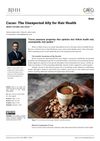 September 2025 in “Brazilian Journal of Hair Health”
 This abstract highlights that Theobroma cacao, commonly associated with chocolate, has potential benefits for hair health beyond its culinary appeal, though specific results are not reported.
June 2023 in “CHEDS Journal of Chemistry Education and Science” In this experimental study, researchers developed a hair tonic using green spinach leaves and assessed its feasibility based on vitamin content and sensory characteristics, finding that the tonic was generally liked by panelists in hedonic tests.
 January 2023 in “Han'gug mi'saengmul saengmyeong gong haghoeji/Han-guk misaengmul saengmyeong gonghak hoeji”
 This study found that a mixed extract of N. jatamansi, O. basilicum, and C. sativus, particularly when extracted via steaming and ultrasonic methods, increased antioxidant content, stimulated melanin production for black hair, and promoted hair growth in mouse models, while maintaining high cell viability.
February 2020 in “Zenodo (CERN European Organization for Nuclear Research)” This study developed a Garcinia cambogia-enriched food product, identified the most acceptable variation, and suggests further research on its potential benefits for weight management and PCOS.