 2 citations
,
December 2016 in “Experimental cell research”
2 citations
,
December 2016 in “Experimental cell research” This study reveals that CSPG4-positive basal cell keratinocytes show distinct global gene expression from CSPG4-negative cells, despite similar colony-forming efficiency.
 July 2013 in “Science-business Exchange”
 In this study, Sept4 knockout mice showed improved wound healing and hair follicle regeneration compared to wild-type controls, suggesting potential therapeutic uses for SEPT4 inhibition.
12 citations
,
June 2020 in “Sultan Qaboos University medical journal” This review discusses the role of the TRPV4 channel in skin physiology and pathology, highlighting its potential as a therapeutic target for skin disorders, but reports no new clinical results.
 47 citations
,
April 2012 in “The Plant Journal”
47 citations
,
April 2012 in “The Plant Journal” This study found that mutations in phosphorylation sites on the PIN3 protein disrupt its phosphorylation and subcellular trafficking, affecting auxin transport and root growth in a cell-type-specific manner.
December 2020 in “Faculty Opinions – Post-Publication Peer Review of the Biomedical Literature” The KDM1 gene helps Venus flytraps close by managing potassium ions.
 17 citations
,
September 2014 in “PLoS ONE”
17 citations
,
September 2014 in “PLoS ONE” This study found that SK2 channels in sensory terminals of rat muscle spindles and hair follicles may play a crucial role in modulating mechanosensory transduction by influencing receptor potentials through Ca2+-activated K+ currents.
 4 citations
,
January 2021 in “Journal of Clinical Medical Research”
4 citations
,
January 2021 in “Journal of Clinical Medical Research” This review provides an in-depth analysis of the structure and function of c-kit activation, and its role in both normal physiological and pathological conditions, with no new research findings reported.
57 citations
,
January 2019 in “Stem Cell Research & Therapy” OCT4 helps hair stem cells renew and fight aging, potentially aiding hair regrowth.
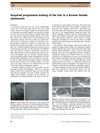 1 citations
,
October 2012 in “The Journal of Dermatology”
1 citations
,
October 2012 in “The Journal of Dermatology” This letter to the editor describes a case of acquired progressive kinking of the hair in a Korean female adolescent, but no new research findings are reported.
117 citations
,
April 2008 in “Developmental biology” This study identified that Eda-A1 unexpectedly induces placode inhibitors dkk4 and lrp4, indicating the importance of tightly regulated signaling for proper ectodermal organ development.
 August 2026 in “International Journal of Developmental Neuroscience”
 In this report, researchers describe a 13-month-old with neurodevelopmental disorder NEDESBA, confirming a TRAPPC4 gene mutation as the cause after excluding biotinidase deficiency, highlighting the importance of molecular testing for accurate diagnosis in overlapping metabolic and genetic conditions.
28 citations
,
January 2015 in “Journal of Cell Science” In this study, PINCH-1 gene loss in mouse epidermis led to detachment from the basement membrane, thickened skin, and hair loss, with findings suggesting PINCH-1 plays a role in keratinocyte adhesion through both ILK and EPLIN pathways.
 93 citations
,
April 2003 in “Proceedings of the National Academy of Sciences of the United States of America”
93 citations
,
April 2003 in “Proceedings of the National Academy of Sciences of the United States of America” This study identified an unexpected critical role for the FATP4 protein in skin and hair development in mice, linking it to a potential candidate gene for restrictive dermopathy in humans.
 March 1998 in “Journal of dermatological science”
 Diphencyprone initially increases mouse hair growth, then slows it, possibly due to changes in specific protein levels.
2 citations
,
January 2014 in “Photochemical & photobiological sciences” This study suggests that the Grasp protein may play a role in regulating skin homeostasis following UVB exposure by influencing p53-mediated apoptotic responses in mice.
March 2026 in “International Journal of Cosmetic Science” This research reports that KCV and its palmitoylated derivatives show strong effectiveness in strengthening hair proteins, indicating their potential for use in advanced hair care products.
 April 2024 in “bioRxiv (Cold Spring Harbor Laboratory)”
 In a keratinocyte-specific knockout mouse model, this study found that deleting GRK2 disrupted hair follicle homeostasis, causing cyst-like structures, abnormal growth patterns, and eventual hair loss, suggesting potential links to immune-mediated alopecias.
 June 2020 in “Nihon Ika Daigaku Igakkai Zasshi”
 This study found that aPKCλ, but not aPKCζ, plays a critical role in maintaining hair follicle stem cell populations and promoting wound healing in the epidermis.
March 2026 in “World Rabbit Science” This study found that overexpression and knockdown of DKK4 influence genes involved in hair follicle growth and development in Angora rabbits and identified specific SNPs in DKK4 associated with wool quality, notably showing that the TT/GG haplotype combination relates to higher fibre diameters.
 June 2021 in “bioRxiv (Cold Spring Harbor Laboratory)”
 This research found that the microtubule catastrophe factor KIF18B plays a crucial role in promoting spindle orientation in keratinocytes, linking this process to cell fate decisions during hair follicle morphogenesis.
 3 citations
,
July 2021 in “Life science alliance”
3 citations
,
July 2021 in “Life science alliance” This study observed that disrupting the Pnkp gene in adult mice resulted in a premature aging-like phenotype, suggesting PNKP's vital role in maintaining normal growth and survival of certain progenitor cell populations.
 September 2023 in “bioRxiv (Cold Spring Harbor Laboratory)”
 This study describes the use of a genetically engineered mouse model, mTurquoise2-Col4a1, to fluorescently label collagen IV and observe basement membrane dynamics during skin development, revealing its stability and pliability during rapid growth phases.
October 2025 in “Journal of Neurophysiology” In this study, researchers identified two types of potassium channels, BK and Kv4.2, in rat Merkel cells and reported that these channels play important roles in repolarizing action potentials and maintaining resting membrane potentials, potentially influencing tactile encoding in these cells.
 19 citations
,
March 2017 in “Scientific Reports”
19 citations
,
March 2017 in “Scientific Reports” This study suggests that the protease HAT-L4 plays a significant role in maintaining epidermal barrier function to prevent body fluid loss, as its absence in mice led to increased fluid loss and higher mortality.
53 citations
,
February 2015 in “Journal of Investigative Dermatology” This study found that inactivating CerS4 in mice led to hair follicle stem cell exhaustion and hair loss, indicating its role in regulating hair regeneration through ceramide composition and signaling pathways.
 13 citations
,
November 2012 in “PLoS ONE”
13 citations
,
November 2012 in “PLoS ONE” This study identified a novel recessive mutation in mice causing lethal congenital lamellar ichthyosis, with skin and hair follicle alterations similar to human congenital ichthyoses, linked to a specific genetic defect affecting Fatp4.
11 citations
,
January 2021 in “British Journal of Dermatology” This report describes a new case of syndromic ichthyosis caused by compound heterozygous mutations in AP1B1, detailing the associated clinical features and molecular consequences in the patient.
 November 2022 in “bioRxiv (Cold Spring Harbor Laboratory)”
 This study found that conditional deletion of Mof in mice resulted in severe defects in skin development, including compromised epidermal differentiation and hair growth, leading to perinatal lethality.
 10 citations
,
December 2015 in “International Journal of Molecular Sciences”
10 citations
,
December 2015 in “International Journal of Molecular Sciences” This study suggests that PDCD4 regulates keratinocyte proliferation and contact inhibition, playing a role in epidermal homeostasis and wound healing.
 April 2023 in “The journal of investigative dermatology/Journal of investigative dermatology”
 This study found that inhibiting the Mitochondrial Pyruvate Carrier in human hair follicles ex vivo activated the integrated stress response, affecting cell proliferation and metabolism.