 24 citations
,
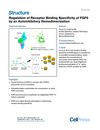
July 2017 in “Structure”
24 citations
,
July 2017 in “Structure” In this study, researchers found that ligand homodimerization controls the receptor binding specificity of the FGF9 subfamily, preventing off-target activation of FGFR "b" isoforms.

This study found that the Nap-F3K-CA hydrogel, when used on burn wounds, demonstrated effective antibacterial and anti-inflammatory properties, promoting accelerated skin repair, decreased wound infections, and improved healing processes, highlighting its potential as a clinical burn wound dressing.
 2 citations
,
April 2018 in “Majalah Obat Tradisional”
2 citations
,
April 2018 in “Majalah Obat Tradisional” In this study, the FIII micro emulsion formulation of virgin coconut oil and rice bran oil showed the best results for hair growth, increasing rabbit hair length by 1.26 cm in 18 days.

This study demonstrated that cryogelation of human hair keratin allows the development of 3D scaffolds with tunable properties, supporting cell adhesion and proliferation for potential biomedical applications.
79 citations
,
January 2002 in “Nucleic Acids Research” This study found that BMP-2 activates Dlx3 gene transcription in murine keratinocytes by binding with Smad1/Smad4, suggesting a mechanism for BMP signaling's role in skin and hair follicle regulation.
6 citations
,
October 2023 in “Animal Biotechnology” This study found that a 22-bp InDel polymorphism in the FGF7 gene was significantly associated with growth traits in goats, with genotypes ID and/or II linked to better growth compared to genotype DD, indicating its potential as a molecular marker in breeding programs.
9 citations
,
January 2014 in “Molecular Genetics and Metabolism Reports” This study discovered that a specific G to C mutation in the ornithine aminotransferase gene is linked to the retarded hair growth phenotype in mice and may serve as a model for human gyrate atrophy.
38 citations
,
November 2020 in “International journal of biochemistry & cell biology” This review discusses the biological roles and diagnostic significance of keratins in mammalian colon epithelial cells and reports no new clinical results.
January 2026 in “Therapeutics” This study found that SCUBE3 protein is upregulated in various cancers, promoting tumor growth and poor outcomes, while suppressing growth in renal cell carcinoma, and may serve as a diagnostic marker and potential therapeutic target for several diseases due to its secreted nature.
27 citations
,
February 2003 in “European Journal Of Oral Sciences” This study found that the SVpgC2a keratinocyte cell line, used as a model for dysplastic epithelium, showed increased apoptosis, proliferation, and aberrant keratin expression compared to normal keratinocytes from buccal mucosa.
 March 2023 in “JIIS (Jurnal Ilmiah Ibnu Sina): ilmu farmasi dan kesehatan”
 This study concluded that the optimum biotin microemulsion hair tonic composition involves span 80 (20%), tween 80 (9.47%), and PEG 400 (5%), providing favorable viscosity and globule size.
60 citations
,
December 2003 in “Journal of Investigative Dermatology” This study found that keratin 6hf, a type II keratin, is expressed in specific regions of mouse and human hair and suggests potential interactions with keratin 17, impacting hair development and associated disorders.
44 citations
,
October 2016 in “Epilepsia” This study demonstrated that the glycolytic inhibitor 2-deoxy-D-glucose enhances antiseizure effects by potentiating extrasynaptic tonic GABAergic inhibition through neurosteroidogenesis in hippocampal slices.
 April 2019 in “Journal of Investigative Dermatology”
 This study demonstrated that gene-corrected 3D skin constructs from RDEB patient-derived iPSCs, grafted onto immunocompetent mice, showed normal collagen VII expression after two months.
January 2026 in “Regenerative Biomaterials” This study synthesized and compared single-ion doped silicate bioactive glass nanoparticles for tissue repair, finding that BSr and BCe were most effective in accelerating wound healing and restoring vasculature, with BSr particularly reducing inflammation and BCo enhancing hair follicle regeneration but with limited biosafety window.
May 2005 in “Zhonghua chuangshang guke zazhi” This study found that human hair keratin bridges effectively induced nerve regeneration and demonstrated good biocompatibility and controlled degradation when used in rats with peripheral nerve defects.
3 citations
,
May 2016 in “Dermatopathology” The researchers reported that Lrig1 overexpression was observed in 100% of sebaceous carcinoma cases, suggesting it may serve as a potential marker for poorly differentiated sebaceous carcinoma.
78 citations
,
May 2012 in “Journal of Investigative Dermatology” A specific gene mutation causes woolly hair and hair loss.
 August 2026 in “Zenodo (CERN European Organization for Nuclear Research)”
 This source provides supplementary materials for the Carnivore Follicular Integrity Framework, a theoretical model proposing that animal-based diets may support hair follicle stability through several biological mechanisms. The materials include definitions, nutrient tables, and mechanistic notes but do not report empirical results.
 1 citations
,
November 2023 in “Rice”
1 citations
,
November 2023 in “Rice” This study found that PRX102, a peroxidase with a unique polar localization pattern, plays a role in root hair growth by aiding the transport of materials to the tips of growing root hairs.
3 citations
,
January 2023 in “Agronomy” This research reported that KDML105 bran extract demonstrated antioxidant activities, reduced nitric oxide production, and influenced gene expression related to the hair cycle in cultured dermal papilla cells, suggesting potential as an anti-hair loss agent by supporting the anagen phase and angiogenesis.
 9 citations
,
March 2015 in “Journal of Microbiology and Biotechnology”
9 citations
,
March 2015 in “Journal of Microbiology and Biotechnology” This study found that ultra-high molecular weight poly-γ-glutamic acid promoted hair growth in telogenic C57BL/6 mice by inhibiting 5-alpha reductase activity and inducing the anagen phase.
5 citations
,
April 2022 in “The journal of investigative dermatology/Journal of investigative dermatology” This article discusses junctional epidermolysis bullosa caused by COL17 deficiency, noting a lack of experimental therapies and the impact of nonsense mutations, but it reports no new clinical results.

This study investigated the molecular mechanisms behind the formation of drug-polymer inclusion complexes and found that carbamazepine can self-assemble into stable channel structures without guest polymers, unlike griseofulvin, which requires guest molecules for structural stability.
 March 2026 in “Zenodo (CERN European Organization for Nuclear Research)”
 This study reports a novel geometric medicine solution, N‑K GM SERIES, claiming to eliminate aflatoxin, offer a universal cancer cure, and provide numerous health benefits, including increased life expectancy, with deployment focused on the "Aflatoxin Belt" regions like Sudan.
January 2004 in “Chinese Journal of Dermatology” This study found that intradermal injection of specific oligonucleotides altered hair growth and morphology in mice by inducing a dominant mutation in the K17 gene.
41 citations
,
February 2005 in “Experimental Cell Research” This study suggests that the MAEG protein may facilitate epithelial–mesenchymal interactions during hair follicle development by binding to RGD-binding integrins like α8β1.
 February 2025 in “PubMed”
 In this study, researchers evaluated CS12192, a selective JAK3 inhibitor, in an alopecia areata mouse model and found it reversed hair growth inhibition comparably to baricitinib, with better safety and similar immune-modulating mechanisms.
66 citations
,
June 2001 in “Gastroenterology” In this study, K19-lacZ transgenic mice exhibited epithelial-specific reporter gene expression in tissues such as the pancreas and stomach, suggesting the K19 promoter is a valuable tool for studying epithelial cell biology.
January 2005 in “日本機械学會論文集. C編” This study suggests that minoxidil sulfate and pinacidil do not activate K channel currents in hair follicles, indicating their hair growth effects may occur through other mechanisms like increased blood flow.