149 citations
,
July 2000 in “Molecular and Cellular Biology” This study found that MK6a-deficient mice showed delayed reepithelialization after superficial wounding but not after full-thickness skin wounds, suggesting MK6a plays a role in activating follicular keratinocytes post-wounding.
 4 citations
,
April 2024 in “Complex & Intelligent Systems”
4 citations
,
April 2024 in “Complex & Intelligent Systems” This study introduced a single-stage network using large kernel attention that effectively restores high-resolution images by capturing both global and local details, reducing parameters and improving processing speed.
May 2026 in “Mendeley Data” This abstract provides supplementary materials for a study on the efficacy and safety of a topical siRNA-based formulation targeting DKK-1 for androgenetic alopecia, but reports no new findings.
December 2025 in “The Journal of Nutritional Biochemistry” This study found that kaempferol may stimulate hair growth in androgenetic alopecia by enhancing dermal papilla cell function and reducing dihydrotestosterone-induced damage, showing comparable efficacy to finasteride in a mouse model.
15 citations
,
September 2002 in “Journal of Biological Chemistry” This study observed that transgenic mice expressing keratin K10 under bovine K6beta control developed severe oral abnormalities, suggesting keratin composition changes can affect the physiology of epithelial cells, especially in the oral mucosa.
May 2026 in “Mendeley Data” This document provides supplementary materials for a study on the efficacy and safety of a topical siRNA-based formulation targeting DKK-1 in treating androgenetic alopecia, but reports no new findings.
 May 2026 in “Theranostics”
 This study found that the DKK3-CKAP4 signaling axis is involved in fibroimmune remodeling in androgenetic alopecia and that targeting this pathway may restore a regenerative hair follicle environment, offering a potential therapeutic strategy to counteract hair follicle miniaturization.
66 citations
,
June 2001 in “Gastroenterology” In this study, K19-lacZ transgenic mice exhibited epithelial-specific reporter gene expression in tissues such as the pancreas and stomach, suggesting the K19 promoter is a valuable tool for studying epithelial cell biology.
 23 citations
,
January 2005 in “Nihon Ishinkin Gakkai zasshi”
23 citations
,
January 2005 in “Nihon Ishinkin Gakkai zasshi” This case study identified Trichophyton rubrum as the cause of trichophytia profunda acuta in a patient using nested PCR, suggesting an alternative diagnostic approach when KOH tests and cultures fail.
 September 2025 in “Annals of Plastic Surgery”
 In this case report, a 76-year-old male had an eyelid lesion that mimicked squamous cell carcinoma but was diagnosed as benign inverted follicular keratosis after surgical excision, underscoring the importance of distinguishing between the two for proper management.
29 citations
,
September 2017 in “Genes” This study found that in Merino-Southdown cross sheep, the presence of the C variant of the KRTAP26-1 gene was associated with higher wool quality, including increased wool yield and staple length.
July 2017 in “Cancer Research” This study identified a radio-resistant population of Krt15+ stem cells in the mouse small intestine that can initiate tumors, suggesting potential targets for colon cancer therapy.
 January 2012 in “Durham e-Theses (Durham University)”
 This study found that knock-down of keratin 15 in various cell lines affected cell spreading, morphology, migration, differentiation, and proliferation, suggesting its role in maintaining the stem cell nature of keratinocytes.
 5 citations
,
January 2021 in “iScience”
5 citations
,
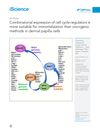
January 2021 in “iScience” Using a combination of specific cell cycle regulators is better for safely keeping hair root cells alive indefinitely compared to cancer-related methods.
 3 citations
,
February 2011 in “Journal of Biomedical Research/Journal of biomedical research”
3 citations
,
February 2011 in “Journal of Biomedical Research/Journal of biomedical research” This study identified a novel mutation, R430Q in the KRT86 gene, in a Han family with monilethrix, which may contribute to the disease's pathogenic mechanism.
 April 2023 in “Journal of Investigative Dermatology”
 This study found that the oral IRAK4-inhibitors BAY 1834845 and BAY 1830839 reduced skin inflammation and systemic inflammatory responses in healthy volunteers, showing similar pharmacodynamic effects to prednisolone when challenged with topical imiquimod and intravenous LPS.
5 citations
,
June 2008 in “British Journal of Dermatology” February 2013 in “Archives of Disease in Childhood Education & Practice” This text describes kerion, a severe form of tinea capitis, and emphasizes the difficulty of diagnosis and the need for oral antifungal treatment, but reports no new clinical results.
 2 citations
,
August 2022 in “The journal of investigative dermatology/Journal of investigative dermatology”
2 citations
,
August 2022 in “The journal of investigative dermatology/Journal of investigative dermatology” This review discusses the genetic origins of autosomal recessive woolly hair with hypotrichosis and reports no clinical results; it highlights the link to homozygous variants in the K25 keratin gene.
 April 2023 in “The journal of investigative dermatology/Journal of investigative dermatology”
 This study found that HPV8-induced actinic keratoses may mechanistically involve Lrig1+ hair follicle keratinocyte stem cells, with the E6 gene promoting downstream STAT3 activity in a mouse model.
104 citations
,
July 1994 in “The Journal of Cell Biology” This study suggests that basonuclin in keratinocytes is likely a regulatory molecule linked to maintaining proliferative capacity and preventing terminal differentiation rather than a cell cycle marker.
70 citations
,
September 2017 in “Expert opinion on therapeutic patents” This review examines the patent literature on AKR1C3 inhibitors and suggests that although numerous potent inhibitors exist, further preclinical optimization is necessary before assessing their therapeutic potential in human diseases.
47 citations
,
September 2004 in “Journal of Biological Chemistry” This study provides evidence supporting a regulatory relationship between the transcriptional regulator Hoxc13 and Krtap16 genes, which are crucial for proper hair growth in mice.
 18 citations
,
October 2017 in “Drug Design Development and Therapy”
18 citations
,
October 2017 in “Drug Design Development and Therapy” The study found that finasteride increased endoplasmic reticulum stress and reduced fertility in rats, effects that were alleviated by the administration of DA-9401.
 1 citations
,
October 2012 in “The Journal of Dermatology”
1 citations
,
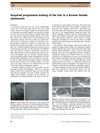
October 2012 in “The Journal of Dermatology” This letter to the editor describes a case of acquired progressive kinking of the hair in a Korean female adolescent, but no new research findings are reported.
 126 citations
,
October 2012 in “PLoS ONE”
126 citations
,
October 2012 in “PLoS ONE” This study found that reduced cytokinin levels allow plants to adapt to low potassium conditions by enhancing root hair growth, reactive oxygen species accumulation, and expression of a key potassium transporter gene.
 September 2025 in “Clinical Cosmetic and Investigational Dermatology”
 In this randomized, placebo-controlled study, Kūlaris supplementation significantly improved quality of life for participants with mild-to-severe acne over 12 weeks, though no significant changes in general skin health measures were observed compared to placebo.
![[4-t-Butylphenyl]-N-(4-imidazol-1-yl phenyl)sulfonamide (ISCK03) Inhibits SCF/c-kit Signaling in 501mel Human Melanoma Cells and Abolishes Melanin Production in Mice and Brownish Guinea Pigs](/images/assets/4eb017dc-711d-4926-bcd0-c3b8f48e3a99/small/19974.jpg) 26 citations
,
July 2007 in “Biochemical Pharmacology”
26 citations
,
July 2007 in “Biochemical Pharmacology” This study found that phenyl-imidazole sulfonamide derivatives, particularly ISCK03, inhibited c-kit signaling and promoted depigmentation in various experimental settings, suggesting potential use as skin-whitening agents.
March 2026 in “World Rabbit Science” This study found that overexpression and knockdown of DKK4 influence genes involved in hair follicle growth and development in Angora rabbits and identified specific SNPs in DKK4 associated with wool quality, notably showing that the TT/GG haplotype combination relates to higher fibre diameters.
5 citations
,
March 2017 in “Gene” This study found that the transcription factor CAP1 negatively regulates KRT83 expression in Tan sheep, possibly influencing their curly hair phenotype.