 January 2024 in “Wiadomości Lekarskie”
 This presentation discusses the integration of artificial intelligence in vascular surgery, emphasizing its potential to enhance surgical outcomes, shorten recovery times, and improve patient safety, although the final decisions remain with the physicians.
March 2026 in “ACS Omega” This study reported that a novel hydrogel wound dressing, created using a Brachybotrys paridiformis polysaccharide derivative and chitosan, significantly accelerated wound healing and tissue regeneration in vivo, showing nearly complete healing by day 15 compared to controls.
 April 2023 in “Journal of Investigative Dermatology”
 In this study, the KPAI and KP-IGA scoring systems for assessing keratosis pilaris showed excellent interrater and intrarater reliability, offering standardized measures for clinical and research use.
 3 citations
,
January 2020 in “PubMed”
3 citations
,
January 2020 in “PubMed” This study found that using insulin-like growth factor 1 with bone marrow-derived mesenchymal stem cells in a collagen-chitosan scaffold enhanced wound healing and hair follicle regeneration in rats.
April 2014 in “Zhonghua shiyan waike zazhi” This study found that follicular unit-like wigs made from a polycaprolactone matrix exhibited good histocompatibility in New Zealand white rabbits, with reduced inflammatory cell infiltration compared to a polypropylene matrix.
4 citations
,
September 2025 in “Journal of the American Academy of Dermatology”  1 citations
,
March 2024 in “Skin health and disease”
1 citations
,
March 2024 in “Skin health and disease” This study found that vibration assisted analgesia reduced pain during intralesional corticosteroid therapy for hair loss, enabling treatment in a broader range of patients, including those with needle phobia.
 3 citations
,
April 2019 in “The journal of investigative dermatology/Journal of investigative dermatology”
3 citations
,
April 2019 in “The journal of investigative dermatology/Journal of investigative dermatology” This research suggests that innate lymphoid cells type 1 (ILC1) may contribute to the development of alopecia areata, alongside CD8+ T cells, by disrupting hair follicle immune privilege and promoting features of the disease.
37 citations
,
January 2010 in “Journal of Clinical Investigation” In this study, N-WASP deficiency in mouse skin was found to cause severe alopecia and disrupt hair follicle cycling by 5 months, highlighting its critical role in skin function and Wnt signaling.
319 citations
,
March 2023 in “Science Advances” This study demonstrated that a wearable bioelectronic patch with combined therapy significantly accelerated chronic wound healing in a rodent model by monitoring and treating wounds noninvasively.
January 2026 in “Journal of Investigative Dermatology” This study found that 3D imaging may serve as a promising tool for objectively evaluating facial vitiligo repigmentation after treatment with upadacitinib.
 87 citations
,
December 2016 in “British journal of dermatology/British journal of dermatology, Supplement”
87 citations
,
December 2016 in “British journal of dermatology/British journal of dermatology, Supplement” This study describes and characterizes four cases of alopecia areata induced by immune checkpoint inhibitor therapy in cancer patients, highlighting the importance of recognizing and managing these hair-related adverse events.
 91 citations
,
December 2010 in “Stem Cells”
91 citations
,
December 2010 in “Stem Cells” This study found that Wnt signaling regulates the symmetric division of adult neural stem cells, increasing their numbers during subependymal regeneration, stroke response, and colony formation.
7 citations
,
April 2025 in “Science Advances” This study suggests that a biomaterial-based approach using microneedles and ion solutions to deliver SiO3 2− ions may disrupt inflammatory cycles and improve outcomes in inflammatory dilated cardiomyopathy (iDCM).
1 citations
,
December 2022 in “Zenodo (CERN European Organization for Nuclear Research)” This article reviews existing instruments for measuring emotional intelligence, comparing time-established and popular questionnaires, but it provides no new research findings.
 April 2023 in “The journal of investigative dermatology/Journal of investigative dermatology”
 This study found that in immunodeficient mice lacking T cells, certain innate lymphoid cell subsets increased and influenced the hair growth cycle, with specific ILC subsets shown to promote anagen, the active phase of hair growth.
 April 2017 in “Journal of Investigative Dermatology”
 In laboratory tests and mouse models, this study found that the novel IPC analog SIG-1451 may offer potent anti-inflammatory effects for treating allergic skin inflammation, potentially outperforming some current therapies in specific inflammatory phases.
 November 2023 in “International Journal of Cosmetic Science”
 This study found that a wheat polar lipid complex supplement significantly reduced hair loss and improved hair growth and volume in women experiencing acute hair shedding, including postmenopausal women.
This study found that creambath preparations with waru leaf extract accelerated hair growth in New Zealand White rabbits, though none matched the positive control; the 37.5% concentration increased hair weight effectively.
1 citations
,
June 2025 in “British Journal of Dermatology” In this study, a solitary patch of significant hair regrowth was observed in a patient with refractory alopecia universalis under the site of a smartwatch emitting green, red, and infrared light, supporting photobiomodulation as a potential treatment for alopecia areata.
 April 2018 in “The journal of investigative dermatology/Journal of investigative dermatology”
 This phase 2a trial evaluated Samcyprone for common wart treatment and found that while a sensitization reaction is necessary for therapeutic response, its level does not predict wart clearance.
19 citations
,
November 2015 in “Radiation Oncology” This study found that hippocampus sparing whole brain radiation therapy (HS-WBRT) using multi-field intensity modulated radiation therapy prevents alopecia without compromising cognitive function compared to traditional whole brain radiation therapy.
 January 2025 in “Advances in Dermatology and Allergology”
 This study found that the Polish version of the AA-QLI questionnaire is a reliable and internally consistent tool for assessing health-related quality of life in Polish-speaking patients with alopecia areata.
 January 2024 in “Wiadomości Lekarskie”
 AI and advanced technologies are improving medical diagnostics and treatments.
August 2010 in “Acupuncture & Electro-Therapeutics Research” In this study, using far-infrared oily cream for massage therapy was associated with increased normal cell telomere length and improvements in stress-induced hair and skin conditions.
April 2017 in “The journal of investigative dermatology/Journal of investigative dermatology” This study found that TLR3-mediated damage sensing can stimulate prostaglandin and Wnt pathways, potentially coordinating hair follicle regeneration in mice with large skin wounds.
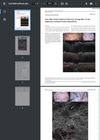 1 citations
,
October 2023 in “Skin research and technology”
1 citations
,
October 2023 in “Skin research and technology” This study found that line-field confocal optical coherence tomography effectively visualized key diagnostic features of classic lichen planopilaris in real time, suggesting its potential as a valuable diagnostic tool.
May 2017 in “The journal of investigative dermatology/Journal of investigative dermatology” In this study, researchers found potential evidence of inducible skin-associated lymphoid tissue (iSALT) in alopecia areata patients undergoing topical immunotherapy, which may suggest an essential role in treatment efficacy.
 April 2016 in “The journal of investigative dermatology/Journal of investigative dermatology”
 This study suggests that infiltrating M2 macrophages promote wound-induced hair neogenesis in mice by producing growth factors that activate the wnt signaling pathway during the late phase of wound healing.
12 citations
,
March 2021 in “JAAD Case Reports” This study reported that immunotherapy in cancer patients can lead to skin-related immune adverse events, such as rashes, pruritus, and vitiligo, affecting a substantial proportion of patients.