3 citations
,
December 2024 in “International Journal of Dermatology” This review examined the psychological effects, mechanisms, health associations, and treatments related to premature hair graying, highlighting factors like genetics, oxidative stress, smoking, and diet, with the aim of enhancing understanding and addressing its broader implications.
 2 citations
,
August 2022 in “The journal of investigative dermatology/Journal of investigative dermatology”
2 citations
,
August 2022 in “The journal of investigative dermatology/Journal of investigative dermatology” This review discusses the genetic origins of autosomal recessive woolly hair with hypotrichosis and reports no clinical results; it highlights the link to homozygous variants in the K25 keratin gene.
September 2024 in “Preprints.org” In this review, the authors propose that hair on the scalp may protect against non-melanoma skin cancer by maintaining an IL-17 biased immunosurveillance, with hair loss potentially increasing the risk of skin cancer due to disrupted immune monitoring.
July 2026 in “Journal of Investigative Dermatology” This retrospective cohort study found that individuals with alopecia totalis or universalis have a higher prevalence of systemic autoimmune diseases, particularly endocrine diseases and inflammatory bowel disease, compared to those with patchy alopecia areata.
October 2025 in “Carbohydrate Polymer Technologies and Applications” This study investigated improving Finasteride's water solubility using trimethyl-β-cyclodextrin (TM-β-CD) and β-cyclodextrin (β-CD) as carriers, finding that β-CD improved Fin's cumulative release, while TM-β-CD enhanced its solubility, with computational data supporting these outcomes.
July 2025 in “Journal of Investigative Dermatology” Ritlecitinib reduces alopecia areata symptoms by blocking JAK3/TEC signaling and T-cell activity.
July 2025 in “Carbohydrate Polymers” This study investigated the extracellular polysaccharides from the edible green alga Parachlorella sp. BX1.5, finding that they have potential applications in cosmetics and health products due to their stability, antioxidant properties, and effects on hair growth in mice.
March 2025 in “Carbohydrate Polymer Technologies and Applications” In this study, researchers developed a carboxylated β-cyclodextrin formulation to enhance finasteride's physicochemical properties, achieving an encapsulation efficiency of about 85% and indicating potential for controlled drug release in therapeutic applications. Their findings suggest this inclusion complex could improve delivery of hydrophobic drugs like finasteride.
September 2024 in “Research Repository Universitas Islam Negeri Maulana Malik Ibrahim (University of Southampton)” In this study, researchers identified an optimal shampoo formulation using Design Expert software, which showed no significant differences in viscosity and foam height, and the physical characteristics met acceptable standards, suggesting its potential for supporting hair health and preventing hair loss.
July 2024 in “Journal of Investigative Dermatology” JAK inhibitors improve hair growth in alopecia areata, especially in patchy types.
 January 2024 in “Pediatric rheumatology online journal”
 In this case report, the authors describe a child and his mother with a heterozygous STING variant linked to SAVI, who exhibited atypical disease courses and varying organ involvement, underlining the diverse clinical manifestations of SAVI.
This study found that innate lymphoid cells-type 1 (ILC1) can induce alopecia areata by disrupting hair follicle immune privilege without the involvement of classical CD8+ T cells.
This study found that innate lymphoid cells-type 1 (ILC1lc) can induce alopecia areata (AA) by disrupting hair follicle immune privilege and causing hair follicle dystrophy and regression in both ex vivo and in vivo settings.
March 2026 in “Journal for ImmunoTherapy of Cancer” This paper reports insights from an Expert Panel convened by the Society for Immunotherapy of Cancer on managing immune-related adverse events (irAEs) following immune checkpoint inhibitor therapy, highlighting surveillance gaps and the need for a comprehensive irAE registry to improve post-treatment care for cancer survivors.
 April 2023 in “Journal of Investigative Dermatology”
 In this study, researchers discovered that fat grafting helps reduce dermal fibrosis in radiation-injured mouse skin by decreasing specific fibroblast subpopulations associated with Fra/c-Jun signaling.
 39 citations
,
December 2011 in “PLoS ONE”
39 citations
,
December 2011 in “PLoS ONE” This study reported that exposure to 1,763 MHz radiofrequency radiation stimulated hair growth in vitro by inducing insulin-like growth factor-1 expression in cultured human dermal papilla cells.
 November 2023 in “Periodontology 2000”
 This narrative review examines the technological advancements and clinical applications of liquid injectable platelet-rich fibrin (i-PRF), discussing its use across regenerative periodontology, sports medicine, and more, as well as its potential as a drug delivery system.
 6 citations
,
October 2012 in “Journal of Heredity”
6 citations
,
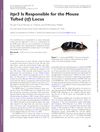
October 2012 in “Journal of Heredity” This study identified the Itpr3 gene as responsible for the tufted hair loss phenotype in the BTBR mouse strain.
3 citations
,
May 2024 in “Indian Journal of Dermatology” In this case report, researchers identified a potential adverse skin reaction, called SDRIFE or Baboon syndrome, caused by the drug tofacitinib in a 19-year-old woman being treated for alopecia subtotalis, leading the authors to recommend discontinuation of the drug.
 20 citations
,
May 2000 in “Journal of The American Academy of Dermatology”
20 citations
,
May 2000 in “Journal of The American Academy of Dermatology” This report suggests that orf infections in Brussels often occur after the Islamic Feast of Sacrifice due to the ritual sheep sacrifice, affecting both men and women handling the animals.
 44 citations
,
October 2017 in “Scientific Reports”
44 citations
,
October 2017 in “Scientific Reports” This study found that far-infrared radiation preconditioning significantly enhanced the proliferation, survival, and migration of bone marrow-derived stem cells in vitro, indicating potential therapeutic benefits for cardiac ischemia treatment.
May 2026 in “Free Radical Biology and Medicine” 9 citations
,
April 2009 in “Dermatologic surgery” Infrared light might help treat stubborn alopecia areata.
October 2021 in “Scholarworks (University of Massachusetts Amherst)” This dissertation demonstrates that FERONIA regulates essential plant functions such as RAC/ROP signaling, pollen tube reception, cell wall integrity, and sugar signaling as a cell surface receptor kinase.
 November 2023 in “The journal of investigative dermatology/Journal of investigative dermatology”
 This study found that engineered high-affinity soluble CD200R agonists, including ARQ-234, showed superior efficacy in reducing immune responses in various preclinical models of inflammatory conditions, suggesting potential as a therapeutic for atopic dermatitis and other related diseases.
 29 citations
,
May 2011 in “Journal of Cataract and Refractive Surgery”
29 citations
,
May 2011 in “Journal of Cataract and Refractive Surgery” This case report suggests a possible association between long-term finasteride use for male pattern baldness and the development of cataracts and intraoperative floppy-iris syndrome in a patient.
 January 2024 in “Materials chemistry frontiers (Online)”
 This study reviews recent advancements in near-infrared organic light-emitting diode (NIR OLED) technologies, focusing on their applications and the diverse luminescent materials used in their emissive layers.
 February 2023 in “Frontiers in Bioengineering and Biotechnology”
 This review discusses the potential of optical techniques for diagnosing and treating oxidative stress-related hepatic ischemia-reperfusion injury, highlighting the need for non-invasive diagnostic methods and the anti-oxidative potential of optical therapies; it reports no new clinical results.
4 citations
,
August 2023 in “Biomedicine & Pharmacotherapy” This study found that in noise-exposed FVB/NJ mice and cell models, ivacaftor reduced oxidative stress and hearing damage by maintaining CFTR function and increasing Nrf2 expression, suggesting its potential for treating noise-induced hearing loss.
 1 citations
,
January 2021 in “Journal of biological chemistry/The Journal of biological chemistry”
1 citations
,
January 2021 in “Journal of biological chemistry/The Journal of biological chemistry” This study found that loss of the folliculin protein delays transferrin receptor recycling, leading to iron deficiency and suggesting a role in the mechanisms of Birt-Hogg-Dubé syndrome.