 September 2023 in “Journal of The American Academy of Dermatology”
 This review discusses the use of Raman spectroscopy to evaluate drug penetration in alopecia treatments and suggests it may be a promising tool for enhancing the effectiveness of laser-assisted drug delivery.
May 2025 in “Immunotherapy” This study observed that patients with alopecia areata taking ritlecitinib reported higher satisfaction with hair growth after 24 and 48 weeks compared to those taking a placebo, aligning with improvements in hair growth noted by doctors.
 March 2026 in “The American Journal of Managed Care”
 The authors concluded that FDA-approved JAK inhibitors, shown to be safe and effective in phase 3 trials, are promising treatment options for severe alopecia areata.
 6 citations
,
February 2023 in “Advances in Therapy”
6 citations
,
February 2023 in “Advances in Therapy” This study found that patients with rheumatoid arthritis, atopic dermatitis, and alopecia areata receiving baricitinib had low incidence rates of adverse events, especially among low-risk individuals, with varying rates among those at higher risk.
9 citations
,
January 2013 in “Indian journal of dermatology, venereology, and leprology” Infliximab may cause hair loss in Crohn's disease patients.
2 citations
,
January 2004 in “Linchuang pifuke zazhi” In a reported case, the use of ZD1839 (Iressa), an EGFR tyrosine kinase inhibitor, resulted in hair changes and acneiform eruptions as cutaneous side effects.
 1 citations
,
September 2023 in “Journal of the American Academy of Dermatology”
1 citations
,
September 2023 in “Journal of the American Academy of Dermatology” This study focused on baricitinib's effect on patients with severe alopecia areata, highlighting its efficacy for hair regrowth and its potential to improve health-related quality of life and psychological symptoms, as seen in two phase 3 trials.
March 2026 in “Immunological Medicine” This review discusses the use of Janus kinase inhibitors for severe alopecia areata in Japan, noting their effectiveness in some patients but highlighting the need for new therapies due to non-responsiveness and relapse in others; it reports no new clinical results.
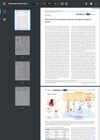 October 2023 in “International journal of rheumatic diseases”
 This study found that the JAK3/TEC kinase inhibitor ritlecitinib was effective and well tolerated in patients aged 12 and older with alopecia areata, providing a potential systemic treatment option for this condition, especially in cases of significant psychosocial impact.
 September 2024 in “Journal of the American Academy of Dermatology”
 In this study, patients with severe alopecia areata treated with baricitinib over 152 weeks experienced sustained patient-reported improvements in scalp, eyebrow, and eyelash hair regrowth, with higher responders observed in the 4mg dose group compared to the 2mg group.
December 2024 in “CONICET Digital (CONICET)” This study found that the small signaling peptide RALF22 plays a key role in root hair growth response to volatile compounds emitted by Penicillium aurantiogriseum through ethylene, auxin, and photosynthesis signaling in Arabidopsis.
This study found that serum irisin levels were significantly lower in patients with androgenetic alopecia compared to healthy controls, but no significant relationship was detected between serum irisin levels and insulin resistance markers like BMI, fasting insulin, or HOMA-IR.

JAK inhibitors, like baricitinib and ritlecitinib, show promise in treating alopecia areata effectively and safely.
128 citations
,
January 2023 in “Frontiers in Endocrinology” This review discusses recurrent implantation failure (RIF) in IVF, noting the lack of standard definitions or treatment protocols, and emphasizes the need for individualized treatment and further research.
 1 citations
,
November 2019 in “The Korea Journal of Herbology”
1 citations
,
November 2019 in “The Korea Journal of Herbology” In this study, a herbal mixture (RAA) was found to promote hair growth in mice, showing increases in hair density and follicle size similar to minoxidil treatment.
 6 citations
,
May 2023 in “Drugs”
6 citations
,
May 2023 in “Drugs” This study reports that baricitinib was more effective than placebo in promoting hair growth in adults with severe alopecia areata after 36 weeks of treatment in clinical trials.
 November 2018 in “Annals of oncology”
 This study found that the computer-controlled RV-01 scalp cooling device helped prevent significant hair loss in metastatic breast cancer patients treated with eribulin, with none of the 16 patients requiring a wig and experiencing minimal discomfort.
 2 citations
,
April 2023 in “Expert Review of Clinical Immunology”
2 citations
,
April 2023 in “Expert Review of Clinical Immunology” This review details how baricitinib successfully demonstrated significant hair regrowth in clinical trials for severe alopecia areata, now leading to its approval as the first systemic therapy for the condition, while also highlighting the importance of assessing individual risk factors for adverse events.
17 citations
,
December 2013 in “Journal of Investigative Dermatology Symposium Proceedings” The excimer laser may help hair regrow in alopecia areata patients.
January 2026 in “International Journal of Dermatology” In this study, researchers reported that treating alopecia areata patients with ritlecitinib led to progressive improvements in emotional symptoms and activity limitations over 48 weeks, though the post hoc analysis and trial setting suggest caution in interpreting the findings for broader populations.
 March 2026 in “Preprints.org”
 This study found that the MIRA technique, which customizes needle length and injection angle guided by ultrasound, improved structural and esthetic outcomes for cellulite treatment compared to standard methods.
 June 2026 in “Dove Medical Press (Taylor and Francis Group)”
 This paper reviews existing and emerging therapies for alopecia areata, describing the impact of targeted treatments in this field, and introduces a global network of disease registers to study the long-term safety and effectiveness of these new options.
March 2026 in “JID Innovations” In a mouse model study, researchers found that mutations in Aire reduced alopecia areata frequency, while Notch4 mutations did not lead to the disease, likely due to proximity with a resistance gene.
In this study, a newly designed protein degrader targeting androgen receptors showed promise in reversing hair regrowth inhibition in a mouse model of androgenetic alopecia, suggesting potential as a novel and safe treatment strategy.
 2 citations
,
February 2025 in “Applied Microbiology and Biotechnology”
2 citations
,
February 2025 in “Applied Microbiology and Biotechnology” This study suggests that Isaria cicadae Miquel rice fermentation extract may enhance regenerative wound healing of hair follicles in mouse skin through the Hippo pathway mechanism.
July 2026 in “Journal of the American Academy of Dermatology” JAK inhibitors are generally safe for treating alopecia areata.
20 citations
,
December 2021 in “Journal of the American Academy of Dermatology” This study found that the oral JAK inhibitors ritlecitinib and brepocitinib were effective in maintaining hair regrowth in alopecia areata with continuous use, though efficacy decreased after withdrawal.
6 citations
,
November 2020 in “JAAD Case Reports” This study identified overlapping genetic susceptibility loci in both alopecia areata and inflammatory bowel disease, specifically with Crohn's disease and ulcerative colitis.
September 2015 in “International Society of Hair Restoration Surgery” This project by the International Society of Hair Restoration Surgery aims to define best practices in hair restoration surgery but does not report new clinical findings.
January 2026 in “Dermatologic Therapy” This study found that elevated tissue RBP4 levels correlate with disease severity in alopecia areata and decrease after effective baricitinib treatment, while the rs3758539 polymorphism is linked to disease susceptibility but not to treatment response.