2 citations
,
November 2004 in “Hospital pharmacy” This article reviews adverse drug reactions, emphasizes methods of prevention, and encourages reporting to the FDA's medWatch program, but presents no new study findings.
 December 2025 in “Dermatology The American Medical Journal”
 In this conference session, experts reviewed clinical evidence and strategies for using JAK inhibitors in managing alopecia areata, emphasizing optimal treatment practices and individual patient considerations to enhance safety and effectiveness in real-world settings.
September 2025 in “Journal of the American Academy of Dermatology” Ritlecitinib may help treat alopecia areata by protecting hair follicles.
January 2026 in “Dermatologic Therapy” In this prospective study, ritlecitinib effectively reduced hair loss in patients with severe alopecia areata, with 43.3% of participants achieving a 20 or lower SALT score by week 24, and showed a good midterm safety profile.
 9 citations
,
July 2022 in “EMBO molecular medicine”
9 citations
,
July 2022 in “EMBO molecular medicine” This study found that targeting IL-6, IL-1, and CCR6 signaling pathways may effectively reduce irradiation-induced alopecia and dermatitis in radiotherapy patients.
 34 citations
,
July 2011 in “International journal of pharmaceutics”
34 citations
,
July 2011 in “International journal of pharmaceutics” This study found that ion-paired solutions significantly improved the skin penetration of risedronate in hairless mice compared to risedronate alone.
June 2025 in “British Journal of Dermatology” This study reviewed therapies for alopecia areata and suggests that Janus kinase inhibitors, such as baricitinib and upadacitinib, show promise in treating both alopecia areata and associated immune-mediated inflammatory diseases.
1 citations
,
September 2023 in “Journal of the American Academy of Dermatology” This study reported that most patients with alopecia areata who responded to ritlecitinib treatment by achieving a SALT score ≤20, SALT score ≤10, or improvements in eyebrow and eyelash assessments at Week 24 maintained their responses through Week 48.
 September 2022 in “Journal of The American Academy of Dermatology”
 This study found that baricitinib was effective in regrowing eyebrow and eyelash hair in patients with severe alopecia areata, with similar improvements observed in both clinician-reported and patient-reported measures.
July 2006 in “Hair transplant forum international” This abstract mentions the XI International Congress of the ISHR in Bari but reports no new research findings.
January 2026 in “Skin Health and Disease” This study conducted a survey among consultant dermatologists in Ireland to explore their use of JAK inhibitors for treating alopecia areata, acknowledging challenges posed by the lack of global guidelines and long-term safety data.
7 citations
,
October 2024 in “Journal of the American Academy of Dermatology” This source reported that patients who initially responded to ritlecitinib treatment showed sustained hair regrowth through week 48, with up to one-third of those not meeting target efficacy at week 24 also achieving a response with continued treatment.
 September 2023 in “Journal of The American Academy of Dermatology”
 This announcement discusses the recent FDA approval of baricitinib for treating severe alopecia areata in adults and reports no new clinical results.
 December 2024 in “Clinical and Experimental Dermatology”
 In this study, researchers found that ritlecitinib, a JAK3/TEC inhibitor, significantly improves hair regrowth, quality of life, and psychological well-being in patients with severe alopecia areata who had inadequate or no response to baricitinib, a JAK1/2 inhibitor.
In this study, ritlecitinib treatment for 12 and 24 weeks downregulated immunity-related genes and upregulated hair keratin genes in patients with alopecia areata, correlating with scalp hair regrowth response.
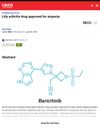 June 2022 in “C&EN global enterprise”
 This source notes that Olumiant (baricitinib), a rheumatoid arthritis drug by Eli Lilly and Company, has been approved as the first systemic treatment for severe alopecia areata.
 1 citations
,
November 2025 in “Frontiers in Immunology”
1 citations
,
November 2025 in “Frontiers in Immunology” This review explores the complex role of the Innate Immune System in rheumatoid arthritis, highlighting gaps in understanding its functions and interactions with the Adaptive Immune System, offering insights into potential biomarkers and therapeutic strategies for this challenging autoimmune condition.
 May 2026 in “Institutional Repository of the University of Granada (University of Granada)”
 This research aims to address gaps in understanding alopecia areata by evaluating the real-world effectiveness and safety of baricitinib, identifying predictors of therapeutic response, and exploring the long-term impact on life quality, including sexual health. Results are not reported in the abstract.
March 2026 in “Journal of Clinical Oncology” In this study, pre-treatment with 5-α-reductase inhibitors (finasteride/dutasteride) in patients with metastatic renal cell carcinoma was associated with better immune checkpoint inhibitor effectiveness and improved progression-free and overall survival, without increasing severe side effects.
August 2024 in “International Journal of Women’s Dermatology” This study characterizes alopecia in ARCI, highlighting its prevalence among patients with severe forms and revealing new associated trichoscopic features.
 December 2024 in “Animals”
 In this study, researchers found that RORA directly regulates the expression of the Bnip3 gene, which is crucial for hair follicle stem cell health, using rat HFSCs as a model. They propose that targeting RORA could modulate HFSC status.
 March 2025 in “SKIN The Journal of Cutaneous Medicine”
 Certain patient characteristics can help predict hair regrowth success with ritlecitinib in alopecia areata.
36 citations
,
December 2021 in “The journal of allergy and clinical immunology/Journal of allergy and clinical immunology/The journal of allergy and clinical immunology” This study observed that both ritlecitinib and brepocitinib improved scalp biomarkers in patients with alopecia areata, with associations to hair regrowth seen in this phase 2a trial.
 January 2022 in “Turkiye Klinikleri Journal of Dermatology”
 This study found that the Turkish version of the Multidimensional Assessment of Interoceptive Awareness-2 Scale is valid and reliable for use with Turkish dermatology patients.
 1 citations
,
March 2024 in “Skin health and disease”
1 citations
,
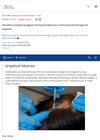
March 2024 in “Skin health and disease” This study found that vibration assisted analgesia reduced pain during intralesional corticosteroid therapy for hair loss, enabling treatment in a broader range of patients, including those with needle phobia.

Baricitinib helps regrow hair in teens with severe alopecia areata.
 August 2021 in “Revista Colombiana de Reumatología/Revista Colombiana de Reumatologia”
 This case study reported that a 24-year-old patient with severe, treatment-resistant alopecia areata experienced excellent clinical improvement after one month of treatment with tofacitinib, a JAK inhibitor.
1 citations
,
August 2024 in “British Journal of Dermatology” This study found that after 15 months of treatment with ritlecitinib, patients with alopecia areata and less than 95% initial hair loss experienced significant hair regrowth, though those with more extensive hair loss showed more variable improvement.
 September 2023 in “Journal of The American Academy of Dermatology”
 This review discusses the use of Raman spectroscopy to evaluate drug penetration in alopecia treatments and suggests it may be a promising tool for enhancing the effectiveness of laser-assisted drug delivery.
May 2025 in “Immunotherapy” This study observed that patients with alopecia areata taking ritlecitinib reported higher satisfaction with hair growth after 24 and 48 weeks compared to those taking a placebo, aligning with improvements in hair growth noted by doctors.