 April 2026 in “Frontiers in Medicine”
 In this case report, a female patient with both psoriasis and lichen planus initially responded to acitretin and topical mometasone but experienced a relapse after stopping the treatment. The authors reported marked improvement within 3 months after switching to upadacitinib, aiming to guide clinical decision-making.
January 2026 in “Medicina” This review found that oral JAK inhibitors, used off-label in various inflammatory skin disorders, often resulted in rapid and sustained clinical improvements with acceptable safety over several months, although the evidence is drawn from case-based reports.
 6 citations
,
August 2013 in “Joint Bone Spine”
6 citations
,
August 2013 in “Joint Bone Spine” Tocilizumab treatment was associated with significant hair regrowth in one patient and temporary hair loss followed by regrowth in another.

Infliximab was effective in treating a scalp condition that did not respond to other treatments.
 3 citations
,
April 2016 in “Journal of The American Academy of Dermatology”
3 citations
,
April 2016 in “Journal of The American Academy of Dermatology” A woman had a severe skin reaction from the drug imiquimod, used for skin cancer, highlighting the need for awareness of rare but serious side effects.
 21 citations
,
September 2010 in “Archives of Dermatology”
21 citations
,
September 2010 in “Archives of Dermatology” This document provides a legal disclaimer and offers no research findings.
12 citations
,
July 2023 in “Journal of the European Academy of Dermatology and Venereology” Upadacitinib improved Crohn's disease, atopic dermatitis, and alopecia areata in one patient.
20 citations
,
January 2024 in “Journal of the European Academy of Dermatology and Venereology” This study conducted a meta-analysis and found that among therapies for alopecia areata, baricitinib_4 mg was most likely to be effective, followed by ritlecitinib and ivarmacitinib, while other treatments like dupilumab and secukinumab were less effective.
 123 citations
,
September 1987 in “JAMA”
123 citations
,
September 1987 in “JAMA” This study observed that patients receiving IL-2 immunotherapy developed a skin eruption characterized by burning and pruritus, which resolved shortly after stopping the infusion, suggesting that IL-2 mediated these effects.
October 2025 in “Frontiers in Medicine” This study confirmed known adverse events and identified new ones related to ixekizumab, offering preliminary safety insights for its clinical use, but noted limitations such as potential underreporting and confounding factors in the spontaneous adverse event reporting systems.
11 citations
,
August 2021 in “Stem Cell Research & Therapy” This study found that coadministration of pimecrolimus may interfere with the therapeutic efficacy of mesenchymal stem cell therapy in atopic dermatitis.
 12 citations
,
March 2016 in “Life Sciences”
12 citations
,
March 2016 in “Life Sciences” This review discusses the potential of combined therapy with WP 631 and epothilone B for ovarian cancer, but reports no new clinical results.
1 citations
,
March 2023 in “Journal of Drugs in Dermatology” This study reported that dupilumab, a human monoclonal antibody, induced hair regrowth in patients with alopecia totalis, suggesting its potential as a treatment for this condition.
33 citations
,
January 2019 in “Acta Dermato Venereologica” This case report suggests potential effectiveness of dupilumab for alopecia areata, though hair regrowth may result from indirect effects on inflammation in atopic dermatitis.
 September 2022 in “XXXIX Congresso Brasileiro de Reumatologia”
 In this case report, a 42-year-old woman with cutaneous dermatomyositis showed significant improvement, including reduction of erythema, pruritus, and scaling, after starting JAK inhibitor tofacitinib, especially when conventional systemic treatments failed and intravenous immune globulin wasn't viable.
24 citations
,
March 2022 in “Journal of the American Academy of Dermatology” Adalimumab improved folliculitis decalvans in most patients.
June 2026 in “JEADV Clinical Practice” This review synthesizes cases of biopsy-confirmed alopecia areata occurring in patients using IL-17 or IL-23 inhibitors, suggesting the need for increased awareness and further investigation into this rare adverse event.
2 citations
,
January 2025 in “Journal of Oncology Pharmacy Practice” This case study reports a rare instance of pembrolizumab-induced eyelash trichomegaly in a 63-year-old male patient, highlighting the importance for clinicians to be aware of such uncommon adverse effects to manage patient treatment effectively.
 9 citations
,
July 2018 in “European Journal of Dermatology”
9 citations
,
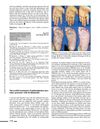
July 2018 in “European Journal of Dermatology” Brodalumab effectively treated a man's severe hand and foot psoriasis.
 May 2015 in “Journal of The American Academy of Dermatology”
 This study suggests that blood microarray biomarkers may help predict individual treatment response in psoriasis patients, highlighting a distinct blood signature related to inflammation, interferon, and myeloid lineage transcripts.
 19 citations
,
November 2016 in “Dermatology and therapy”
19 citations
,
November 2016 in “Dermatology and therapy” This study describes a case where stopping infliximab and using oral minocycline with topical treatments effectively resolved alopecia and scalp psoriasis in a woman with Crohn's disease.
2 citations
,
May 2008 in “Journal of Clinical Oncology” This study found that patients with unresectable melanoma treated with AZD6244 experienced skin reactions, including depigmentation and papulopustular rashes, in patterns similar to those caused by EGFR inhibitors.
 2 citations
,
February 2014 in “Journal of Crohn's and colitis”
2 citations
,
February 2014 in “Journal of Crohn's and colitis” This study observed that 6.45% of IBD patients treated with anti-TNF therapy developed severe psoriasiform reactions, with notable cases of alopecia universalis suggesting a potential link to previous alopecia areata.
 April 2026 in “Clinical Journal of Gastroenterology”
 In this case report, a woman with ulcerative colitis experienced clinical deterioration during upadacitinib therapy, which improved after discontinuation, strongly suggesting drug hypersensitivity to the Janus kinase inhibitor as a potential cause for her symptoms.
16 citations
,
June 2018 in “JAAD case reports” This article reviews the differences in inflammatory processes between alopecia universalis and atopic dermatitis, focusing on type 1 and type 2 immune responses, but it reports no new results.
November 2025 in “Journal of Investigative Dermatology” January 2026 in “Journal of Investigative Dermatology” This study found that 3D imaging may serve as a promising tool for objectively evaluating facial vitiligo repigmentation after treatment with upadacitinib.
2 citations
,
December 2024 in “Journal of Dermatological Treatment” This review suggests that IL-23 inhibitors may be effective for various non-psoriatic inflammatory skin conditions, but emphasizes the need for further large-scale trials to confirm their efficacy and safety.
2 citations
,
February 2023 in “Actas Dermo-Sifiliográficas” Baricitinib effectively improved both atopic dermatitis and alopecia areata symptoms in a patient.
 1 citations
,
June 2020 in “Annals of the rheumatic diseases”
1 citations
,
June 2020 in “Annals of the rheumatic diseases” In this study, 93% of patients with inflammatory arthritis remained on the adalimumab biosimilar ABP 501 for 24 weeks after switching from the originator, with some switching back due to adverse reactions or reduced effectiveness.