 4 citations
,
June 2021 in “Wounds-a Compendium of Clinical Research and Practice”
4 citations
,
June 2021 in “Wounds-a Compendium of Clinical Research and Practice” This study observed that erosive pustular dermatosis of the scalp in elderly patients was effectively treated with high-potency topical steroids, with plasma and lymphocyte dermal infiltrates helping to confirm diagnosis.
38 citations
,
January 2017 in “PPAR Research” This review discusses the role of PPAR-γ in the pathogenesis of primary cicatricial alopecia, including its involvement in lichen planopilaris and treatment trials using PPAR-agonists, and reports no new clinical results.
 3 citations
,
January 2005 in “Biological & Pharmaceutical Bulletin”
3 citations
,
January 2005 in “Biological & Pharmaceutical Bulletin” This study reports that the peptide GPIGS, found in Bacillus sp. M18 conditioned medium, may promote hair growth through the PI-3K/Akt pathway and accelerate hair regrowth in mice.
November 2001 in “Oncology Times” The committee unanimously voted against recommending approval of the injectable cisplatin/epinephrine gel IntraDose for certain head and neck cancer patients, citing insufficient clinical benefit and concerns about toxicity in this study.
1 citations
,
July 2022 in “Journal of Cataract and Refractive Surgery” This meta-analysis reports that male sex, hypertension, tamsulosin, finasteride, benzodiazepines, and antipsychotics are significantly associated with increased risk of developing intraoperative floppy-iris syndrome during cataract surgery.
 January 2005 in “Elektronische Hochschulschriften der LMU München (Ludwig-Maximilians-Universität München)”
 This study found that a significant portion of alopecia areata patients achieved at least partial hair regrowth with diphenylcyclopropenon therapy, which was more effective in certain subtypes and disease durations.
April 2026 in “Clinical and Experimental Dermatology” This study found that treating moderate-to-severe prurigo nodularis with dupilumab significantly improved itch severity, skin condition, and quality of life over 104 weeks, with a favorable safety profile, even in elderly and comorbid patients.
14 citations
,
January 2015 in “Korean Journal of Pediatrics” This article reviews the importance of monitoring nutritional aspects like growth and anemia in pediatric inflammatory bowel disease, reporting no new research findings.
December 2024 in “Journal of Investigative Dermatology” The conference highlighted new treatments and research in pediatric skin conditions, emphasizing collaboration and innovation.
February 2024 in “bioRxiv (Cold Spring Harbor Laboratory)” This study found that Pik3r1 Y657* mice, which model human SHORT syndrome, show increased energy expenditure despite insulin resistance, but this is not due to changes in locomotion, thermoregulation, or Ucp1-dependent thermogenesis, suggesting a different metabolic mechanism may protect against lipotoxicity.
April 2024 in “Surgical Techniques Development” This article describes the significance of the Italian Association of Plastic Aesthetic Surgery's annual congress in European aesthetic plastic surgery, but reports no new research findings.
April 2020 in “Journal of the Endocrine Society” This case report describes a 34-year-old woman with pituitary stalk interruption syndrome, highlighting the need for long-term follow-up due to potential progression from isolated hormonal deficiencies to pan-hypopituitarism.
April 2024 in “Актуальні питання педіатрії акушерства та гінекології” This study concluded that inositol use in women with polycystic ovary syndrome and obesity may improve metabolic profiles and reproductive function as part of a comprehensive treatment approach.
 23 citations
,
August 2018 in “Biochimica and biophysica acta. Molecular and cell biology of lipids”
23 citations
,
August 2018 in “Biochimica and biophysica acta. Molecular and cell biology of lipids” This article reviews the roles of lesser-known secreted phospholipase A2 isoforms in various biological processes, such as immune suppression, metabolic regulation, epidermal hyperplasia, and male reproduction, without reporting new clinical findings.
5 citations
,
July 2024 in “Journal of Microbiology and Biotechnology” This study investigated autophagy activator ICP5249 and found it promotes hair growth by enhancing cell proliferation and autophagy-related markers in human dermal papilla cells and hair follicles, with AMPKα playing a regulatory role, suggesting its potential as a hair growth ingredient.
26 citations
,
September 2009 in “Clinical genetics” This study identified four novel and one recurrent mutation in the AIRE gene among Arab families with APS1, suggesting these contribute to the disorder.
 22 citations
,
February 2017 in “Clinical and Experimental Dermatology”
22 citations
,
February 2017 in “Clinical and Experimental Dermatology” This study suggests that icariin promotes hair follicle growth in mice by enhancing IGF-1 expression in dermal papilla cells.
November 2022 in “Journal of Investigative Dermatology”  10 citations
,
January 2019 in “Advances in Clinical and Experimental Medicine”
10 citations
,
January 2019 in “Advances in Clinical and Experimental Medicine” This meta-analysis reported a significant association between vitamin D receptor gene ApaI polymorphism and polycystic ovary syndrome risk, with variations observed between Asian and Caucasian populations.
 278 citations
,
March 2013 in “Gut”
278 citations
,
March 2013 in “Gut” In this study, nearly 5% of anti-TNF-treated patients with IBD developed psoriasiform skin lesions, with smoking identified as a main risk factor, and ustekinumab proved highly effective in severe cases.
 4 citations
,
September 2013 in “Expert Review of Endocrinology & Metabolism”
4 citations
,
September 2013 in “Expert Review of Endocrinology & Metabolism” Different types of polycystic ovary syndrome show varying levels of insulin resistance, with the 'PHO' type being the most insulin resistant.
October 2022 in “The Laryngoscope” The InCISE score is a promising tool for assessing wound healing in head and neck surgery but needs more research for broader use.
 April 2018 in “Journal of Investigative Dermatology”
 In this animal study, the researchers found that DPP4 plays a crucial role in scar formation and wound-induced hair follicle neogenesis in mice, impacting regenerative repair.
 November 2022 in “Pakistan Armed Forces Medical Journal”
 This study found that intense pulse light and diode laser treatments were similarly effective and tolerable for reducing unwanted facial hair in female patients with hirsutism, with no significant differences in hair reduction, adverse effects, or patient satisfaction between the two methods.
8 citations
,
July 2024 in “Journal of Advanced Research” In this study, researchers report that CDK inhibitors like palbociclib and ribociclib, initially developed for cancer therapy, show potential in treating neutrophilic inflammation-related conditions such as ARDS and psoriasis, although their clinical repurposing requires further research on safety and dose adjustments.
 11 citations
,
August 2019 in “Journal of Molecular Histology”
11 citations
,
August 2019 in “Journal of Molecular Histology” This study found that upregulation of NFIC may enhance proliferation and osteogenic/cementogenic differentiation in rat dental follicle cells.
 4 citations
,
May 2025 in “npj Parkinson s Disease”
4 citations
,
May 2025 in “npj Parkinson s Disease” This study identified peripheral myeloid cells as the earliest dysregulated immune cells in PINK1 KO mice with Parkinson’s-like symptoms following intestinal infections, suggesting that PINK1 regulates gut immune functions linked to early Parkinson’s disease mechanisms.
 11 citations
,
January 2012 in “International Journal of Endocrinology”
11 citations
,
January 2012 in “International Journal of Endocrinology” In this study, the prevalence of insulin resistance in reproductive-aged Thai women with polycystic ovary syndrome was found to be 20%, with age, waist circumference, acanthosis nigricans, and dyslipidemia as significant predictors.
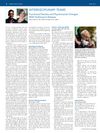
The interdisciplinary approach improved the quality of life for a Parkinson's patient and eased staff workload.