August 2025 in “Al-Iraqia Medical College Journal” This study found that among eight RNA viruses, susceptibility to infection is directly related to heat tolerance and virus size, while inversely related to high humidity and mutation rate. Additionally, larger viruses had higher mutation rates.
 11 citations
,
September 2016 in “Journal of virological methods”
11 citations
,
September 2016 in “Journal of virological methods” In this study, rabies virus antigens were detected in the outer root sheath of the follicle-sinus complex in the muzzle skin of rabid dogs, suggesting its usefulness as an alternative diagnostic specimen.
 February 2025 in “Infectious Diseases & Immunity”
 This case report highlights two instances of suspected human herpesvirus 6 reactivation in patients with existing psychiatric disorders, underscoring the need for further research into the relationship between viral reactivation and psychiatric conditions.
55 citations
,
May 2007 in “Australasian journal of dermatology” This case report describes the characteristic clinicopathological features of trichodysplasia spinulosa in two boys with acute lymphocytic leukemia, highlighting its resolution as immune function normalizes.
7 citations
,
February 2002 in “Veterinary Dermatology” This study found that intracorneal vacuoles were common in various parakeratotic skin diseases in dogs, but large vacuoles were exclusively observed in congenital follicular parakeratosis.
8 citations
,
September 2023 in “International Journal of Nanomedicine” In this study, researchers developed an in vitro airway-organoid model using human lung-derived cell lines on RADA16-I hydrogels to serve as a potential tool for studying adenovirus isolation, pathogenesis, and antiviral drug screening.
 39 citations
,
June 1982 in “The BMJ”
39 citations
,
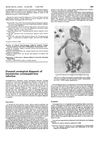
June 1982 in “The BMJ” Blood tests confirmed a baby in the womb had a CMV infection.
 133 citations
,
May 2016 in “Cell Host & Microbe”
133 citations
,
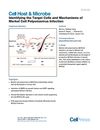
May 2016 in “Cell Host & Microbe” In this study, human dermal fibroblasts were identified as natural host cells that support productive Merkel cell polyomavirus infection, and the MEK antagonist trametinib was introduced as an effective inhibitor to control the virus.
2 citations
,
October 2025 in “Antimicrobial Agents and Chemotherapy” This study found that cepharanthine may be a promising treatment for enterovirus infections, as it offered full protection to mice against lethal EV71 challenges and reduced viral titers and pathology.
16 citations
,
April 2000 in “Journal of Investigative Dermatology” The study reports that the AVET system showed higher efficiency in transfecting cultured human keratinocytes compared to SuperFect and PrimeFector, with AVET reaching levels of enzyme activity similar to normal cells in keratinocytes from lamellar ichthyosis patients.
 21 citations
,
January 2022 in “Biomaterials Science”
21 citations
,
January 2022 in “Biomaterials Science” This article reviews CRISPR/Cas system delivery methods for genome editing and highlights RNA's promise in non-viral in vivo applications but reports no new clinical results.
July 2022 in “Journal of Investigative Dermatology”  1 citations
,
October 2024 in “Journal of Clinical Immunology”
1 citations
,
October 2024 in “Journal of Clinical Immunology” This study observed that adult Netherton syndrome patients showed a range of normal to diminished immune responses to polysaccharide, conjugate, and mRNA-based vaccines, with responses generally overlapping those of healthy controls, suggesting no consistent B- or T-cell immunodeficiency in this population.
 26 citations
,
December 2022 in “Journal of the American Academy of Dermatology”
26 citations
,
December 2022 in “Journal of the American Academy of Dermatology” This study observed that epidermal necrosis and keratinocytic ballooning are consistent histopathologic signs of monkeypox in skin lesions, reinforcing the diagnostic value of histopathologic and immunohistochemical analyses.
December 2018 in “European Journal of Pediatric Dermatology/PD. European journal of pediatric dermatology” This article discusses the potential involvement of hair follicle melanocytes in follicular vitiligo, noting a pattern of depigmentation centered on follicles and supported by inflammatory infiltrates, without reporting new clinical results.
30 citations
,
June 1993 in “The Journal of Cell Biology” This study found that transgenic mice expressing a mutant E1a oncoprotein in their skin had disturbed hair follicle maturation but did not show increased tumor development or proliferation.
28 citations
,
March 2019 in “Cellular Microbiology” This review discusses the advancements enabled by intravital microscopy in understanding host-parasite interactions in living animals and reports no new clinical results.
 52 citations
,
October 2010 in “Antiviral Therapy”
52 citations
,
October 2010 in “Antiviral Therapy” This review discusses recent advances in monophosphate prodrug strategies for HCV drug discovery, aiming to enhance oral absorption and stability, and reports no new clinical results.
2 citations
,
February 2025 This study demonstrates that an iPSC-derived skin organoid model effectively supports Merkel cell polyomavirus infection, persistence, and immune evasion, providing a valuable platform for studying viral tumorigenesis and testing treatment strategies.
116 citations
,
April 1986 in “The journal of cell biology/The Journal of cell biology” This study reports that a 190,000 molecular weight protein, identified as trichohyalin, may play a matrix role in the development of inner root sheaths in hair follicles.
 1 citations
,
November 2025 in “Wiener Medizinische Wochenschrift”
1 citations
,
November 2025 in “Wiener Medizinische Wochenschrift” This study reports a case of fatal HHV-6 encephalitis and vasculitis in a previously healthy 49-year-old male, highlighting the occurrence of this condition even in individuals without typical risk factors, such as immunocompromised status.
 12 citations
,
November 2014 in “Journal of Cutaneous Medicine and Surgery”
12 citations
,
November 2014 in “Journal of Cutaneous Medicine and Surgery” This report describes a case where oral valganciclovir treatment led to improved skin texture and hair regrowth in a patient with trichodysplasia spinulosa.
25 citations
,
July 1994 in “Journal of Cell Science” This study found that polyomavirus large T-immortalized rat dermal papilla cells retain hair-inductive ability and provide a viable model for studying hair growth and cytokine expression.
 April 2018 in “Journal of Investigative Dermatology”
 In this study, researchers identified CENPV as a new CYLD interacting partner that localizes to primary cilia and regulates acetylated tubulin levels, offering insights into the pathogenesis of skin appendage tumors.
6 citations
,
February 2009 in “Journal of Investigative Dermatology” 5 citations
,
August 2021 in “Experimental dermatology” This study suggests that Merkel cell polyomavirus T antigen-positive cells resembling Merkel cell carcinoma may originate from epithelial cells in human hair follicles, potentially informing future transgenic mouse models for this cancer.
10 citations
,
November 2018 in “bioRxiv (Cold Spring Harbor Laboratory)” This study introduced laser particles as a new imaging probe capable of real-time tracking of thousands of individual cells in 3D tumor models, suggesting potential for advanced single-cell analyses.
 3 citations
,
January 2008 in “Journal of the American Academy of Dermatology”
3 citations
,
January 2008 in “Journal of the American Academy of Dermatology” A patient's skin rash did not affect the area where a previous viral rash was healing, suggesting a rare immune response.
11 citations
,
June 1974 in “Journal of Cutaneous Pathology” In this study, electron microscopy of follicular mucinosis showed severe cytoplasmic degeneration in hair follicles, with myelin figures and onion-like lamellar structures, but no indications of mucin release through degeneration or degradation were found.

This study explored new molecular structures as potential COVID-19 treatments, identifying a compound called Hit15 that inhibited viral infection in lab settings and reduced inflammation markers in human neutrophils, suggesting further development is warranted.