 1 citations
,
September 2009 in “Regenerative Medicine”
1 citations
,
September 2009 in “Regenerative Medicine” This article provides an overview of bioaesthetics in regenerative medicine, emphasizing the need for rigorous scientific validation for safety and effectiveness without introducing new research results.
 1 citations
,
November 2008 in “Gerontology”
1 citations
,
November 2008 in “Gerontology” This article discusses the increasing use of lifestyle drugs by healthy individuals to alter appearance or slow aging and emphasizes the need for doctors to consider side effects and contraindications, but it reports no new clinical findings.
 July 2026 in “Quality in Sport”
 This narrative review highlights that endurance, skill-oriented athletes, and physique-oriented competitors such as bodybuilders face accelerated degradation of fillers and botulinum neurotoxin due to elevated basal metabolic rates and other factors, and raised concerns about psychological conditions like body dysmorphic disorder in these populations.
 June 2026 in “Reports of Morphology”
 This study on female Wistar rats with stress-induced alopecia found that a modified diet rich in antioxidants and nutrients reduced dystrophic skin changes and preserved the functional activity of hair follicles, suggesting dietary approaches may support hair restoration under chronic stress conditions.
 June 2026 in “Frontiers in Bioengineering and Biotechnology”
 This review outlines the transition from simple hair follicle organoids to immune-competent microphysiological systems, addressing limitations in replicating native hair follicle immune features and discussing their applications in disease modeling and regenerative medicine.
 June 2026 in “Lasers in Medical Science”
 This randomized trial found that diode laser achieved more favorable long-term hair removal outcomes but induced more discomfort and transient adverse effects compared to intense pulsed light in women with Fitzpatrick skin types I-IV.
 May 2026 in “Organoid Research”
 This review highlights recent advancements in the engineering of skin organoids using hydrogels, which improve their structural and functional fidelity by supporting the architecture and integration of vascular and neural components, promising to enhance regenerative medicine, drug discovery, and complex skin disorder studies.
 May 2026 in “Organoid Research”
 This review discusses recent advancements in hair follicle organoid technology for alopecia treatment but presents no new experimental results, emphasizing the potential for clinical applications and drug screening.
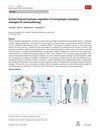
This review highlights that surface mechanical regulation can program macrophage behavior through specific mechanical cues on material surfaces, potentially advancing immunotherapies and regenerative medicine by enabling precise control over macrophage functions.
 April 2026 in “Microsystems & Nanoengineering”
 This study developed HA-gel-dex hydrogels with enhanced ECM-like properties and functionality, showing promise for 3D bioprinting, tissue repair, and as wound dressings due to improved cell interaction, cytocompatibility, antimicrobial synergy, and wound healing in mice compared to traditional ECM bio-inks.
 April 2026 in “Journal of Education Health and Sport”
 This thesis review found that invasive methods like PRP and hair transplantation can significantly improve hair quality and density in androgenetic alopecia, though effectiveness and safety vary by technique.
 April 2026 in “International Journal of Nanomedicine”
 This review explores quercetin's potential in multifunctional theranostic systems, highlighting its bioactivity and the challenges of improving its clinical application through innovative strategies like nanoencapsulation, while noting that research in this area is underdeveloped.
 March 2026 in “Collagen and Leather”
 This study found that a newly developed supramolecular FPC hydrogel effectively promotes wound healing through its anti-inflammatory and angiogenic properties, making it a promising material for wilderness first aid due to its storage convenience, sprayability, and ability to speed up wound recovery.
 March 2026 in “Panacea Journal of Medical Sciences”
 This study evaluated 23 cases of MRKH syndrome undergoing neo-vaginal reconstruction using islanded pudendal thigh flaps, finding a 100% flap survival and patency rate, along with satisfactory functional and aesthetic outcomes despite minor issues like hair growth in some patients.
 March 2026 in “Frontiers in Pharmacology”
 The study concluded that the Exprecell™ device for preparing anticoagulant-free f-PRF increases volume yield and simplifies the process while maintaining biological activity comparable to conventional methods, suggesting potential clinical utility.
 February 2026 in “MedScien”
 This study found that mesenchymal stem cells mainly promote skin regeneration and delay aging through paracrine activity, releasing growth factors and cytokines that protect against oxidative stress and stimulate healing.
 February 2026 in “Frontiers in Materials”
 In this study, researchers developed iron-curcumin-coordinated nanoparticles to enhance curcumin's bioavailability and therapeutic effects, finding that these nanoparticles accelerate wound healing in diabetic mice by reducing inflammation and oxidative stress more effectively than free curcumin.
 February 2026 in “Frontiers in Medical Technology”
 This review discusses current knowledge of keratinocyte stem cell dynamics, including their regenerative roles and potential applications beyond wound healing, but presents no new clinical findings.
This study on alopecia areata meta-analyses highlights the risk of misleading results when ineffective, unsafe, or unapproved dosing regimens are included, recommending methodological safeguards to ensure accurate data interpretation and avoid inappropriate causal inferences.
 January 2026 in “Frontiers in Cell and Developmental Biology”
 This review discusses the molecular mechanisms and clinical applications of autologous platelet-derived products for TMJ regeneration, but reports no new clinical results.
 January 2026 in “International Journal of Applied Pharmaceutics”
 This study found that a hair tonic containing 10% mesenchymal stem cell secretome significantly increased hair density in volunteers with alopecia after eight weeks, suggesting its potential as an effective treatment option for hair growth stimulation.
 January 2026 in “Clinical Cosmetic and Investigational Dermatology”
 This expert opinion article presents insights from dermatologists and aesthetic physicians on using polynucleotides (Rejuran®) for skin hydration, rejuvenation, structural support, barrier repair, and scar remodeling, noting their favorable safety profile but highlighting the need for more robust evidence and research.
 December 2025 in “ADMET & DMPK”
 This review synthesizes recent research to propose a precision framework for treating androgenetic alopecia and alopecia areata based on genetic insights and pathway biology, highlighting the roles of androgen-receptor signaling, immune dysregulation, and emerging therapies like regenerative medicine and AI-assisted diagnostics.
 November 2025 in “IECCMEXICO”
 This review found that adipose-derived stem cells and stromal vascular fraction have robust clinical benefits in aesthetic surgery, particularly in facial rejuvenation, scar treatment, and volumetric restoration, with favorable safety profiles.
This study found that platelet-rich plasma might support brain health by enhancing glial cell function and modulating immune responses in inflammation, indicating potential as a treatment for brain disorders.
 October 2025 in “Journal of Translational Medicine”
 This literature review discusses the challenges and potential strategies for creating fully functional hair follicles capable of active cycling, emphasizing the molecular mechanisms, signaling pathways, and innovative regenerative techniques, such as hair micropatterning and three-dimensional printing, crucial for optimizing hair follicle regeneration.
 September 2025 in “Journal of Dermatology Research Reviews & Reports”
 This study found that men aged 33 to 44 with androgenetic alopecia experienced significant hair improvement over 7 months after treatment with autologous cells using the Rigenera® system, as evaluated by HairMetrix® technology.
 September 2025 in “Journal of Pakistan Association of Dermatologists”
 This study compared the effectiveness of adding Biotin supplements to PRP treatment against using PRP alone for androgenetic alopecia patients and found no additional benefits in hair regrowth when Biotin was included.
 August 2025 in “Fabad Journal of Pharmaceutical Sciences”
 This review highlights that bicalutamide, a non-steroidal antiandrogen used in prostate cancer treatment, is mainly effective through its (R)-enantiomer and emphasizes the need to monitor its adverse effects despite its targeted antiandrogenic action.

In this case report, the authors described a patient who developed postoperative pressure alopecia one month after a lengthy surgery, emphasizing the importance of primary prevention to minimize patient distress from this preventable complication.