 3 citations
,
September 2016 in “Hair transplant forum international”
3 citations
,
September 2016 in “Hair transplant forum international” This abstract discusses the growing popularity of follicular unit extraction in hair restoration surgery but offers no clinical findings.
 December 2023 in “Clinical, cosmetic and investigational dermatology”
 This study found that no-shave long hair-follicular unit excision using a skin-responsive device, without recess-tipped punches, yielded low graft transection and shaft break rates, improved procedure speed, and increased surgeon willingness.
February 2025 in “Jurnal Kedokteran Brawijaya” This study evaluated the efficacy of various skin graft types for burn injury healing, finding that xenografts had the highest repigmentation rate (87.50%), while device-facilitated autologous skin cell transplantation showed outstanding efficacy in reepithelialization, highlighting its potential in clinical practice.
 4 citations
,
April 2000 in “Plastic and Reconstructive Surgery”
4 citations
,
April 2000 in “Plastic and Reconstructive Surgery” The document suggests fixing common hair transplant issues by combining artistic principles with plug reduction, recycling, and additional micrograft transplantation, while also potentially using arnica to help with post-operative swelling.
 August 1998 in “Dermatologic Surgery”
 Dr. George A. Farber recommends using follicular unit transplantation for hair restoration because it gives a more natural look and has fewer problems compared to the older miniflap technique.
 3 citations
,
October 2010 in “Dermatologic Surgery”
3 citations
,
October 2010 in “Dermatologic Surgery” The new surgical technique for vitiligo is effective, safe, and cost-efficient.
 2 citations
,
January 2015 in “Hair therapy & transplantation”
2 citations
,
January 2015 in “Hair therapy & transplantation” This study reports that both prolene and staplers are effective for closing the donor area in hair transplants, but staplers offer convenience and time efficiency.
 August 2026 in “npj Regenerative Medicine”
 This study found that hair follicle micro-graft transplantation significantly improved scar remodeling outcomes in 40 patients, with greater reductions in scar volume, lower scar scores, and enhanced skin characteristics compared to punch excision alone, potentially due to activation of the PI3K-AKT pathway.
 2 citations
,
January 2001 in “Dermatologic Surgery”
2 citations
,
January 2001 in “Dermatologic Surgery” This study concluded that poliglecaprone 25 sutures may result in less postoperative discomfort and narrower scar formation compared to metal staples in hair transplantation donor site closures.
 July 2025 in “Bulgarian Portal for Open Science”
 In this study, researchers explained that healing of extensive skin defects involves granulation filling the wound cavity, followed by epithelialization from skin edges and hair follicles, which are crucial steps in wound healing.
 18 citations
,
March 2018 in “Archives of Plastic Surgery”
18 citations
,
March 2018 in “Archives of Plastic Surgery” This article reviews the use of superficial temporal artery island flaps for facial reconstruction and provides a systematic approach for managing composite facial defects, reporting no major complications in 72 patients.
29 citations
,
September 2019 in “Stem Cells International” This study observed that a treatment combining platelet-rich fibrin and micrograft spray-on skin led to rapid and complete wound healing in both massive and chronic burn patients within an average of 7-10 days.
6 citations
,
March 2010 in “Journal of plastic, reconstructive & aesthetic surgery” This article reviews the evolution of syndactyly repair techniques, highlighting a shift towards graftless approaches to avoid complications associated with skin grafts, but reports no new clinical outcomes.
 January 2009 in “Indian Journal of Plastic Surgery”
 This study evaluated surgical methods for treating cicatricial alopecia and found that factors such as size, location, and shape are crucial in deciding the approach, with good outcomes seen in 18 out of 24 patients.
 2 citations
,
April 2014 in “International Wound Journal”
2 citations
,
April 2014 in “International Wound Journal” The authors reported that V-Y-S plasty was a safe one-stage method for reconstructing very large scalp alopecia following burns or surgeries.
 10 citations
,
May 2012 in “Journal of Plastic Reconstructive and Aesthetic Surgery”
10 citations
,
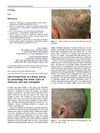
May 2012 in “Journal of Plastic Reconstructive and Aesthetic Surgery” This article discusses various methods for minimizing and repairing strip scars from follicular unit hair transplants but reports no new clinical results.
 August 1998 in “Dermatologic Surgery”
 Follicular unit hair transplantation is better than Miniflap Hair Restoration due to less scarring and more natural results.

Scalp flaps in hair restoration surgery provide immediate results, prevent temporal hair loss, offer great density, and allow for large hair re-allocation, making them a popular choice, especially in Asian countries.
 March 2024 in “Authorea (Authorea)”
 This retrospective case series reports on the use of STRAVIX PL, a shelf-stable human umbilical tissue allograft, in managing recurrent pilonidal cyst wounds, suggesting potential benefits in reducing recurrence and providing durable wound coverage compared to traditional methods.
4 citations
,
January 2000 in “Durham e-Theses (Durham University)” This study found that anagen skin in PVG rats showed significantly smaller wound diameters compared to telogen skin at 7 and 8 days after wounding, suggesting the importance of hair follicle dermal components in wound healing.
January 2024 in “Skin Appendage Disorders” This source reports that SET may offer notable cosmetic improvements and enhance well-being for patients with CA, serving as a cost-effective treatment option either alone or alongside hair transplantation.
88 citations
,
January 2010 in “Escritura pública” This article discusses the combined use of strip method and FUE techniques for hair transplantation along with a real-time intraoperative calculation model to reduce graft over-extraction and wastage, but reports no new clinical results.
 26 citations
,
February 2011 in “Journal of Plastic Reconstructive and Aesthetic Surgery”
26 citations
,
February 2011 in “Journal of Plastic Reconstructive and Aesthetic Surgery” Technique effectively treats deformities, achieves re-pigmentation, and releases scar contractures.
This review discusses the authors' approach to reconstructing scalp and neurocranial defects and reports no new clinical results.
 9 citations
,
January 1974 in “Leprosy Review”
9 citations
,
January 1974 in “Leprosy Review” This article discusses the various techniques for eyebrow replacement and concludes that punch grafting is specifically recommended for restoring hair to the medial end after vascular island transfer.
 May 2005 in “Seminars in Plastic Surgery”
 This review discusses the application of follicular unit micrografts and minigrafts in hair restoration, particularly for male pattern baldness, and reports no new clinical results.
 11 citations
,
June 2008 in “Dermatologic Surgery”
11 citations
,
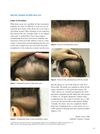
June 2008 in “Dermatologic Surgery” Transplanting chest hair into scalp scars may effectively treat wide donor scars in hair restoration.
 2 citations
,
May 2011 in “Hair transplant forum international”
2 citations
,
May 2011 in “Hair transplant forum international” This abstract provides no results or study findings; it only includes author affiliations and general commentary.

This study found that grafting an autologous cultured epithelial sheet improved both scarring and skin texture in four patients with acne-associated scar contracture three months post-treatment, suggesting the technique might effectively treat difficult acne scars by metabolizing excess collagen.
 January 2011 in “Hair transplant forum international”
 This article addresses the role of surgical assistants in graft preparation and placement for hair restoration and reports no new clinical findings.