353 citations
,
November 2014 in “Molecular immunology” This review discusses the immune functions of porcine skin and proposes a classification of dendritic cell subsets based on similarities to human skin, but it reports no new clinical results.
32 citations
,
August 2016 in “Science Signaling” This study developed PiSCES biosignatures that distinguished alopecia areata patients from controls, revealing enhanced basal TCR signaling and a potential disease-specific signaling network signature.
July 2026 in “Frontiers in Immunology” This review highlights the role of epidermal tissue-resident memory T (T RM) cells in human skin, showing their involvement in immune surveillance and regulation within the epidermis, and suggesting their importance in understanding skin diseases like HIV infection and vitiligo.
January 1990 in “대한피부과학회지” This study found that peanut agglutinin binding patterns after neuraminidase pretreatment can help differentiate malignant melanoma from nevocellular nevus in skin specimens.
 1 citations
,
October 2024 in “Journal of Clinical Immunology”
1 citations
,
October 2024 in “Journal of Clinical Immunology” This study observed that adult Netherton syndrome patients showed a range of normal to diminished immune responses to polysaccharide, conjugate, and mRNA-based vaccines, with responses generally overlapping those of healthy controls, suggesting no consistent B- or T-cell immunodeficiency in this population.
2 citations
,
December 2017 in “The journal of investigative dermatology. Symposium proceedings/The Journal of investigative dermatology symposium proceedings” This article discusses advancements and methodologies in epitope identification for autoimmune diseases, specifically alopecia areata, but does not report new experimental results.
March 1995 in “The Journal of Dermatology” This study found that cultured hair apparatus cells initially showed low keratin antibody reactivity, which increased by day 6 as cells differentiated and corresponded with electron microscopic observations.
 1 citations
,
March 2015 in “Journal of the European Academy of Dermatology and Venereology”
1 citations
,
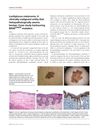
March 2015 in “Journal of the European Academy of Dermatology and Venereology” This letter to the editor shares a case study of lentiginous melanoma that appears clinically malignant but histopathologically benign, involving the BRAFV600R mutation.
6 citations
,
March 2022 in “Actas Dermo-Sifiliográficas” This review discusses the characteristics and management of cutaneous immune-related adverse events from immune checkpoint inhibitors and notes their potential association with a favorable cancer treatment response.
 October 2023 in “Frontiers in medicine”
 Targeted immunotherapy could be a promising new treatment for hair regrowth.
14 citations
,
July 2004 in “Australasian Journal of Dermatology” This case study describes a patient with rapidly progressing follicular mycosis fungoides, highlighting its unusual histology and challenges in diagnosing it against cutaneous B-cell lymphoma.
 July 2025 in “Indian Journal of Forensic Medicine & Toxicology”
 This review highlights how the development of forensic DNA phenotyping systems like IrisPlex, HIrisPlex, and HIrisPlex-S has advanced criminal investigation by accurately predicting physical traits such as eye, hair, and skin color from DNA, thereby improving the precision and relevance of forensic applications.
 8 citations
,
October 2016 in “Experimental dermatology”
8 citations
,
October 2016 in “Experimental dermatology” This paper proposes that the induction of HF-specific neo-antigens by peripheral CD8+ T cells may maintain self-tolerance but could also lead to immunopathology in conditions like alopecia areata.
December 2021 in “Figshare” This review discusses recent advancements in targeted therapies for vitiligo, including JAK inhibitors and mesenchymal stem cells, and highlights the need for further research.
 2 citations
,
November 1998 in “Journal of The European Academy of Dermatology and Venereology”
2 citations
,
November 1998 in “Journal of The European Academy of Dermatology and Venereology” This study focused on the ultrastructural and immunohistochemical aspects of dermal mast cells in systemic mastocytosis and their interaction with the epidermal melanin unit.
2 citations
,
May 2023 in “Veterinary Pathology” This article outlines methods to study the skin and its molecular traits, focusing on interpretation and techniques applicable to mouse models, including diverse assays and approaches like electron microscopy and large-scale lipid analyses.
November 2025 in “OPAL (Open@LaTrobe) (La Trobe University)” In this study, researchers conducted additional IHC staining on equine skin sections and found that collagen type III primarily labels the extracellular matrix, while anti-PDGFR-antibody staining highlights cells with long-shaped processes mainly arranged around hair follicles.
 3 citations
,
January 2021 in “Journal of The American Academy of Dermatology”
3 citations
,
January 2021 in “Journal of The American Academy of Dermatology” This study observed that atopic dermatitis severity was associated with higher eosinophil counts and FLG variants, suggesting distinct endotypes that may require tailored treatment approaches.
March 2026 in “Oral Presentations” This abstract reports pooled safety data from the WILLOW study for participants with cutaneous lupus erythematosus and systemic lupus erythematosus but does not provide new findings.
 3 citations
,
May 2018 in “Journal of Cosmetic Dermatology”
3 citations
,
May 2018 in “Journal of Cosmetic Dermatology” This study reported that the most reliable way to differentiate alopecia areata from androgenic alopecia is by detecting intrafollicular CD3 and CD8 cell density, with CD3 being the most specific and sensitive marker.
July 2024 in “Journal of Investigative Dermatology” October 2018 in “The American journal of gastroenterology” This case study highlights the importance of early detection and management of pembrolizumab-induced hepatitis, suggesting that early steroid treatment could potentially prevent severe complications.
89 citations
,
March 1996 in “Proceedings of the National Academy of Sciences” This study found that homozygous mutant mice with a hypomorphic CD18 mutation developed a chronic inflammatory skin disease resembling human psoriasis, potentially implicating additional genetic factors in disease susceptibility.
5 citations
,
June 2012 in “Journal of Investigative Dermatology” Harris et al. describe a new mouse model for vitiligo, where interfollicular melanocytes are retained and melanocyte-targeting immune responses are simulated, aiding the development of immunomodulatory therapies.
 57 citations
,
March 2011 in “Pediatric Dermatology”
57 citations
,
March 2011 in “Pediatric Dermatology” In this study, skin manifestations were observed in 48% of children with primary immunodeficiency disorders, often providing crucial diagnostic clues for early identification of these conditions.
 July 2025 in “Journal of Investigative Dermatology”
 Immune system changes may contribute to female pattern hair loss.
15 citations
,
January 2022 in “Immune Network/Immune network” This review summarizes the pathophysiology and immune mechanisms of inflammatory skin diseases like psoriasis and atopic dermatitis, highlighting the therapeutic potential of targeted immunotherapies, but reports no new clinical results.
June 2023 in “The Journal of Dermatology” This abstract provides supplementary materials and directs queries to the corresponding author but presents no new research findings.
 January 2005 in “Elektronische Hochschulschriften der LMU München (Ludwig-Maximilians-Universität München)”
 This study found that a significant portion of alopecia areata patients achieved at least partial hair regrowth with diphenylcyclopropenon therapy, which was more effective in certain subtypes and disease durations.

This study in a nine-year-old boy from Lebanon identified a gene mutation (c.1066dup p.(Arg356Profs*16)) associated with a rare inborn error of immunity, characterized by craniosynostosis, jaundice, and several other symptoms, expanding the known genotypic and phenotypic spectrum of this condition.