July 2026 in “Dermatology Practical & Conceptual” This narrative review reports that IL-17 and IL-23 inhibitors, while effective for psoriasis and other inflammatory diseases, can cause a variety of skin reactions that resemble primary dermatoses, highlighting the need for careful diagnosis and varied management strategies.
 27 citations
,
May 2007 in “Archives of dermatological research”
27 citations
,
May 2007 in “Archives of dermatological research” In this study, alopecia areata patients treated with diphencyprone showed a significant increase in CD8 lymphocytes around hair bulbs, which may be associated with hair regrowth.
 August 2024 in “Clinical and Medical Engineering Live”
 This abstract highlights that alopecia treatment requires moving beyond outdated methods to a sophisticated approach that considers the complex interplay between genetic susceptibility and immune response in different types of hair loss. Results are not reported.
 44 citations
,
November 1998 in “Australasian Journal of Dermatology”
44 citations
,
November 1998 in “Australasian Journal of Dermatology” This review provides a framework for diagnosing acquired scalp alopecias and discusses both non-scarring and scarring types, but reports no new clinical results.
 26 citations
,
June 2018 in “Australasian Journal of Dermatology”
26 citations
,
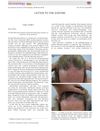
June 2018 in “Australasian Journal of Dermatology” Stopping sunscreen use on the forehead led to hair regrowth in a woman with frontal fibrosing alopecia.
 1 citations
,
January 2006 in “Elsevier eBooks”
1 citations
,
January 2006 in “Elsevier eBooks” The conclusion is that different types of hair loss in dogs and cats can be cosmetic or serious, and affected animals should not be bred.
 July 2017 in “International Journal of Dermatology and Venereology”
 This review discusses the use of phototherapy for treating different types of alopecia and reports its potential effectiveness without serious adverse reactions, but it emphasizes the need for further studies to optimize treatment parameters.
April 2018 in “Veterinary Pathology” This study describes a form of lymphocytic mural folliculitis in tigers causing hair loss, concluding it may represent a nonspecific hypersensitivity reaction distinct from T-cell lymphoma.
This study reviews the diverse clinical presentations of tinea capitis, such as gray patches, a "black dot" appearance, and kerion, highlighting its complex differential diagnosis with conditions like alopecia areata and psoriasis.
 March 2013 in “Hair transplant forum international”
 This article discusses the role of inflammation in causing various types of alopecia but reports no clinical results; the author notes an ongoing interest in the topic.
This article discusses folliculitis decalvans as a cicatricial alopecia caused by a neutrophilic immune reaction to microbial biofilms, but it reports no new clinical results.
1 citations
,
January 2018 in “Journal of Cosmetics Dermatological Sciences and Applications” This study observed that a targetoid polycyclic concentric hair regrowth pattern appeared in some male patients with alopecia areata following treatment, indicating a positive sign of recovery despite unclear etiopathogenesis.
 16 citations
,
January 2006 in “The Aging Male”
16 citations
,
January 2006 in “The Aging Male” This review discusses various skin diseases with endocrinological origins and reports no clinical results, highlighting the need for interdisciplinary understanding in diagnosis.
 June 2011 in “International Journal of Dermatology”
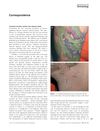
 A man's red tattoo caused a skin reaction and hair loss in his beard, which improved after treatment.
 14 citations
,
February 2023 in “Frontiers in immunology”
14 citations
,
February 2023 in “Frontiers in immunology” This review discusses the range of cutaneous immune-related adverse events induced by immune checkpoint inhibitors and the proposed mechanisms underlying these skin reactions, but reports no new clinical results.
 94 citations
,
August 1975 in “Journal of Cutaneous Pathology”
94 citations
,
August 1975 in “Journal of Cutaneous Pathology” In this study, the researchers observed that male pattern alopecia is characterized by miniature follicles, enlarged sebaceous glands, and an increased number of mast cells, without significant abnormalities in enzyme activity.
 88 citations
,
August 2019 in “Nature communications”
88 citations
,
August 2019 in “Nature communications” In this study, researchers identified a specific T cell receptor associated with carbamazepine-induced severe cutaneous adverse reactions, demonstrating its potential for therapeutic development in patients with the HLA-B*15:02 genotype.
 10 citations
,
May 2020 in “Dermatology Research and Practice”
10 citations
,
May 2020 in “Dermatology Research and Practice” This review discusses "follicular hypoglycania" as a potential pathology in hair growth disorders and reports that proteoglycan replacement therapy may improve hair loss treatments, though it presents no new clinical trial results.
 April 2026 in “International Journal of Clinical Oncology”
 This review found that adding immune checkpoint inhibitors to cancer treatment regimens likely increases the incidence of specific drug-related skin toxicities in adult Asian patients, highlighting the need for careful monitoring and management strategies.
 20 citations
,
November 2019 in “Current Opinion in Systems Biology”
20 citations
,
November 2019 in “Current Opinion in Systems Biology” This review discusses how recent studies use models and experiments to understand immune system signaling, but it reports no new clinical findings; the authors suggest strategies for improving these models.
 15 citations
,
December 2017 in “Journal of The European Academy of Dermatology and Venereology”
15 citations
,
December 2017 in “Journal of The European Academy of Dermatology and Venereology” This letter discusses potential pathogenetic links among frontal fibrosing alopecia, androgenetic alopecia, and fibrosing alopecia in a pattern distribution and reports no new clinical findings.
 May 2026 in “Pharmaceuticals”
 This study analyzed safety data for semaglutide, liraglutide, and tirzepatide from the EudraVigilance database, identifying potential safety signals not listed in current SmPCs, such as optic ischemic neuropathy and pancreatitis, underscoring the importance of ongoing pharmacovigilance.
15 citations
,
June 2015 in “F1000Research” This study examined immune responses to Diphencyprone and found that its induced skin reactions have higher levels of negative immune regulators compared to psoriasis, suggesting differences in immune regulation may contribute to psoriasis chronicity.
 1 citations
,
January 2024 in “American journal of clinical and experimental immunology.”
1 citations
,
January 2024 in “American journal of clinical and experimental immunology.” This study reports that cutaneous manifestations such as herpes zoster, purpura, and livedo reticularis in COVID-19 patients can potentially indicate disease severity, aiding in the prediction of the illness's progression and guiding dermatological management during the pandemic.
 41 citations
,
December 2015 in “Journal of the European Academy of Dermatology and Venereology”
41 citations
,
December 2015 in “Journal of the European Academy of Dermatology and Venereology” This review discusses the challenges and potential solutions in studying Demodex mites and their possible pathogenic role in human skin disorders but reports no new findings.
 4 citations
,
November 2014
4 citations
,
November 2014 The skin protects the body, regulates temperature, senses touch, and makes vitamin D.
 7 citations
,
October 2013 in “British Journal of Dermatology”
7 citations
,
October 2013 in “British Journal of Dermatology” This article describes how HIV-related skin disorders vary in presentation among pigmented skin types and highlights challenges in their diagnosis due to atypical disease manifestations.
 15 citations
,
May 2016 in “Archives of Dermatological Research”
15 citations
,
May 2016 in “Archives of Dermatological Research” This study found significantly higher levels of the protein ULBP3 in patients with alopecia areata incognita compared to other hair loss conditions and healthy controls, suggesting ULBP3's potential as a diagnostic marker for AAI.
 5 citations
,
September 1989 in “Journal of The American Academy of Dermatology”
5 citations
,
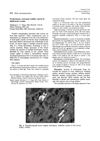
September 1989 in “Journal of The American Academy of Dermatology” This article reports that cocaine injections can lead to skin lesions containing talc crystals at the sites of injection.
June 2025 in “British Journal of Dermatology” This report describes two unusual cases of frontal fibrosing alopecia in men, highlighting potential vaccine-related immune triggers and genetic factors, especially regarding the pronounced facial papular phenotype observed.