 November 2023 in “Indian Journal of Dermatology”
 This study from North-East India analyzed 21 cases of frontal fibrosing alopecia, noting a high prevalence in post-menopausal women and distinct histological features such as perifollicular lymphocytic infiltrate and hydropic degeneration.
 11 citations
,
October 2020 in “Sensors”
11 citations
,
October 2020 in “Sensors” This study found that photoacoustic imaging can effectively measure follicle density and angles, even when follicles are not visible to the eye, providing a promising alternative to traditional photographic examination.
 1 citations
,
February 2004 in “Dermatologic Surgery”
1 citations
,
February 2004 in “Dermatologic Surgery” This study found that using deep plane fixation during scalp surgeries significantly reduced closure tension and allowed for increased tissue excision compared to standard techniques without fixation.
 August 2023 in “Clinical, Cosmetic and Investigational Dermatology”
 In this article, researchers describe a novel FUE device designed to enhance follicular unit excision surgery by minimizing follicular injury and improving ergonomics with features such as Bluetooth functionality, fingertip touch sensors, and automated operation.
 5 citations
,
April 2019 in “Journal of The American Academy of Dermatology”
5 citations
,
April 2019 in “Journal of The American Academy of Dermatology” This review discusses the complex nature of frontal fibrosing alopecia, suggesting it is a misnomer and possibly a subset of lichen planopilaris, but reports no new clinical results.
36 citations
,
January 2000 in “British journal of dermatology/British journal of dermatology, Supplement” This case study reports on a mother and daughter with ichthyosis follicularis, alopecia, and photophobia, noting consistent keratotic eruptions during the mother's pregnancies that improved postpartum.
17 citations
,
June 2022 in “Frontiers in Nutrition” This study found that fermented Flammulina velutipes polysaccharides showed higher antioxidant and anti-inflammatory capacities than non-fermented ones, suggesting potential use in functional foods and health products.
8 citations
,
May 2019 in “International Society of Hair Restoration Surgery” This review discusses the establishment of standard terminology for follicular unit extraction (FUE) by the ISHRS committee and reports no new results; the terminology is now widely accepted in hair restoration practices.
3 citations
,
May 2019 in “Journal of Cosmetic Dermatology” This study suggests that the dipeptide Pro-Ile has FGF18-like activity, can penetrate model human epidermis, and may have potential as a cosmetic ingredient for skin and hair regulation.
22 citations
,
April 2013 in “International Journal of Dermatology” Frontal fibrosing alopecia can occur with lichen planus pigmentosus, needing careful diagnosis and treatment.
 September 2011 in “Urology”
 This study aimed to identify characteristics of patients who fail to void during pressure-flow studies, which limits the determination of the cause behind their lower urinary tract symptoms.
1 citations
,
November 2022 in “International journal of molecular sciences” This study found that local injections of fetal tissue mesenchymal stromal cells in mice significantly improved healing and hair follicle density after high-dose radiation-induced skin damage.
475 citations
,
October 2006 in “Proceedings of the National Academy of Sciences” This study suggests that folliculin, mutated in Birt–Hogg–Dubé syndrome, and its partner FNIP1 may play a role in energy and nutrient sensing through the AMPK and mTOR pathways.
 January 2026 in “Frontiers in Medicine”
 This article questions whether frontal fibrosing alopecia and fibrosing androgeneic patterned hair loss are overlapping conditions or stages of the same process, calling for further research to clarify their underlying factors.
18 citations
,
January 2019 in “International journal of trichology” This study found that injectable platelet-rich fibrin (i-PRF) showed improved hair growth in males with Type VI and Type VII alopecia, which are typically difficult to treat.
 1 citations
,
January 2020 in “Skin appendage disorders”
1 citations
,
January 2020 in “Skin appendage disorders” Finasteride may help treat frontal fibrosing alopecia, but more research is needed.
 225 citations
,
April 2018 in “Journal of Investigative Dermatology”
225 citations
,
April 2018 in “Journal of Investigative Dermatology” Two main types of fibroblasts with unique functions and additional subtypes were identified in human skin.
 1 citations
,
January 2014 in “Hair therapy & transplantation”
1 citations
,
January 2014 in “Hair therapy & transplantation” This report describes benefits of advanced hair transplant techniques, micro-FUE and U-FUE, which may result in natural, undetectable hair restoration and discrete post-procedure appearance.
May 2025 in “Indian Journal of Obstetrics and Gynecology Research” This study analyzed the relationship between clinical and anthropometric factors with the free androgen index to better evaluate polycystic ovarian syndrome, but results are not reported in the abstract.
 15 citations
,
August 2019 in “Dermatologic Therapy”
15 citations
,
August 2019 in “Dermatologic Therapy” This letter details a case report on platelet-rich plasma treatment for a patient with treatment-resistant frontal fibrosing alopecia, but it does not provide new clinical results.
1 citations
,
August 2024 in “Anais Brasileiros de Dermatologia” This review discusses the non-follicular skin manifestations of frontal fibrosing alopecia and how they affect diagnosis and treatment, but reports no new clinical results.
 1 citations
,
October 2023 in “Journal of the Pakistan Medical Association”
1 citations
,
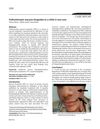
October 2023 in “Journal of the Pakistan Medical Association” This source describes a case of a 12-year-old male diagnosed with folliculotropic mycosis fungoides, presenting with an asymptomatic, erythematous plaque. Histology and immunohistochemistry confirmed FMF, which is typically rare in children and marked by follicular infiltration by CD4+ lymphocytes.
 January 2026 in “Clinical Cosmetic and Investigational Dermatology”
 This study found that targeting both hormonal and immune pathways improved treatment outcomes in androgenetic alopecia patients with an under-recognized inflammatory component called PIILIF, which may contribute to treatment resistance.
 April 2023 in “The journal of investigative dermatology/Journal of investigative dermatology”
 This study revealed distinct cellular and transcriptomic differences among various subtypes of cutaneous T-cell lymphoma, particularly highlighting characteristics unique to folliculotropic mycosis fungoides.
 10 citations
,
June 2005 in “The journal of investigative dermatology/Journal of investigative dermatology”
10 citations
,
June 2005 in “The journal of investigative dermatology/Journal of investigative dermatology” This study identified FP-1 as a highly specific extracellular matrix protein in follicular papilla cells, which may play a role in hair growth regulation during specific hair cycle phases.
1 citations
,
January 1980 in “Computer Physics Communications” 
This study evaluated the effect of intralesional injections of lyophilized Platelet Derived Growth Factors in 42 patients with Peyronie's disease and found significant reductions in penile curvature and plaque size, along with improvements in Peyronie's Disease Questionnaire scores, suggesting a potential treatment role.
2 citations
,
January 2016 in “Dermatology online journal” This case report describes a 46-year-old man diagnosed with frontal fibrosing alopecia, a condition primarily affecting postmenopausal women, highlighting its rare occurrence in men.
 49 citations
,
December 2007 in “Journal of Cataract and Refractive Surgery”
49 citations
,
December 2007 in “Journal of Cataract and Refractive Surgery” This case report suggests that oral finasteride, used for benign prostatic hyperplasia, may be associated with intraoperative floppy-iris syndrome during cataract surgery.
17 citations
,
June 2016 in “Archives de Pédiatrie” This case report describes three pediatric cases of frontal fibrosing alopecia, a condition typically seen in postmenopausal women, including a unique instance involving female twins.