 27 citations
,
September 1992 in “The Lancet”
27 citations
,
September 1992 in “The Lancet” ICL is a condition with low CD4+ T cells like AIDS but not caused by HIV, and normal CD4+ T cell counts may vary between men and women.
13 citations
,
September 2022 in “Frontiers in immunology” This study found that Ifidancitinib, a JAK1/3 inhibitor, significantly promoted hair regrowth and reduced inflammation in a mouse model of alopecia areata by decreasing pathogenic T cell activity and inducing T cell exhaustion.
March 2015 in “Institutional Repositories DataBase (IRDB)”  April 2025 in “International Journal of General Medicine”
 This study found that among COVID-19 patients, a higher presence of the G allele in the IFITM3 rs12252 polymorphism correlates with increased inflammatory markers and disease severity, noting higher ESR, CRP, Fibrinogen, LDH, and D-dimer levels in severe cases compared to mild ones.
24 citations
,
September 2024 in “Journal of Investigative Dermatology”  January 2023 in “Indian dermatology online journal”
 This case study describes a previously unknown association of the PIBIDS complex with autoimmune thyroiditis and autoimmune hemolytic anemia in a five-year-old Indian child.

This invention reports piperazine derivatives as potent inhibitors of type 3 17β-hydroxysteroid dehydrogenase, suggesting potential therapeutic applications in treating prostate cancer, acne, and androgenic alopecia.
 108 citations
,
July 2002 in “Molecular and cellular biology”
108 citations
,
July 2002 in “Molecular and cellular biology” This study found that overexpressing Dsg3 in the suprabasal epidermis of transgenic mice resulted in flaking skin and abnormal hair growth, supporting Dsg3's role in regulating epidermal differentiation.
2 citations
,
January 1989 This article discusses the history and understanding of Tay syndrome, recognizing it as a distinct condition related to ichthyotic erythroderma, mental retardation, and brittle hair but reports no new clinical results.
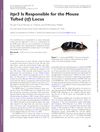 6 citations
,
October 2012 in “Journal of Heredity”
6 citations
,
October 2012 in “Journal of Heredity” This study identified the Itpr3 gene as responsible for the tufted hair loss phenotype in the BTBR mouse strain.
5 citations
,
January 1998 in “Journal of dermatological treatment” This study found that calcitriol, tacalcitol, and calcipotriol ointments achieved complete clearance of scalp psoriasis in 45%, 35.2%, and 17.6% of patients, respectively, with minimal side effects.
November 2025 in “Journal of Investigative Dermatology” TEC kinases may help cause inflammation in vitiligo and could be targeted for treatment.
 May 2025 in “Journal of the Egyptian Womenʼs Dermatologic Society”
 This randomized controlled trial found that intralesional vitamin D3 was as effective and safe as intralesional triamcinolone acetonide for treating patchy alopecia areata on the scalp, with no significant influence from serum vitamin D levels on treatment response.
 2 citations
,
January 2001 in “Biomedical Research”
2 citations
,
January 2001 in “Biomedical Research” This study found that peptidylarginine deiminase type III and trichohyalin are coincidentally expressed in the infant rat hair follicle, but trichohyalin deimination occurs after their expression during development.
37 citations
,
June 1996 in “Journal of cellular physiology” This study found that IGF1, retinoic acid, and dexamethasone increase IGFBP-3 production in cultured human dermal papilla cells, potentially inhibiting IGF1 action on hair growth.
 2 citations
,
January 2022 in “BioMed Research International”
2 citations
,
January 2022 in “BioMed Research International” This study found that using an LED array with an 863 nm wavelength delayed tumor development and reduced systemic inflammatory cytokines in DMBA/TPA-induced mouse skin tumors, suggesting potential but limited benefits of light therapy.
 5 citations
,
December 2021 in “Frontiers in Cell and Developmental Biology”
5 citations
,
December 2021 in “Frontiers in Cell and Developmental Biology” This review outlines how peptidyl arginine deiminases (PADIs) and protein citrullination are involved in hair follicle regeneration and inflammatory alopecia, but presents no new clinical findings.
July 2026 in “Journal of Cutaneous and Aesthetic Surgery” This study found that intralesional Vitamin D3 injections were comparable in efficacy to intralesional triamcinolone for patchy alopecia areata, with a non-significant trend towards better outcomes and fewer local adverse effects.
 April 2015 in “Plastic and Reconstructive Surgery”
 This article is from the ASPS Education Network and does not report any new research findings.
 2 citations
,
October 2023 in “Philosophical transactions - Royal Society. Biological sciences”
2 citations
,
October 2023 in “Philosophical transactions - Royal Society. Biological sciences” This article reports that mutations in the PADI3 gene, affecting its activity or localization, cause uncombable hair syndrome and are linked to central centrifugal cicatricial alopecia, particularly among women of African ancestry.
8 citations
,
June 2020 in “The journal of investigative dermatology/Journal of investigative dermatology” This study provides definitive evidence that a homozygous mutation in the DSC3 gene causes skin fragility and hypotrichosis in humans.
 7 citations
,
January 2016 in “Laboratory Investigation”
7 citations
,
January 2016 in “Laboratory Investigation” TR3 is mainly found in hair follicle stem cells and may be involved in hair loss.
13 citations
,
February 2012 in “International Journal of Dermatology” This case report identifies a novel nonsense mutation in the CDH3 gene associated with hypotrichosis and juvenile macular dystrophy.
2 citations
,
January 2025 in “Brazilian Journal of Medical and Biological Research” This study demonstrated that VD3 significantly enhanced the proliferation and differentiation of epidermal stem cells in a murine skin defect model, leading to improved wound healing, potentially through activation of the PI3K signaling pathway.
24 citations
,
December 2013 in “Archives of Dermatological Research” 35 citations
,
July 2010 in “The FEBS journal” In this study, researchers identified a highly reactive, isozyme-specific sequence for TGase 3, contributing to understanding its distinct functional role and activity distribution in the mouse epidermis.
13 citations
,
February 1995 in “Archives of Dermatological Research” In this study, gamma/delta T cells were observed in skin after allergic or irritant reactions to heavy metal salts, suggesting a role in skin defense against these metals.
2 citations
,
January 2004 in “Linchuang pifuke zazhi” In a reported case, the use of ZD1839 (Iressa), an EGFR tyrosine kinase inhibitor, resulted in hair changes and acneiform eruptions as cutaneous side effects.
4 citations
,
October 2016 in “The journal of investigative dermatology/Journal of investigative dermatology” This study found that the MD-3 antibody significantly improved the survival of hair follicle allografts in nonhuman primates by reducing T-cell infiltration.
September 2025 in “Journal of the American Academy of Dermatology” Ritlecitinib may help treat alopecia areata by protecting hair follicles.