 108 citations
,
November 1980 in “British Journal of Dermatology”
108 citations
,
November 1980 in “British Journal of Dermatology” This article reviews the current status of oral retinoids in dermatology and reports no new clinical findings.
13 citations
,
July 2012 in “International Journal of Trichology” In this study, the varied phenotype of trichothiodystrophy was highlighted, with findings of distinctive hair shaft abnormalities and a wide range of multisystem issues, including neurologic and urologic disorders.
 January 2015 in “Indian Journal of Dermatology, Venereology and Leprology”
 The document concludes that various skin conditions have specific characteristics and treatments, and highlights the importance of vitamin D in managing these dermatological issues.
37 citations
,
June 2000 in “Experimental dermatology” This study investigated a spontaneous mutation in mice resulting in hair abnormalities and elevated IgE levels, which resembles human Netherton's syndrome and monilethrix.
January 2000 in “The Mouseion at the JAXlibrary (Jackson Laboratory)” This study identified a new mouse mutation associated with noninflammatory proliferative skin disease and hair abnormalities, drawing parallels to human conditions like Netherton's syndrome and monilethrix.
1 citations
,
November 2003 in “SKINmed Dermatology for the Clinician” This case report describes a 17-year-old patient diagnosed with Netherton syndrome, characterized by pruritic dry skin, short brittle hair, and elevated IgE levels, treated with antihistamines and emollients.
 February 2010 in “Journal of The American Academy of Dermatology”
 A woman's nail separation was likely caused by poor blood flow, and a treatment for similar conditions might help.
 February 2010 in “Journal of The American Academy of Dermatology”
 Mimicking growth factors in a topical solution can prolong hair growth phase and reduce hair loss without side effects.
 1 citations
,
April 2017 in “Journal of Investigative Dermatology”
1 citations
,
April 2017 in “Journal of Investigative Dermatology” This study reports that tofacitinib, a JAK inhibitor, may stabilize hair loss in patients with classic lichen planopilaris and frontal fibrosing alopecia, though hair regrowth was not robust.
 April 2017 in “The journal of investigative dermatology/Journal of investigative dermatology”
 This study identified intramembrane proteolysis as a key feature of Astrotactin2 maturation, providing insights into its role in planar cell polarity hair patterning.
 36 citations
,
January 2014 in “Elsevier eBooks”
36 citations
,
January 2014 in “Elsevier eBooks” This narrative review discusses the structure and functions of the skin, focusing on its barrier role, self-repair, thermoregulation, and immune functions, and reports no new experimental results.
March 2003 in “中華皮膚科醫學雜誌” This report describes a patient with trichothiodystrophy exhibiting both specific hair abnormalities and developmental delay, contributing to the understanding of this rare disorder's clinical presentation.
 3 citations
,
January 2020 in “Acta Dermato Venereologica”
3 citations
,
January 2020 in “Acta Dermato Venereologica” This clinical case report presents photographs of a patient with Netherton syndrome, highlighting severe inflammatory vegetative lesions on the pubic area and umbilicus.
84 citations
,
June 1970 in “Journal of Investigative Dermatology” 32 citations
,
May 1986 in “Archives of Dermatology” This case study suggests that atrichia with papular lesions associated with common variable immunodeficiency may follow an autosomal-dominant inheritance pattern, differing from previous reports of autosomal recessive inheritance.
23 citations
,
January 1964 in “Archives of Dermatology” This report describes a child with ulerythema ophryogenes marked by eyebrow hair absence and progressive skin atrophy, whose condition did not improve despite elevated vitamin A levels via injections.
1 citations
,
January 2008  January 2007 in “Revista del Centro Dermatológico Pascua”
 This case report describes a 2-year-old boy diagnosed with trichothiodystrophy, characterized by fragile hair, intellectual damage, diminished fertility, and short stature.
 42 citations
,
January 2007 in “Pediatric dermatology”
42 citations
,
January 2007 in “Pediatric dermatology” This report describes an 11-year-old boy with Netherton syndrome who developed Cushing syndrome after using low-potency hydrocortisone ointment extensively, highlighting caution with long-term topical treatments in such conditions.
 17 citations
,
November 2012 in “Journal of Investigative Dermatology”
17 citations
,
November 2012 in “Journal of Investigative Dermatology” This paper reviews the genetic aspects of hair disorders and suggests that understanding these genes could advance treatment and diagnosis; it reports no new experimental findings.
 15 citations
,
October 2006 in “Journal of the American Academy of Dermatology”
15 citations
,
October 2006 in “Journal of the American Academy of Dermatology” This case report describes subcutaneous emphysema in a patient's forearm as a rare complication of liquid nitrogen spray used on hypertrophic actinic keratosis, resolving spontaneously within a day.
 14 citations
,
July 2012 in “Journal of the American Academy of Dermatology”
14 citations
,
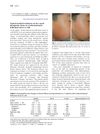
July 2012 in “Journal of the American Academy of Dermatology” This study found that topical tacalcitol improved roughness and scaling in erythromelanosis follicularis faciei et colli, although it was less effective for facial erythema.
 12 citations
,
June 2016 in “Reviews in Endocrine and Metabolic Disorders”
12 citations
,
June 2016 in “Reviews in Endocrine and Metabolic Disorders” This review discusses various genetic and acquired skin diseases that can affect male fertility, highlighting the clinical management challenges and reports no new research findings.
 6 citations
,
September 2015 in “Journal of Investigative Dermatology”
6 citations
,
September 2015 in “Journal of Investigative Dermatology” This study demonstrated that RNA interference targeting mutant keratin genes can effectively correct hair shaft structural defects in a mouse model by reducing mutant gene expression.
 5 citations
,
November 2024 in “Journal of Clinical Immunology”
5 citations
,
November 2024 in “Journal of Clinical Immunology” This study reports that a 9-week-old infant with Netherton syndrome showed rapid and sustained symptom improvement, including skin microbiome normalization and developmental progress, after off-label dupilumab treatment, without adverse reactions.
 April 2015 in “Experimental Dermatology”
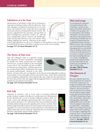
 Melanoma risk tools need improvement, certain gene mutations cause skin diseases and could be treated by targeting those mutations, skin wrinkling may relate to lung aging due to genetic factors, and oxidative stress affects hair loss but can be reduced in low oxygen.
 September 2003 in “Current Paediatrics”
 This article outlines how pediatric hair problems present and how they can be assessed, without reporting new research results.
 January 1982 in “Side effects of drugs annual”
 This review discusses the therapeutic effects of vitamins, highlighting risks such as liver damage from prolonged high doses of vitamin A and hypercalcemia from excessive vitamin D, while noting a case of allergic reaction to vitamin B12.
10 citations
,
March 1997 in “Pediatric Dermatology” This case report describes a patient with trichothiodystrophy presenting with autism, mental retardation, and seizures, characterized by distinct hair abnormalities under microscopy.
 March 2017 in “BIRDEM Medical Journal”
 This report discusses two cases of sarcoidosis with cutaneous manifestations that posed a diagnostic challenge, without presenting new clinical results.