 September 2017 in “Journal of Investigative Dermatology”
 This study found that stabilizing HIF1A in balding hair follicle cells shifted their metabolism towards glycolysis, reducing oxidative stress and potentially promoting hair growth.
October 2016 in “Journal of Case Reports” This study reports a case of an ovarian steroid cell tumor with malignant potential, presenting unusually with osteopenia and low weight instead of the expected virilizing symptoms.
2 citations
,
March 2011 in “Hair transplant forum international” This article discusses the ontological and hormonal sensitivity hierarchy within follicular units and does not report new experimental results.
25 citations
,
March 2004 in “Regulatory Toxicology and Pharmacology” Using testosterone-stimulated weanling rats can effectively replace castrated rats for anti-androgen testing, reducing animal stress.
 7 citations
,
January 2009 in “Immunological investigations”
7 citations
,
January 2009 in “Immunological investigations” This report describes a rare case of alopecia areata universalis developing in a child during the recovery phase of phenobarbital-induced anti-convulsant hypersensitivity syndrome, which suggests a mechanism involving lymphocyte-related immune responses.
 April 2022 in “PANACEA JOURNAL OF MEDICAL SCIENCES”
 This study found that serum prolactin levels were significantly higher in patients with subclinical and clinical hypothyroidism compared to controls, indicating altered prolactin regulation in these patients.
 August 2026 in “International Journal of Homoeopathic Sciences”
 This review explores the role of homeopathy, particularly the use of Phosphorus, for managing dandruff, noting current indications derive from traditional practices rather than modern trials, and emphasizes the necessity of well-designed studies to assess its effectiveness compared to conventional treatments.
16 citations
,
April 1998 in “Journal of Investigative Dermatology” ACTH promotes hair growth in mink, but α-MSH does not.
 124 citations
,
August 1994 in “Journal of Investigative Dermatology”
124 citations
,
August 1994 in “Journal of Investigative Dermatology” This study found that applying dexamethasone to mice induced catagen-like follicle changes significantly earlier and more consistently than a vehicle, such changes being useful for studying hair follicle regression.
 August 2022 in “IntechOpen eBooks”
 This article reviews congenital adrenal hyperplasia, a group of rare genetic disorders affecting steroid synthesis, and highlights the need for specific therapy and ongoing monitoring, but reports no new clinical findings.
202 citations
,
January 1989 in “Journal of Clinical Investigation” This study indicates that insulin changes sex hormone levels in insulin-resistant women with polycystic ovary syndrome without affecting gonadotropin release, challenging the idea that hyperinsulinemia directly causes hyperandrogenism in PCO.
 12 citations
,
January 1984 in “Anesthesia & Analgesia”
12 citations
,
January 1984 in “Anesthesia & Analgesia” This abstract provides only publication and correspondence details; it does not present any study findings or results.
21 citations
,
October 2007 in “Australasian Journal of Dermatology” This case study reported that a 62-year-old woman with alopecia areata experienced significant hair regrowth with completely non-pigmented white hair following a 2-month course of oral prednisolone.
January 2025 in “Mansoura Medical Journal” This research observed that some hypothyroid patients on adequate levothyroxine therapy continue to experience symptoms like poor concentration and hair loss, with findings suggesting an elevated anti-TPO level increases the likelihood of such symptoms, despite normal TSH levels.
July 2024 in “Journal of Investigative Dermatology” This study found that inhibiting the enzyme PDE8A can promote adipocyte differentiation and enhance hair growth in an animal model of androgenetic alopecia, suggesting PDE8A as a potential therapeutic target for restoring dermal adipogenesis and hair cycling.
2 citations
,
April 2024 in “Alexandria Dental Journal” This study found that a high-fat diet in rats led to obesity, insulin resistance, and structural changes in the parotid salivary glands, with associated negative impacts on general health.
 25 citations
,
August 2014 in “Endocrinology”
25 citations
,
August 2014 in “Endocrinology” This study created a humanized mouse model of hereditary vitamin D-resistant rickets that lacks alopecia, indicating the mutant receptor's potential to explore the syndrome's characteristics beyond vitamin D binding.
March 2026 in “Indian journal of veterinary and animal sciences research.” This case study found that treating a dog with primary hypothyroidism using oral levothyroxine sodium led to significant clinical improvement within six weeks.
 44 citations
,
March 2008 in “European journal of endocrinology”
44 citations
,
March 2008 in “European journal of endocrinology” This study found that women with PCOS had lower fasting serum ghrelin levels and a reduced ghrelin response to an oral glucose load compared to controls, with an inverse relationship to insulin resistance.
 December 2024 in “Journal of Clinical Research in Pediatric Endocrinology”
 This study explains that congenital adrenal hyperplasia due to 21-hydroxylase deficiency presents as a continuous phenotype and involves symptoms ranging from virilization to accelerated growth in children, with diagnosis relying on clinical, biochemical, and genetic evaluation.
 6 citations
,
August 1989 in “European journal of pediatrics”
6 citations
,
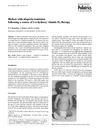
August 1989 in “European journal of pediatrics” This case study describes a child with rickets and alopecia who responded to a small dose of 1-a-hydroxyvitamin D3, but her alopecia remained unchanged despite treatment.
April 2016 in “The journal of investigative dermatology/Journal of investigative dermatology” This study observed that sebaceous gland atrophy in psoriatic lesions correlates with the down-regulation of specific lipid biosynthetic gene modules, potentially affecting hair appearance without damaging follicles.
 27 citations
,
May 2007 in “Archives of dermatological research”
27 citations
,
May 2007 in “Archives of dermatological research” In this study, alopecia areata patients treated with diphencyprone showed a significant increase in CD8 lymphocytes around hair bulbs, which may be associated with hair regrowth.
 December 2019 in “Mehmet Akif Ersoy Üniversitesi Sağlık Bilimleri Enstitüsü dergisi”
 In this case series, two cats with hypothyroidism and hyperthyroidism achieved clinical remission and normal thyroid function following timely diagnosis and targeted treatment with levothyroxine and methimazole, respectively.
January 2020 in “Case reports in endocrinology” This case report describes a 29-year-old female with resistant polycystic ovary syndrome who experienced symptom relief following a unilateral oophorectomy.
This case study reports significant clinical and hormonal improvement in a 21-year-old woman with HAIR-AN syndrome after nine months of treatment with oral contraceptives and spironolactone.
2 citations
,
January 2010 in “PubMed” This case report observed no hair regrowth after treating a woman with postmenopausal frontal fibrosing alopecia using systemic and local corticosteroids, suggesting the need for more innovative therapies.
March 2026 in “AYUSHDHARA” In this case report, a 45-year-old woman with recently diagnosed hypothyroidism experienced significant symptom relief and a reduction in serum TSH levels after five months of Ayurvedic treatment, despite not using allopathic medication.
13 citations
,
January 2014 in “Journal of Veterinary Internal Medicine” This case study reports an instance of adult-onset primary hypothyroidism with goiter in a cat, suggesting potential causes such as dietary iodine imbalance, chronic exposure to thyrotoxic substances, or a congenital form with late manifestation.
April 2020 in “Journal of the Endocrine Society” This case report describes a rare and atypical presentation of primary hypothyroidism with myxedema in a two-year-old boy, highlighting the importance of recognizing unusual symptoms for timely treatment.