 12 citations
,
March 2004 in “International Journal of Dermatology”
12 citations
,
March 2004 in “International Journal of Dermatology” A woman with X-linked chronic granulomatous disease developed lupus-like skin lesions, improved with treatment, suggesting a unique skin condition in carriers.
 1 citations
,
February 2009 in “Journal of The American Academy of Dermatology”
1 citations
,
February 2009 in “Journal of The American Academy of Dermatology” Children's Serum Sickness-Like Reaction is often linked to antibiotics, especially amoxicillin, and involves symptoms like rash, fever, and joint issues.
45 citations
,
March 1998 in “Journal of the American Academy of Dermatology” This report describes two cases of Majocchi's granuloma in immunocompromised patients, highlighting the importance of considering this condition in such populations.
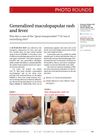 July 2023 in “The Journal of Family Practice”
 This case study describes a 29-year-old man who presented with a fever and a generalized maculopapular rash, alongside symptoms like hair loss and joint pain, leading to an investigation into whether his condition was a case of the "great masquerader.
January 2026 in “Forum Dermatologicum” This study systematically reviewed literature on paradoxical reactions during biologic treatments for psoriasis, identifying immune dysregulation mechanisms and diverse clinical manifestations, highlighting that mild cases often respond well to topical treatments, while severe cases may require switching to different IL-23 inhibitors.
 1 citations
,
July 2023 in “Journal of Ayub Medical College Abbottabad”
1 citations
,
July 2023 in “Journal of Ayub Medical College Abbottabad” In this case study, a 30-year-old woman with symptoms including fever, joint pain, and skin ulcers was diagnosed with Lupus Vasculitis and treated with steroids, mycophenolate mofetil, and hydroxychloroquine after tests showed positive anti-nuclear and anti-Ro antibodies and reduced serum complement levels.
 June 2025 in “Academic Medical Journal”
 This study suggests elevated homocysteine levels may serve as a biomarker for disease severity and vascular risk in cutaneous lupus erythematosus, indicating potential therapeutic benefits from B-vitamin supplementation and lifestyle changes.
23 citations
,
December 1990 in “PubMed” This case study suggests that systemic lupus erythematosus should be considered as a potential diagnosis for immune-mediated skin disease in horses, based on multisystemic signs and specific histopathologic and immunopathologic findings.
 2 citations
,
May 2018 in “Expert opinion on orphan drugs”
2 citations
,
May 2018 in “Expert opinion on orphan drugs” This review discusses Omenn syndrome, a form of severe combined immunodeficiency, highlighting its immunopathology and genetic defects without presenting new clinical results.
1 citations
,
September 2022 in “Canadian Journal of Ophthalmology” This study presents cases of paraproteinemic keratopathy associated with multiple myeloma and MGUS, highlighting varied treatment responses and the need for long-term follow-up to better understand disease progression and management.
January 2002 in “대한피부과학회지” This study analyzed clinical manifestations in 18 dermatomyositis patients, noting that all exhibited skin rash and variable symptoms like itching and muscle weakness, with treatment involving prednisolone and hydroxychloroquine.
 April 2023 in “The journal of investigative dermatology/Journal of investigative dermatology”
 This study found that psoriasis patients on biologic therapy had significantly lower anti-COVID19 IgG antibody levels after vaccination compared to healthy individuals not on biologic treatment.
 21 citations
,
January 2021 in “Journal of infection and chemotherapy”
21 citations
,
January 2021 in “Journal of infection and chemotherapy” This study observed that male sex, diabetes mellitus, and high maximum C-reactive protein levels during the acute phase of COVID-19 were linked to elevated anti-SARS-CoV-2 antibody levels.
 July 2025 in “The Korean Journal of Internal Medicine”
 This study suggests that T-cell recruitment, thrombosis, and increased vascular permeability may contribute to various symptom clusters in post-acute sequelae of COVID-19 through shared cytokine elevation.
This study found that prophylactically administering amotosalen-treated allogeneic donor T cells at transplantation significantly improved immune reconstitution and protection against murine cytomegalovirus infection without inducing graft-versus-host disease.
 63 citations
,
October 1989 in “Journal of The American Academy of Dermatology”
63 citations
,
October 1989 in “Journal of The American Academy of Dermatology” This study reports that erythematous, infiltrated plaques can develop in patients receiving subcutaneous heparin therapy, indicating a possible delayed hypersensitivity reaction to heparin or its constituents.

This correspondence discusses bias in expert medical testimony within workmen's compensation cases, emphasizing the author's objective approach, but provides no new empirical findings.
 February 2018 in “Trends in Immunology”
 This study demonstrated that antigens from the skin bacterium Staphylococcus epidermidis can stimulate CD8+ T cells, which in turn enhance wound healing.
December 2021 in “Zenodo (CERN European Organization for Nuclear Research)” This case report describes a post-COVID syndrome patient who experienced symptoms like headache, joint pain, and swollen lymph nodes; treatment with Erbisol drugs reportedly alleviated symptoms and normalized immunological parameters.
May 2024 in “International journal of medicine and psychology.” This study found that in laboratory rats, toxic concentrations of hydrogen sulfide affected the immune system differently depending on age and immune suppression status, with notable changes in immune cell levels and phagocytosis, suggesting significant roles in age-associated pathologies.
 January 2017 in “Dermatology Review”
 This article discusses skin lesions in chronic graft-versus-host disease and highlights the importance of coordinated care between haematologists and dermatologists for effective management; it presents no new clinical results.
 April 2020 in “Journal of the Endocrine Society”
 This case report details an atypical presentation of Hodgkin's lymphoma in an 87-year-old man, where severe hypercalcemia and mental status changes prompted further investigation and diagnosis.

In this multicenter study, belimumab effectively reduced disease activity in systemic lupus erythematosus patients with joint and skin manifestations, showing significant improvement in acute and subacute skin types earlier than in chronic types, while no significant benefit was observed for nonspecific skin manifestations.
 October 2022 in “The American journal of gastroenterology”
 This case report details a patient with myasthenia gravis and a malignant thymoma whose rising liver function tests, initially thought to be related to antibiotic use, were ultimately attributed to thymoma-associated multiorgan autoimmunity.
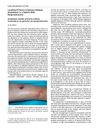 3 citations
,
March 2012 in “Actas Dermo-Sifiliográficas”
3 citations
,
March 2012 in “Actas Dermo-Sifiliográficas” An elderly man with skin amyloidosis and abnormal blood proteins was monitored without finding widespread disease after 18 months.
 July 2026 in “Advanced Biology”
 This study introduces novel wound dressings with hydrophobic properties, highlighting their ability to enhance hemostasis, improve wound adhesion, reduce bacterial adherence, and facilitate exudate removal, and discusses advancements in the development and application of such composite dressings for antibacterial hemostatic purposes.
 April 2024 in “Research Square (Research Square)”
 This case report describes a 27-year-old male with autoimmune polyglandular syndrome type 1, characterized by symptoms including fever, dysarthria, dysphagia, oral candidiasis, nail dystrophy, alopecia, hypoparathyroidism, and dilated cardiomyopathy. The study highlights unique bilateral symmetrical brain calcifications and underscores the syndrome’s diverse manifestations.
 4 citations
,
November 2016 in “Pediatric Clinics of North America”
4 citations
,
November 2016 in “Pediatric Clinics of North America” This article discusses the diagnostic and therapeutic approach for immune-mediated central nervous system diseases but reports no new clinical findings.
 1 citations
,
July 2022 in “BMJ Case Reports”
1 citations
,
July 2022 in “BMJ Case Reports” This case report describes a woman in her 30s diagnosed with systemic lupus erythematosus, characterized by alopecia, arthritis, photosensitivity, and skin rashes, confirmed through positive serology.
 1 citations
,
February 2025 in “Frontiers in Medicine”
1 citations
,
February 2025 in “Frontiers in Medicine” This study found that patients with juvenile-onset systemic lupus erythematosus have a high prevalence of endocrine and metabolic comorbidities, particularly dyslipidemia and obesity-related issues, suggesting the need for routine monitoring and obesity prevention.