March 2025 in “Journal of Clinical Medicine” This study highlighted the potential of iron chelators, deferoxamine and deferiprone, to improve hair density, thickness, and elasticity and reduce hair loss by up to 66.8% over six months in individuals with autoimmune alopecia, suggesting they may offer a promising therapeutic option.
3 citations
,
November 2017 in “International Journal of Cosmetic Science” This study found that increasing the pH from 2.0 to 6.0 enhanced the binding of cationic solutes to hair keratin, driven primarily by hydrophobic and electrostatic interactions.
This study found that combining prodigiosin and essential oil from Thuja orientalis leaves showed a synergistic effect against the 3rd larva stage of Cx. pipiens, significantly reducing acetylcholine esterase activity and altering midgut pH, compared to untreated larvae.
23 citations
,
April 2003 in “Journal of Structural Biology” Keratin structure changes during keratinization, but the exact model remains uncertain.
August 2025 in “Marine Drugs” This study evaluated a new composite material made from PLA, ALG, ZnS, and HT for blood-contacting applications, finding it improved surface characteristics and displayed anticoagulant properties and high biocompatibility with no genotoxic effects on blood and skin cells.
1 citations
,
May 2024 in “The Journal of Sexual Medicine” This case report suggests that clomiphene citrate can effectively restore fertility in some men with a long history of anabolic steroid abuse, though individual responses to treatment vary.
 109 citations
,
March 2011 in “Journal of controlled release”
109 citations
,
March 2011 in “Journal of controlled release” This study found that econazole nitrate delivered via MPEG-dihexPLA micelles significantly increased skin deposition compared to Pevaryl® cream, potentially enhancing drug bioavailability and clinical efficacy.
 March 1996 in “Journal of The American Academy of Dermatology”
 The book is a useful guide for learning about chemical peels, with practical information for all skill levels.
December 1951 in “Journal of the American Medical Association” This article reports a case of hair loss and pigmentation changes in a man after using propylthiouracil alongside iodine solution for thyroid and diabetic conditions, providing clinical observations without broader conclusions.
3 citations
,
September 2023 in “Journal of Photochemistry and Photobiology A Chemistry” 1 citations
,
March 2019 in “Hygiene and Sanitation” This study observed that exposure to heavy metal salts affected skin and hair morphology in mice, with lead acetate decreasing keratinocyte proliferation and zinc sulfate and sodium dichromate increasing it.
1 citations
,
June 2016 in “DOAJ (DOAJ: Directory of Open Access Journals)” This study found that an Enterobacter isolate demonstrated high resistance to selenate and effective sorption capacity, suggesting potential for bioremediation of selenium-contaminated environments.
30 citations
,
February 2023 in “Biomaterials Research” This study evaluated a new carboxymethyl chitosan/polyaldehyde dextran (CMCS/PD) hydrogel and found it to be a promising tissue adhesive for trauma emergencies in rats, showing rapid gel formation, strong adhesion, and better antibacterial properties than some commercial alternatives.
75 citations
,
September 2015 in “Acta biomaterialia” This study found that alkylation of kerateine cysteine residues created a cell-compatible method for controlling hydrogel erosion rates and therapeutic agent release in keratin-based systems.
1 citations
,
January 2022 in “Brazilian Journal of Pharmaceutical Sciences” This study investigated the physicochemical properties of polystyrene-b-poly(acrylic acid) nanovesicles coated with modified chitosans, finding that they can effectively control surface charge and potentially serve as drug delivery carriers with a 50.7% encapsulation efficiency for minoxidil.
12 citations
,
September 2023 in “Polymers” This study reported that a newly developed hydrogel composed of recombinant type I collagen and chitosan, incorporating a metal–polyphenol structure, demonstrated strong mechanical and healing properties, effectively promoting wound healing in a full-thickness skin defect model.
October 2024 in “Iraqi postgraduate medical journal” 31 citations
,
February 1972 in “Experientia” This study found that the diphosphonate ethan-1-hydroxy-1,1-diphosphonat was the most effective compound in preventing calcifications in rats induced by DHT, compared to other phosphatase inhibitors and polyphosphates tested.
 4 citations
,
January 2014 in “RSC Advances”
4 citations
,
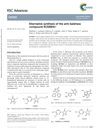
January 2014 in “RSC Advances” A new, less toxic and more efficient method to create the anti-baldness compound RU58841 was developed in 2014.
December 2012 in “SWU eJournals System (Srinakharinwirot University)” This review discusses temporary chemical hair removal methods involving thioglycolates and other compounds but reports no new clinical findings; the authors highlight interest in natural-based substances.
 3 citations
,
January 2009 in “Sen'i Gakkaishi”
3 citations
,
January 2009 in “Sen'i Gakkaishi” This study found that using a bicomponent reduction system with TGA and DTDG for hair straightening limited hair damage by forming only thiol groups, while a TGA-only system formed more damaging mixed disulfide groups.
2 citations
,
October 2020 in “Journal of Pharmacy And Bioallied Sciences” This study reviewed existing literature on chloroquine and hydroxychloroquine's safety and efficacy in COVID-19 management, finding mixed clinical evidence and highlighting the need for more rigorous trials to determine their potential role in treatment.
This chapter examines how toxins such as inorganic arsenic, dioxin, and bacterial toxins can disrupt the balance of keratinocyte stem cell regeneration and differentiation, affecting skin barrier maintenance.
 6 citations
,
January 1998 in “Journal of Investigative Dermatology”
6 citations
,
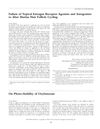
January 1998 in “Journal of Investigative Dermatology” This study found that oxybenzone is very stable under light exposure, contradicting previous findings of its oxidation to semiquinone after solar irradiation.
75 citations
,
March 2007 in “Journal of Biological Chemistry” This review discusses the complexities and uncertainties in the pathways and mechanisms for disulfide bond formation in multicellular organisms and reports no new experimental findings.
 4 citations
,
January 2025 in “Journal of Materials Chemistry B”
4 citations
,
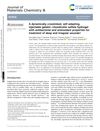
January 2025 in “Journal of Materials Chemistry B” In this study, researchers developed a multifunctional, injectable hydrogel that adapts to irregularly shaped wounds, enhances healing, and shows potential antibacterial activity without significant toxicity, suggesting promise for treating chronic wounds.
 87 citations
,
March 2000 in “American Journal of Clinical Dermatology”
87 citations
,
March 2000 in “American Journal of Clinical Dermatology” Alpha-hydroxy acids, like glycolic acid, safely improve skin issues and work on all skin types.
16 citations
,
July 2014 in “Cell Biology International” This study found that the Wnt pathway activator lithium chloride promotes proliferation and odontoblast differentiation of hair follicle neural crest cells.
 March 2025 in “Dental Journal (Majalah Kedokteran Gigi)”
 This study developed a biodegradable gelatin and chitosan hemostatic sponge, enhanced with pomegranate peel extract, for dental applications, highlighting its effective antibacterial properties, improved blood absorption, and reduced clotting time, suggesting potential for use in clinical dental and wound care procedures.
 3 citations
,
August 2019 in “Journal of The American Academy of Dermatology”
3 citations
,
August 2019 in “Journal of The American Academy of Dermatology” Clascoterone safely promotes hair growth similar to minoxidil.