 1 citations
,
January 2018 in “Journal of Gynecologic Surgery”
1 citations
,
January 2018 in “Journal of Gynecologic Surgery” This article reports two cases where ovarian hyperthecosis caused hyperandrogenism in postmenopausal women, confirmed by imaging and resolved after bilateral oophorectomy.
 1 citations
,
September 2017 in “Elsevier eBooks”
1 citations
,
September 2017 in “Elsevier eBooks” Diuretics help the body get rid of excess salt and water by acting on the kidneys in different ways.
 1 citations
,
November 2014
1 citations
,
November 2014 This chapter reviews patchy hair loss due to skin disease, nail disorders related to chronic trauma, and treatments for small carcinomas, but it reports no new clinical findings.
 1 citations
,
January 2013 in “Elsevier eBooks”
1 citations
,
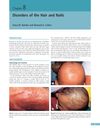
January 2013 in “Elsevier eBooks” The document reviews various hair and nail disorders, their causes, and treatments, emphasizing the need for proper diagnosis and the link between nail changes and systemic diseases.
 1 citations
,
June 2010 in “Expert Review of Dermatology”
1 citations
,
June 2010 in “Expert Review of Dermatology” Covers common skin issues in kids, their diagnosis, treatment, and need for specialist care.
 1 citations
,
January 2010 in “Elsevier eBooks”
1 citations
,
January 2010 in “Elsevier eBooks” Any drug can cause skin reactions, but antibiotics, NSAIDs, and psychotropic drugs are more common, with some reactions being life-threatening.
 1 citations
,
January 2009 in “Elsevier eBooks”
1 citations
,
January 2009 in “Elsevier eBooks” This article reviews the endocrine changes in anorexia nervosa and bulimia nervosa, highlighting hypoleptinemia as a potential mediator, but does not present any new clinical results.
 1 citations
,
April 2006 in “Seminars in Reproductive Medicine”
1 citations
,
April 2006 in “Seminars in Reproductive Medicine” This review discusses the multifactorial causes of female sexual dysfunction and reports no clinical results; it emphasizes the need for thorough evaluation before considering androgen therapy.
 1 citations
,
February 2004 in “Journal of The European Academy of Dermatology and Venereology”
1 citations
,
February 2004 in “Journal of The European Academy of Dermatology and Venereology” This paper reports a case of alopecia triangularis congenita in a 22-year-old woman, combined with androgenetic alopecia, and highlights successful treatment with internal and topical antiandrogens.
 1 citations
,
January 2001 in “American Journal of Kidney Diseases”
1 citations
,
January 2001 in “American Journal of Kidney Diseases” This report suggests that recombinant human erythropoietin use may be linked to alopecia in Southeast Asian women with chronic renal failure.
 1 citations
,
October 1984 in “Clinics in dermatology”
1 citations
,
October 1984 in “Clinics in dermatology” This article discusses the psychological impact of skin imperfections and suggests establishing a Cosmetic Dermatology Service within public health systems to address these issues ethically.
 1 citations
,
March 1954 in “Archives of dermatology”
1 citations
,
March 1954 in “Archives of dermatology” This article reviews small animal experiments reported from 1932 to 1952 in two dermatology journals and notes the contributions of Farris's book on laboratory animal care.
 October 2024 in “Irish Journal of Medical Science (1971 -)”
 Continuous glucose monitoring and GLP-1 receptor agonists improve diabetes management, but personalized care and education are crucial.
 October 2020 in “Veterinary Dermatology”
 This review discusses autoimmune blistering diseases across species and highlights new treatment efficacy findings and ongoing trials, but it reports no new clinical results.
 January 2016 in “Springer eBooks”
 A 19-year-old male with delayed puberty was successfully treated for a condition that prevents normal hormone production.
 January 2014 in “Durham e-Theses (Durham University)”
 In this study, the activation of Notch1 signaling in keratinocytes was found to play a key role in recruiting immune cells and facilitating skin repair after injury.
 April 2026 in “Experimental & Molecular Medicine”
 This study used integrated single-cell chromatin and transcriptomic analyses in developing mouse skin to uncover gene networks involved in skin lineage specification and identified Mef2c+ upper fibroblasts as potential precursors to certain muscle-like structures, with cross-species findings in human skin.
 March 2026 in “American Journal of Clinical Dermatology”
 This narrative review provides an overview of the persistent dermatological side effects experienced by cancer survivors due to treatments, highlighting their impact on quality of life and the need for structured dermatological care during survivorship.
 February 2026 in “Orphanet Journal of Rare Diseases”
 This study identified pathogenic or likely pathogenic gene variants in 70.1% of Russian families affected by hypohidrotic ectodermal dysplasia, expanding knowledge of causative mutations.
 January 2026 in “International Research Journal of Modernization in Engineering Technology and Science”
 This review outlines the existing understanding of alopecia areata, detailing its autoimmune nature, clinical presentation, histology, and management strategies, with corticosteroids highlighted as the most popular treatment option.
 January 2026 in “Forum Dermatologicum”
 This study observed that 2.5% of patients with mycosis fungoides or Szary syndrome experienced alopecia, predominantly within skin lesions, with scalp metastases from other cancers also potentially causing hair loss, highlighting the diagnostic value of trichoscopy in differentiating alopecia types.
 January 2026 in “Journal of Ayurveda and Integrated Medical Sciences”
 In this case study, a 20-year-old female with hypothyroidism experienced marked symptom improvement, including weight reduction and menstrual regularization, after Ayurvedic management involving herbal remedies and lifestyle changes, suggesting Ayurveda could complement conventional therapies and indicating the need for larger-scale validation.

This study discusses the potential of phytochemicals, such as isoflavones and polyphenols, to manage PCOS symptoms by improving insulin resistance, regulating hormones, and reducing cyst size, highlighting their promise as alternative treatments given the limitations of current pharmacological options.
 December 2025 in “IP Indian Journal of Clinical and Experimental Dermatology”
 This study observed that topical dinitrochlorobenzene was significantly more effective than topical betamethasone in treating patients with alopecia areata, with 53.3% achieving excellent hair regrowth compared to 13.3% using betamethasone.
 December 2025 in “Italian Journal of Anatomy and Embryology”
 This narrative literature review examined how linking embryonic development with non-genetic skin anomalies can improve diagnostic accuracy, guide prenatal counseling, and enrich dermatology education by revealing specific vulnerabilities in skin morphogenesis and supporting advances in regenerative medicine.
 December 2025 in “International Journal of Research in Dermatology”
 This consensus highlights that addressing nutritional and endocrine deficiencies through lifestyle modifications, nutritional support, and medical interventions is crucial for managing hair loss associated with endocrine and gynecological disorders, emphasizing the need for a multidisciplinary approach involving dermatologists, nutritionists, endocrinologists, and gynecologists.
 December 2025 in “International Journal of Medicine and Public Health”
 In this study, researchers found that overt hyperthyroidism was the most prevalent thyroid disorder among patients, especially in women, and it was characterized by classic symptoms like high pulse rate and weight loss, highlighting the importance of early identification and management to prevent complications.
 November 2025 in “International Journal of Innovative Research in Technology”
 This study assesses the impact of teaching programs on the knowledge of waste management among women, but results are not reported in the abstract.
This review discusses polycystic ovary syndrome, focusing on its primary features of ovulatory dysfunction and hyperandrogenism, and reports no new findings.
 August 2025 in “Animal Bioscience”
 In this study, researchers examined the methylation patterns in the skin tissues of Alpine Merino sheep with varying wool fiber diameters, finding that specific methylated RNAs linked to the Wnt, Notch, and TGF-ẞ signaling pathways may influence fiber diameter and potentially improve wool quality.