 January 2026 in “Springer Link (Chiba Institute of Technology)”
 In this study, researchers synthesized silver nanoparticles using an extract from Mitracarpus scaber and found them to have significant hepatoprotective and anti-hyperplastic effects in rats, suggesting potential for treating liver injury and benign prostatic hyperplasia.
This study reports that patients with specific MFN2 mutations, including p.Arg707Trp, exhibit significant upper body fat overgrowth with suppressed leptin production, suggesting tissue-selective mitochondrial dysfunction and potential therapeutic targets.
This study suggests that specific mutations in the MFN2 gene, including the p.Arg707Trp allele, can result in tissue-selective mitochondrial dysfunction leading to excessive upper body fat growth and low leptin levels.
147 citations
,
April 1997 in “Oncogene” This study found that transgenic mice expressing IGF-1 in their skin showed significant skin changes, early hair follicle generation, and a higher propensity to develop tumors after chemical promotion, suggesting IGF-1's role in skin carcinogenesis.
83 citations
,
July 1993 in “Journal of the American Veterinary Medical Association” This study found that surgical removal of adrenal glands resolved clinical signs of adrenocortical tumors and hyperplasias in ferrets, but cortisol levels were not excessively high.
48 citations
,
October 2004 in “Molecular and Cellular Biology” In this study, Brca1(S971A/S971A) mice showed a moderately increased risk of spontaneous tumor formation and defects in DNA damage response, suggesting CHK2 phosphorylation of BRCA1 is crucial for tumor suppression.
47 citations
,
January 1998 in “Molecular Carcinogenesis” This study observed that targeted expression of the neu oncogene in transgenic mice led to significant epidermal hyperplasia and a carcinoma-like appearance, suggesting a crucial role for erbB2 signaling in epidermal proliferation and carcinogenesis.
44 citations
,
January 2012 in “Food and chemical toxicology” In a testosterone-induced BPH rat model, this study found that ursolic acid treatment significantly reduced prostate weight and hormone levels, suggesting it may inhibit BPH development.
42 citations
,
January 2003 in “International Journal of Gynecological Pathology” This research observed that multifocal pseudoepitheliomatous hyperplasia may explain some cases of squamous nests in vulvar lichen sclerosus with lichen simplex chronicus, potentially as a reaction to tissue damage rather than squamous cell carcinoma.
20 citations
,
August 2020 in “Scientific Reports” In this study, low-dose BPA was associated with induced prostatic hyperplasia in rats, potentially mediated by COX-2 and L-PGDS through pathways involving cell proliferation and apoptosis.
12 citations
,
March 2023 in “The FASEB Journal” This study found that platelet-rich plasma treatment significantly improved erectile function and restored neural structures in aged rats with erectile dysfunction, suggesting potential benefits for geriatric patients.
 11 citations
,
August 2019 in “The Journal of Sexual Medicine”
11 citations
,
August 2019 in “The Journal of Sexual Medicine” This study found that women with nonclassic congenital adrenal hyperplasia (NC-CAH) reported lower sexual function and higher sexual distress compared to those with classic CAH (C-CAH), particularly among those showing signs of androgen excess.
 7 citations
,
January 2025 in “Archives of Gynecology and Obstetrics”
7 citations
,
January 2025 in “Archives of Gynecology and Obstetrics” In this review, the authors aim to improve the differential diagnosis between hyperandrogenic PCOS and NCAH, which could lead to more personalized treatment strategies for patients experiencing hyperandrogenism.
6 citations
,
December 2023 in “Journal of Molecular Cell Biology” In this study, Gsdma1/2/3 knockout mice showed reduced epidermal hyperplasia and inflammation when induced by PMA, which was attributed to decreased EGFR-Stat3/Akt signaling due to a decrease in related ligands.
 5 citations
,
February 2022 in “Supportive Care in Cancer”
5 citations
,
February 2022 in “Supportive Care in Cancer” This study found that age is the most significant risk factor for hemorrhagic cystitis after hematopoietic stem-cell transplantation, with additional risk factors including cyclophosphamide-based prophylaxis and, among male recipients, prostatic hyperplasia.
 5 citations
,
June 2020 in “Journal of Endocrinological Investigation”
5 citations
,
June 2020 in “Journal of Endocrinological Investigation” The study observed that women with congenital adrenal hyperplasia experience more impaired sexual functions and are more often homosexually or bisexually oriented than those with polycystic ovary syndrome.
 4 citations
,
January 1987 in “Journal of The American Academy of Dermatology”
4 citations
,
January 1987 in “Journal of The American Academy of Dermatology” A man with both skin lesions and lung cancer improved quickly with chemotherapy, suggesting the skin condition might be a reaction to immune system injury.
2 citations
,
June 2019 in “The Journal of Dermatology” This report describes two cases of aplasia cutis congenita with hair collar signs and hemangioma, which may suggest neural tube defects, although imaging showed no bone or neural tissue abnormalities.
2 citations
,
March 2016 in “Serbian Journal of Dermatology and Venerology” This report describes a rare case of congenital generalized hypertrichosis terminalis in a six-year-old boy with gingival hyperplasia, a coarse face, congenital hydronephrosis, and a heterozygous deletion on chromosome 17q12.
2 citations
,
May 2011 in “International Journal of Dermatology” This case report details a 12-year-old boy from rural south India diagnosed with syringolymphoid hyperplasia, which presented with alopecia and anhidrosis.
 1 citations
,
October 2022 in “Curēus”
1 citations
,
October 2022 in “Curēus” This case report highlights the challenges in diagnosing simple-virilizing congenital adrenal hyperplasia, emphasizing the importance of early expert evaluation to prevent irreversible changes such as virilization.
1 citations
,
April 2010 in “Cancer Research” In preclinical studies, a B-Raf inhibitor called WYE-130600 caused dose-related skin effects in dogs and rats, suggesting potential similar responses might occur in humans.
August 2026 in “European Journal of Endocrinology” In this case report, researchers described how autoimmune thyroid disease can obscure primary hyperparathyroidism diagnosis, emphasizing the necessity of combining imaging, cytology, biochemical assessment, and parathyroid scintigraphy for accurate diagnosis.
 January 2025 in “Haematology International Journal”
 This study describes a functional disorder in the ovary, known as stromal hyperplasia, characterized by the proliferation of ovarian stroma and luteinization of stromal cells, which is linked to excessive androgen production and elevated testosterone levels.
 December 2024 in “Journal of Clinical Research in Pediatric Endocrinology”
 This study explains that congenital adrenal hyperplasia due to 21-hydroxylase deficiency presents as a continuous phenotype and involves symptoms ranging from virilization to accelerated growth in children, with diagnosis relying on clinical, biochemical, and genetic evaluation.

This case study highlights a 38-year-old woman with lichen planopilaris experiencing gingival hypertrophy linked to high serum cyclosporine levels and relevant dosage, which improved after reducing the cyclosporine dose.
April 2020 in “Journal of the Endocrine Society” In this case report, successful management of a pituitary macroadenoma was achieved with thyroid hormone therapy, leading to reduced tumor size and improvement in symptoms like galactorrhea and headaches.
April 2016 in “The journal of investigative dermatology/Journal of investigative dermatology” This study observed that sebaceous gland atrophy in psoriatic lesions correlates with the down-regulation of specific lipid biosynthetic gene modules, potentially affecting hair appearance without damaging follicles.
 January 2010 in “Actas Dermo-Sifiliográficas”
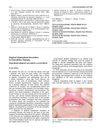
 A woman developed thick gums from everolimus treatment after a kidney transplant.
January 2005 in “Enlighten: Publications (The University of Glasgow)” In this transgenic mouse study, preliminary findings suggest that overt melanocyte hyperplasia may require prior keratinocyte hyperplasia, indicating a potential role for keratinocyte mutation in early melanoma development.