14 citations
,
January 1998 in “Dermatology” This study found evidence that polythelia pilosa, previously excluded from classification, should be reintroduced as it marks true aberrant mammary structures in men and hirsute women.
This report presents a rare case of lichen spinulosus in a 52-year-old woman, featuring hyperkeratotic follicular papules and a dense lymphohistiocytic infiltrate in affected skin areas.
 14 citations
,
January 2005 in “Pediatric Dermatology”
14 citations
,
January 2005 in “Pediatric Dermatology” This case report describes a child with hypopigmented mycosis fungoides successfully treated with UVA1 light therapy.
 5 citations
,
January 2013 in “Journal der Deutschen Dermatologischen Gesellschaft”
5 citations
,
January 2013 in “Journal der Deutschen Dermatologischen Gesellschaft” The document concludes that individualized treatment for malignant epithelial tumors is necessary and more research on metastatic squamous cell carcinoma treatments is needed.
 2 citations
,
September 2022
2 citations
,
September 2022 In this study, researchers found that a PER3 gene SNP may be pathogenic for a new subtype of dyschromatosis universalis hereditaria, especially when combined with a SASH1 mutation.
 1 citations
,
January 2021 in “Dermatology online journal”
1 citations
,
January 2021 in “Dermatology online journal” This report describes a unique case of linear lichen planus pigmentosus on the face with histological features of lichen planopilaris, which has not been documented before.
 1 citations
,
January 2009
1 citations
,
January 2009 In this case report, a 25-year-old man with nevus comedonicus showed no improvement from keratolytics and topical tretinoin, but had success with surgical excision of the lesions.
 39 citations
,
October 2010 in “Journal of The American Academy of Dermatology”
39 citations
,
October 2010 in “Journal of The American Academy of Dermatology” This study reported that alopecia occurred in 2.5% of patients with mycosis fungoides or Sézary syndrome, with some cases resembling alopecia areata and others associated with specific skin lesions.
 25 citations
,
January 2005 in “Pediatric Dermatology”
25 citations
,
January 2005 in “Pediatric Dermatology” This article discusses the use of methotrexate for treating generalized pustular psoriasis in a 2-year-old child, providing a specific case study but reporting no new clinical results.
 16 citations
,
January 2005 in “Pediatric Dermatology”
16 citations
,
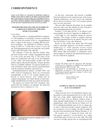
January 2005 in “Pediatric Dermatology” This brief report describes a case of Fox-Fordyce disease in a prepubertal girl but reports no new clinical findings.
 12 citations
,
January 2005 in “Pediatric Dermatology”
12 citations
,
January 2005 in “Pediatric Dermatology” Fox Fordyce disease might be more common in prepubertal girls than thought and can be managed with treatment.
 9 citations
,
January 2005 in “Pediatric Dermatology”
9 citations
,
January 2005 in “Pediatric Dermatology” This report details the clinical presentation and management of cutaneous mastocytosis in Indian children and provides no new experimental findings.
 February 2010 in “Journal of the American Academy of Dermatology”
 Lactic acid cream can help improve skin bumps known as eruptive vellus hair cysts.
 May 2002 in “British Journal of Dermatology”
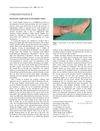
 A pregnant woman's skin condition improved after giving birth, possibly due to high estrogen levels during pregnancy.
 44 citations
,
April 2017 in “Genes & development”
44 citations
,
April 2017 in “Genes & development” This study identified hair shaft progenitors in the matrix that regulate hair growth and pigmentation by creating a niche dependent on stem cell factor, implicating KROX20+ cells in these processes.
 9 citations
,
March 2015 in “International reviews of immunology”
9 citations
,
March 2015 in “International reviews of immunology” This review discusses the relationship between ectodermal alterations and immunodeficiencies, particularly the roles of hyper-IgE syndrome, ectodermal dysplasia, and FOXN1 gene mutations, but it presents no new research findings.
 January 2026 in “International Journal of Dermatology Venereology and Leprosy Sciences”
 This study suggests that metformin's ability to enhance insulin sensitivity may improve acanthosis nigricans by addressing the underlying insulin resistance.
 November 2023 in “Berkala Ilmu Kesehatan Kulit dan Kelamin/Berkala ilmu kesehatan kulit dan kelamin (Periodical of dermatology and venerology)”
 This study suggests that using a dermoscope, a handheld microscope, can effectively help distinguish between Pityrosporum folliculitis and Acne vulgaris by revealing unique lesion characteristics that are not visible to the naked eye, offering a practical diagnostic alternative when KOH examinations are unavailable.
 August 2022 in “Frontiers in genetics”
 This study identified a novel bi-allelic missense variant in the DSC3 gene linked to severe Hypotrichosis with Recurrent Skin Vesicles in a Saudi child, supporting its role in the condition.
 April 2017 in “IOSR journal of dental and medical sciences”
 This abstract discusses Netherton Syndrome, a genetic disorder with a characteristic triad of symptoms caused by SPINK5 gene mutation, and reports no new clinical findings or treatment advances.
 May 2004 in “Pediatric Dermatology”
 Atopic dermatitis may have genetic causes and can be treated with pharmacologic methods, glycerin creams, and controlling Staphylococcus aureus colonization.
 6 citations
,
November 2013 in “International Journal of Radiation Biology”
6 citations
,
November 2013 in “International Journal of Radiation Biology” In this study, γ-ray irradiation of mice reduced hair follicle density and pigmentation, suggesting damage to stem cells and progenitors for keratinocytes and melanocytes.
 5 citations
,
November 2015 in “International Journal of Radiation Biology”
5 citations
,
November 2015 in “International Journal of Radiation Biology” This study suggests that gamma-ray irradiation affects hair follicle density, structure, and pigmentation in mice, with some changes observed in later hair cycles.
 3 citations
,
June 2017 in “International Journal of Radiation Biology”
3 citations
,
June 2017 in “International Journal of Radiation Biology” This review of murine studies reports that γ-rays affect hair follicle pigmentation in mice throughout the hair cycle, while effects on hair structure may be obscured by aging.
70 citations
,
January 2014 in “International review of cell and molecular biology” This review discusses the role of keratins in maintaining epidermal structure and function and reports no new results; the authors emphasize the lack of rational therapies for skin disorders linked to keratin mutations.
 55 citations
,
November 2004 in “Expert opinion on drug safety”
55 citations
,
November 2004 in “Expert opinion on drug safety” This review describes the variety of mucocutaneous side effects caused by antineoplastic chemotherapy, with emphasis on skin, nails, and mucous membranes, while highlighting potential severity and the possibility of needing to adjust or interrupt treatment in rare cases; it presents no new clinical results.
 1 citations
,
November 2004 in “Clinical and Experimental Dermatology”
1 citations
,
November 2004 in “Clinical and Experimental Dermatology” Most bald men don't protect their scalp from the sun, and doctors should encourage prevention.
 23 citations
,
October 2018 in “Australasian Journal of Dermatology”
23 citations
,
October 2018 in “Australasian Journal of Dermatology” This review highlights that frontal fibrosing alopecia’s increasing incidence may involve immune, genetic, hormonal, and environmental factors, yet its pathogenesis remains complex and not fully understood.
 55 citations
,
October 2009 in “Clinics in Plastic Surgery”
55 citations
,
October 2009 in “Clinics in Plastic Surgery” Burn reconstruction improves with new techniques, materials, and tissue engineering.
 4 citations
,
January 2011 in “Annals of Dermatology”
4 citations
,
January 2011 in “Annals of Dermatology” This article discusses the role of HR gene mutations in differentiating atrichia with papular lesions from alopecia universalis, but presents no new experimental results.