 16 citations
,
January 2000 in “The Journal of clinical endocrinology and metabolism/Journal of clinical endocrinology & metabolism”
16 citations
,
January 2000 in “The Journal of clinical endocrinology and metabolism/Journal of clinical endocrinology & metabolism” This study found that serum PSA levels are higher in hirsute women and can be significantly reduced by antiandrogen treatment, suggesting PSA as a marker of androgen action in females.
This study found that cutaneous manifestations such as hirsutism, acne, and acanthosis nigricans in women with PCOS correlate significantly with hormonal imbalances and insulin resistance.
 11 citations
,
May 2003 in “Obstetrics and gynecology (New York. 1953. Online)/Obstetrics and gynecology”
11 citations
,
May 2003 in “Obstetrics and gynecology (New York. 1953. Online)/Obstetrics and gynecology” This review explores the evaluation and treatment of hirsutism, emphasizing a systematic approach to uncovering its causes and recommending combination therapies for effective management, but presents no new results.
 228 citations
,
February 2003 in “Urology”
228 citations
,
February 2003 in “Urology” This article discusses the side effects of androgen deprivation therapy for nonmetastatic prostate cancer, highlighting the need for clinical trials to systematically study these effects.
This review outlines diagnostic and treatment approaches for hirsutism, highlighting spironolactone or cyproterone acetate with oral contraceptives as the most effective therapy, and reports no new empirical results.
 5 citations
,
January 1984 in “Journal of psychosomatic obstetrics and gynecology/Journal of psychosomatic obstetrics and gynaecology”
5 citations
,
January 1984 in “Journal of psychosomatic obstetrics and gynecology/Journal of psychosomatic obstetrics and gynaecology” This study found that treatment with cyproterone acetate and ethinylestradiol in hirsute women reduced testosterone and androstenedione levels, decreased hair growth, and increased cortisol levels without changing catecholamine excretion.
1 citations
,
May 2013 in “Hair transplant forum international” Non-classical 21 hydroxylase deficiency is an underdiagnosed cause of female hair loss and polycystic ovarian syndrome.
30 citations
,
August 1984 in “Archives of Dermatology” This review discusses the influence of androgens and antiandrogens on acne, hirsutism, and androgenetic alopecia, focusing on antiandrogen treatments like cyproterone acetate, but reports no new clinical findings.
 January 2025 in “JCEM Case Reports”
 Among postmenopausal women, this case study observed that a rare ovarian tumor called thecoma, found via MRI, was associated with high testosterone levels and symptoms of mild virilization such as hirsutism, indicating surgery as the primary treatment.
 195 citations
,
May 2003 in “Obstetrics and gynecology (New York. 1953. Online)/Obstetrics and gynecology”
195 citations
,
May 2003 in “Obstetrics and gynecology (New York. 1953. Online)/Obstetrics and gynecology” This review discusses the diagnosis and treatment of hirsutism, emphasizing that a systematic evaluation can determine its cause, while combination therapy effectively manages the condition for most patients.
 9 citations
,
November 2015 in “Gynecological Endocrinology”
9 citations
,
November 2015 in “Gynecological Endocrinology” This study found that among different subtypes of PCOS based on Rotterdam criteria, group A showed higher androgen levels and hirsutism, while all subtypes had increased LH and LH/FSH compared to controls.
 2 citations
,
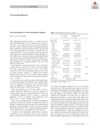
November 2018 in “Clinical and Experimental Dermatology”
2 citations
,
November 2018 in “Clinical and Experimental Dermatology” This correspondence discusses acne development in male androgenetic alopecia but reports no new clinical findings.
 8 citations
,
April 2019 in “Journal of the Endocrine Society”
8 citations
,
April 2019 in “Journal of the Endocrine Society” In this study, long-term normalization of testosterone levels in postmenopausal women with hyperandrogenism did not improve body mass index, glucose, or lipid metabolism.
January 2022 in “Journal of Morphological Sciences” This case report presents a 60-year-old woman with virilization and elevated adrenal androgens, where a bilateral salpingo-oophorectomy confirmed ovarian steroid cell tumor NOS, and her symptoms resolved post-operatively.
 January 2026 in “Research Square (Research Square)”
 This systematic review reports that HAIR-AN syndrome, characterized by severe insulin resistance, hyperandrogenism, and distinctive skin issues, significantly impacts obese women and can improve with treatments like metformin, emphasizing the importance of targeted management to reduce metabolic complications.
June 2025 in “V F Snegirev Archives of Obstetrics and Gynecology” In this case study, a six-year-old girl was diagnosed with isolated adrenarche, linked to premature adrenal maturation, with increased dehydroepiandrosterone sulfate and axillary and pubic hair growth, and will require long-term monitoring due to increased risks of conditions like polycystic ovary syndrome and cardiovascular diseases.
 November 2020 in “Elsevier eBooks”
 This source outlines various antiandrogen and androgen inhibitor drugs used to treat cutaneous disorders of hyperandrogenism, detailing their mechanisms, uses, dosages, and side effects, with emphasis on spironolactone, finasteride, dutasteride, and oral contraceptives.
 January 1977 in “Case Reports in Medicine”
 This article discusses ovarian steroid cell tumors, which can produce testosterone and manifest symptoms like hirsutism, emphasizing surgery as the primary treatment, but reports no new clinical findings.
177 citations
,
June 1991 in “The Journal of Clinical Endocrinology & Metabolism” This study found that caucasian subjects had higher serum levels of 5 alpha-reduced androgen metabolites compared to Chinese subjects, suggesting racial differences in 5 alpha-reductase activity and a potential mechanism for increased body hair in caucasian men.
April 2019 in “Journal of the Endocrine Society” This case report documents successful virilization, including penile length increase, in a boy with partial androgen insensitivity syndrome using high-dose testosterone combined with anastrozole.
 October 2024 in “Journal of the Endocrine Society”
 This case study describes three young females with hirsutism who were diagnosed with different underlying conditions—late-onset congenital adrenal hyperplasia, idiopathic hirsutism, and polycystic ovary syndrome with ovarian thecosis—highlighting the need for reevaluation if initial treatments are ineffective.
 April 2005 in “CRC Press eBooks”
 Excessive androgens in women with polycystic ovary syndrome can lead to excessive hair growth and hair loss, but this might not fully explain these conditions.
 December 2005 in “Endocrine-related cancer”
 This case report describes a 57-year-old woman's virilizing adrenal tumor effectively treated with the antiandrogen cyproterone acetate, which led to symptom reversal and tumor resolution.
This study found that men with benign prostate hyperplasia showed increased meibomian gland dysfunction and tear film instability compared to age-matched controls, and were also more likely to have androgenic alopecia.
 January 2018 in “Universidad Privada Antenor Orrego”
 This study found that androgenic alopecia may serve as an early marker for benign prostatic hyperplasia.
October 1984 in “Kidney international” This case report describes a 23-year-old woman with a history of ambiguous genitalia and complex medical conditions, including a pelvic mass and hirsutism, observed from childhood to adulthood.
 May 2021 in “Journal of the Endocrine Society”
 This case report describes the rare association of an ovarian Leydig cell tumor and primary hyperparathyroidism in a postmenopausal woman, highlighting the importance of considering rare causes in patients with virilizing symptoms.

In this case report, a 54-year-old woman with hirsutism was found to have a benign ovarian cystadenofibroma, which resolved after surgery, highlighting the importance of evaluating postmenopausal women for ovarian causes of androgen excess.
October 2025 in “University of Zadar Institutional Repository” This article reviews the association between androgenic alopecia and metabolic syndrome, highlighting the importance of early diagnosis and lifestyle changes to manage associated health risks, but reports no new clinical results.
 June 2013 in “Vestnik dermatologii i venerologii”
 This study found that women with androgenic alopecia often have increased dihydrotestosterone levels, suggesting potentially enhanced activity of 5-alpha-reductase, with the saliva free testosterone level providing valuable hormonal background information.