 April 2018 in “Journal of Investigative Dermatology”
 This study found that psoriasis patients value medication providing substantial clearance of symptoms at an average of $34,208/year, significantly below the annual cost of biologic treatments.
 April 2018 in “Journal of Investigative Dermatology”
 This study found that no patients with moderately dysplastic nevi with positive margins developed melanoma at the biopsy site, but those with a history of multiple nevi may have a higher risk of melanoma elsewhere.
 April 2018 in “Journal of Investigative Dermatology”
 This study found that patients taking hydroxychloroquine had a significantly higher likelihood of indeterminate QuantiFERON-TB Gold test results compared to those not on the medication, independent of other immunosuppressive drug use.
 April 2018 in “Journal of Investigative Dermatology”
 This study suggests that for dermatomyositis patients with minimal skin disease activity, further improvement in cutaneous symptoms may not translate into better quality of life, highlighting a need to revise trial endpoints.
 April 2018 in “Journal of Investigative Dermatology”
 This review discusses recent studies on platelet-rich plasma (PRP) therapy for androgenic alopecia and found varied results; the authors highlight a need for more controlled trials to standardize treatment methods.
 35 citations
,
January 2013 in “The Journal of experimental medicine/The journal of experimental medicine”
35 citations
,
January 2013 in “The Journal of experimental medicine/The journal of experimental medicine” This study found that deleting the CD98hc protein in mouse skin impairs wound healing and homeostasis, resembling aging effects, due to disrupted integrin signaling pathways.
 17 citations
,
April 2015 in “Tropical Journal of Pharmaceutical Research”
17 citations
,
April 2015 in “Tropical Journal of Pharmaceutical Research” This review highlights the traditional use and potential therapeutic activities of Asiasari Radix in drug discovery, but it reports no new clinical results.
 12 citations
,
April 1995 in “Journal of Medicinal Chemistry”
12 citations
,
April 1995 in “Journal of Medicinal Chemistry” In this study, 4-substituted N-(1,1-dimethylethyl)-3-oxo-4-androstene-17.beta.-carboxamides were synthesized and evaluated in vitro as potential 5 alpha-reductase inhibitors and antiandrogens.
 6 citations
,
November 1996 in “Archives of Dermatology”
6 citations
,
November 1996 in “Archives of Dermatology” This case report describes a 29-year-old Japanese-Paraguayan man who experienced a relapse of leprosy 14 years after initial treatment, presenting with severe pain and skin lesions but no sensory impairment.
 September 2025 in “Drug Design Development and Therapy”
 This study suggests that while platelet-rich products show promise in treating dermatological conditions like chronic wounds and skin aging, there is still a need for standardized methodologies and extensive trials to confirm their long-term clinical benefits.
 20 citations
,
June 2007 in “Recent Patents on Endocrine, Metabolic & Immune Drug Discovery”
20 citations
,
June 2007 in “Recent Patents on Endocrine, Metabolic & Immune Drug Discovery” This review summarizes recent research and patents on 17β-HSD3, 17β-HSD5, and 3α-HSD3 inhibitors, suggesting their potential in treating androgen-dependent diseases, but reports no new clinical results.
 5 citations
,
February 2009 in “International Journal of Cosmetic Science”
5 citations
,
February 2009 in “International Journal of Cosmetic Science” In a study using a placebo-controlled design, the researchers found that coenzyme Q10 may enhance gene expression of age-relevant hair keratins in human hair roots, suggesting potential anti-aging benefits for mature hair.
 November 2025 in “Frontiers in Oncology”
 This study found that Si extract, cryptomeridiol, and SiAgNPs have the ability to induce cell death and prevent cell growth in HepG2 liver cancer cells, suggesting cryptomeridiol's potential as a phytochemical component in developing new therapies for hepatocellular carcinoma using nanotechnology in vitro.
 October 2023 in “Biomedical science and engineering”
 Innovative methods are reducing animal testing and improving biomedical research.
 September 2013 in “Science”
 In this study, researchers found that undergraduate research experiences improved students' research skills, research self-efficacy, and aspirations for research careers, with self-efficacy partially mediating the effect on career aspirations.
 September 2013 in “Science”
 The document concludes that human astrocytes aid stroke recovery, research confidence affects student career aspirations, collagen affects cancer spread, a microRNA suppresses brain cancer growth, calmodulin regulates water channels, and small magnesium pieces deform differently.
 September 2013 in “Science”
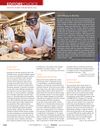
 Certain astrocytes can protect the brain and improve recovery after a stroke, and a hair loss drug might reduce cancer spread.
 September 2013 in “Science”
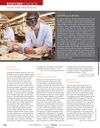
 Human stem cells can aid stroke recovery, research experiences boost students' career aspirations, minoxidil may reduce cancer spread, a molecule can slow tumor growth, a protein affects water flow in cells, magnesium behaves differently at tiny scales, and a new method detects slow-moving objects.
 September 2013 in “Science”
 This study found that single-crystal magnesium samples smaller than 100 nm exhibited increased plastic deformation due to greater activation of nonbasal planes as local flow stresses approached 2 GPa.
 September 2013 in “Science”
 This article discusses the Doppler effect as illustrated by the sound of a passing police siren but presents no new research findings.
 September 2013 in “Science”
 Transplanted human Olig2+ astroglia may help improve learning and memory after a stroke.
 25 citations
,
May 2003 in “Expert Opinion on Therapeutic Patents”
25 citations
,
May 2003 in “Expert Opinion on Therapeutic Patents” This review examines patents and publications on steroid sulfatase inhibitors since 1999 and reports no new clinical results, highlighting their potential for treating estrogen- and androgen-driven conditions.
 March 2013 in “Molecular & Cellular Toxicology/Molecular & cellular toxicology”
 In this study, exposure to m-Aminophenol in human keratinocytes altered the expression of thousands of genes involved in inflammation and stress responses, suggesting potential biomarkers for MAP-induced skin toxicity.
 73 citations
,
January 2013 in “European journal of dermatology/EJD. European journal of dermatology”
73 citations
,
January 2013 in “European journal of dermatology/EJD. European journal of dermatology” This review examines current research on antioxidants in autoimmune skin diseases like alopecia areata and vitiligo, concluding with suggestions for future studies and treatment possibilities without reporting new clinical results.
 53 citations
,
October 2014 in “Free radical biology & medicine”
53 citations
,
October 2014 in “Free radical biology & medicine” This study found that oxidative damage is present in the mitochondria of PolG mice, which exhibit premature aging-like phenotypes due to mitochondrial dysfunction.
 45 citations
,
January 2020 in “Pharmaceutical Biology”
45 citations
,
January 2020 in “Pharmaceutical Biology” This review discusses the potential dermatological applications of Dendrobium officinale polysaccharides, noting their hair growth promoting, skin moisturizing, and antioxidant effects, but reports no new clinical results.
 29 citations
,
December 2012 in “Current Opinion in Endocrinology, Diabetes and Obesity”
29 citations
,
December 2012 in “Current Opinion in Endocrinology, Diabetes and Obesity” This review discusses factors affecting fertility in both men and women with congenital adrenal hyperplasia and emphasizes individualized preconception management but reports no new clinical results.
 23 citations
,
May 2019 in “Expert Opinion on Therapeutic Patents”
23 citations
,
May 2019 in “Expert Opinion on Therapeutic Patents” This review discusses AR-modulating agents developed between 2012 and 2018, highlighting challenges with ligand-binding domain antagonists and proposing nonconventional approaches targeting other domains as promising strategies.
 22 citations
,
November 2024 in “Planta”
22 citations
,
November 2024 in “Planta” This review highlights the potential of aromatic plants as natural antioxidants in cosmeceuticals, which may combat skin aging and promote rejuvenation by counteracting oxidative stress, offering a natural alternative to synthetic products with benefits like photoprotection and anti-wrinkle effects.
 22 citations
,
February 2008 in “Journal of Neurochemistry”
22 citations
,
February 2008 in “Journal of Neurochemistry” This study found that minoxidil prevents long-term serotonergic toxicity induced by MDMA in rats, primarily by opening mitochondrial KATP channels and involving Akt and MAP kinases in its neuroprotective mechanism.