July 2025 in “Journal of Investigative Dermatology” Reduced AhR signaling in HS tunnels leads to persistent inflammation and microbial imbalance.
 February 2009 in “Journal of The American Academy of Dermatology”
 Certain immune system genes are linked to a higher risk of psoriasis and psoriatic arthritis, while others may offer protection.
3 citations
,
January 2011 in “生物医学研究杂志:英文版” In this study, a novel heterozygous transition mutation in the KRT86 gene was identified, which may be pathogenic for monilethrix in a Chinese family.
2 citations
,
July 2021 in “UNC Libraries” This study suggests that residues Val-889 and Arg-752 in the androgen receptor's steroid binding domain are crucial for NH2-/carboxyl-terminal interaction, affecting receptor stability and function.
 11 citations
,
March 2019 in “EMBO molecular medicine”
11 citations
,
March 2019 in “EMBO molecular medicine” This paper reviews the role of endoplasmic reticulum stress and the unfolded protein response in Hutchinson-Gilford progeria syndrome-related atherosclerosis, especially in vascular smooth muscle cells, but reports no clinical findings; intervention in these pathways is suggested as a potential therapeutic strategy.

This review summarizes the proposed model that describes how different shapes of 1alpha,25(OH)2D3 ligands interact with the vitamin D receptor to mediate genomic and rapid responses in cells.
 4 citations
,
December 2013 in “British Journal of Dermatology”
4 citations
,
December 2013 in “British Journal of Dermatology” This study reports an association between the ESR2 gene variant rs10137185 and female-pattern hair loss in German patients.
11 citations
,
January 1997 in “Journal of Dermatological Science” This study identified a human sequence likely coding for a new ultra-high sulphur protein, which may aid in understanding hair differentiation and the molecular basis of human trichothiodystrophy.

This review summarizes recent genetic research on hidradenitis suppurativa, highlighting potential therapeutic targets and genetic mutations, but reports no new clinical findings.
August 2025 in “American Journal of Case Reports” In this case report, researchers describe a 13-year-old phenotypic female with 46,XY karyotype, previously misdiagnosed with androgen insensitivity syndrome, who was later identified to have 17-beta-hydroxysteroid dehydrogenase type 3 deficiency, underscoring the importance of genetic and hormonal tests for accurate diagnosis of sex development disorders.
 14 citations
,
April 2021 in “Biology”
14 citations
,
April 2021 in “Biology” This study found that ethanol extract of Tubtim Chumphae rice bran downregulates SRD5A gene expression, similarly to finasteride, suggesting potential use as an anti-hair loss product.
1 citations
,
September 2024 in “Journal of the American Academy of Dermatology” Farudodstat may effectively treat alopecia areata without harmful side effects.
5 citations
,
September 2011 in “Biochimica et Biophysica Acta (BBA) - Molecular Basis of Disease” Hairless protein helps control hair growth by regulating vitamin D receptor activity.
26 citations
,
October 2002 in “Journal of Investigative Dermatology” This study identifies a mutation in the hairless gene that may impact thyroid receptor interaction, contributing to alopecia universalis congenita in an Arab Israeli patient.
14 citations
,
July 2016 in “Journal of Endocrinology” This study observed that equine epididymis mainly expresses the type 1 isoform of 5α-reductase and effectively converts progesterone and testosterone to DHP and DHT, while finasteride and dutasteride inhibited this activity.
 August 2016 in “Journal of Investigative Dermatology”
 This case report identifies a novel LIPH gene mutation linked to autosomal recessive woolly hair/hypotrichosis in a Japanese boy, expanding the spectrum of known mutations associated with this condition.
 May 2024 in “Animal genetics”
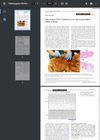
 The researchers investigated a Maine Coon cat with suspected classical Ehlers-Danlos Syndrome and discovered a heterozygous deletion in the COL5A1 gene, underscoring the value of whole-genome sequencing for precise veterinary diagnostics.
20 citations
,
December 1999 in “Journal of Investigative Dermatology” Mutations in the hHb6 gene cause the hair disorder monilethrix.
 14 citations
,
September 2018 in “The journal of allergy and clinical immunology/Journal of allergy and clinical immunology/The journal of allergy and clinical immunology”
14 citations
,
September 2018 in “The journal of allergy and clinical immunology/Journal of allergy and clinical immunology/The journal of allergy and clinical immunology” In this study, a novel homozygous mutation in the STAT5B gene was identified in a 17-year-old boy with growth hormone-refractory growth failure, severe eczema, and autoimmune disease, suggesting a similarity to known STAT5B deficiency phenotypes.
6 citations
,
November 2022 in “BMC Urology” In this study, researchers found that the microRNA miR-1199-5p may reduce the expression of SRD5A2 in benign prostatic hyperplasia tissues, potentially contributing to the failure of 5-α reductase inhibitor therapy in some patients.
12 citations
,
December 2013 in “Immunological Investigations” This study suggests that the 5’UTR SNP rs6457452 of HSPA1B may be associated with the onset of Alopecia Areata and reduced susceptibility in the Korean population.
 25 citations
,
November 2018 in “Cell reports”
25 citations
,
November 2018 in “Cell reports” This study found that the ablation of Esrp1 and Esrp2 disrupts epithelial tight junctions by affecting Arhgef11 isoform expressions, highlighting a potential mechanistic link between splicing alterations and epithelial barrier defects.
November 2022 in “Journal of Investigative Dermatology” This study reported that an HS-associated NCSTN mutation in iPSC-derived skin organoids led to altered hair follicle stem cell differentiation and increased expression of proteins linked to HS inflammation.
 510 citations
,
August 2006 in “Endocrinology”
510 citations
,
August 2006 in “Endocrinology” This minireview discusses a proposed model of the vitamin D receptor that explains how 1alpha,25(OH)2D3 can mediate both genomic and rapid responses through different ligand shapes and cellular locations, without presenting new research findings.
 25 citations
,
December 2005 in “Molecular Genetics and Metabolism”
25 citations
,
December 2005 in “Molecular Genetics and Metabolism” This study reports that riboflavin may increase enzymatic activity in a GCDH-deficient patient with specific mutations, but doesn't fully normalize urinary organic acid levels.
 January 2008 in “The Year book of endocrinology”
 Gene variant linked to prostate cancer, hormone levels, and hair loss.
8 citations
,
June 2017 in “Steroids” This study evaluated novel steroid compounds for their ability to inhibit 5α-reductase, showing that compound 16a significantly reduced rat prostate weight more than epristeride and exhibited excellent in vitro inhibitory potency, indicating its potential as a lead candidate for further benign prostatic hyperplasia drug research.
 52 citations
,
October 1999 in “Developmental Dynamics”
52 citations
,
October 1999 in “Developmental Dynamics” This study found that the hairless gene in mice has a more extensive role in development than previously thought, as indicated by its expression in various tissues and associated abnormalities in hr/hr mutants.
October 2014 in “Archives of Disease in Childhood” This case study reported that growth hormone therapy dramatically improved rickets symptoms and growth in three children with vitamin-D dependent rickets type 2 who had not responded to standard treatments.
37 citations
,
August 2015 in “The Journal of Steroid Biochemistry and Molecular Biology” This study found that in a mouse model with hereditary 1,25-dihydroxyvitamin D resistant rickets, a mutant vitamin D receptor lacking hormone-binding ability could restore normal hair cycling and affect parathyroid hormone regulation.