41 citations
,
March 2016 in “The Journal of Clinical Endocrinology & Metabolism” This study suggests that patients with STSD show a different pattern in androgen activation compared to healthy controls, potentially due to increased 5α-reductase activity and absent prepubertal serum DHEA surge.
9 citations
,
May 2024 in “Journal of Clinical & Translational Endocrinology” This review examines existing evidence on the efficacy and safety of gender affirming hormone therapy in relation to Gender Affirmation Surgery, but reports no new clinical results.
 17 citations
,
January 1986 in “Acta obstetricia et gynecologica Scandinavica”
17 citations
,
January 1986 in “Acta obstetricia et gynecologica Scandinavica” In this study, spironolactone treatment reduced hair growth in 17 out of 30 patients with hirsutism, but was less effective compared to cyproterone acetate–estrogen therapy.
2 citations
,
January 2005 in “PubMed” In this study, females with hirsutism showed higher levels of certain androgens and reported more frequent symptoms such as infertility and increased skin greasiness compared to those without hirsutism.
 January 2021 in “touchREVIEWS in Endocrinology”
 Surgery successfully treated a hidden ovarian tumor causing hair loss and excess hair growth in a postmenopausal woman.
October 2025 in “European Journal of Translational and Clinical Medicine” This study found that women with polycystic ovary syndrome had significantly higher serum dihydrotestosterone levels than healthy controls, supporting its use as a reliable biomarker for early detection of the condition.
 3 citations
,
April 2020 in “Clinical endocrinology and metabolism journal”
3 citations
,
April 2020 in “Clinical endocrinology and metabolism journal” This review discusses imaging's role in the diagnosis and management of congenital adrenal hyperplasia and reports no new clinical results; it suggests a potential presentation route via incidental radiologic findings.
 51 citations
,
November 2011 in “Reproductive Biology and Endocrinology”
51 citations
,
November 2011 in “Reproductive Biology and Endocrinology” In this study of reproductive-aged women in Tehran, idiopathic hirsutism and polycystic ovary syndrome were reported to be prevalent, with rates influenced by the screening methods used.
2 citations
,
January 2020 in “Clinical Dermatology Review” In this study, idiopathic hirsutism was identified as the most common cause of hirsutism among the patients, followed by polycystic ovarian syndrome.
 1 citations
,
October 2012 in “Gynäkologische Endokrinologie”
1 citations
,
October 2012 in “Gynäkologische Endokrinologie” This review discusses androgenization symptoms like hirsutism, alopecia, and acne in reproductive-age women, focusing on diagnostic and therapeutic approaches, and highlights postmenopausal considerations, but presents no new clinical findings.
 1 citations
,
April 2015 in “Iranian Journal of Clinical Infectious Diseases”
1 citations
,
April 2015 in “Iranian Journal of Clinical Infectious Diseases” This study found no significant difference in H. pylori antibody levels between women with and without PCOS, suggesting H. pylori infection may not influence infertility in these women.
 1 citations
,
June 2021 in “Revista de la Facultad de Ciencias Médicas de Córdoba”
1 citations
,
June 2021 in “Revista de la Facultad de Ciencias Médicas de Córdoba” This case report describes a postmenopausal woman with virilization linked to ovarian stromal hyperthecosis, highlighting the importance of detailed clinical evaluation and complementary testing for accurate diagnosis and treatment.
 March 2022 in “VNU Journal of Science Medical and Pharmaceutical Sciences”
 This study developed a sensitive method using LC-ESI-MS/MS for accurate and reliable measurement of nine steroid hormones in children's serum.
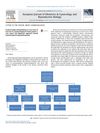 1 citations
,
February 2016 in “European Journal of Obstetrics & Gynecology and Reproductive Biology”
1 citations
,
February 2016 in “European Journal of Obstetrics & Gynecology and Reproductive Biology” This case study reports that medical imaging of the ovaries may not always conclusively identify the cause of postmenopausal hyperandrogenism, as demonstrated by a patient with a rare condition.
 2 citations
,
May 2018 in “International journal of reproduction, contraception, obstetrics and gynecology”
2 citations
,
May 2018 in “International journal of reproduction, contraception, obstetrics and gynecology” This case report describes a 41-year-old woman with lower abdominal pain who was found to have an ovarian cavernous hemangioma, highlighting the importance of correct diagnosis to prevent unnecessary radical surgery.
 October 2023 in “Journal of the Endocrine Society”
 This case report details a 73-year-old woman with significant hirsutism and hair loss linked to a rare ovarian Leydig cell tumor, which was resolved by bilateral salpingo-oophorectomy, normalizing her testosterone levels and addressing her symptoms.

In this case report, a 54-year-old woman with hirsutism was found to have a benign ovarian cystadenofibroma, which resolved after surgery, highlighting the importance of evaluating postmenopausal women for ovarian causes of androgen excess.
 4 citations
,
August 2019 in “Actas Dermo-Sifiliográficas”
4 citations
,
August 2019 in “Actas Dermo-Sifiliográficas” This study evaluated the Spanish version of the Hair Specific Skindex-29 questionnaire and found it sensitive to changes in health-related quality of life among women with female-pattern hair loss.
 1 citations
,
July 2019 in “The journal of applied laboratory medicine”
1 citations
,
July 2019 in “The journal of applied laboratory medicine” This review analyzes 873 cases of female hyperandrogenism, primarily attributing it to polycystic ovarian syndrome, and explores sample testing for suspected neoplasms but reports no new clinical findings.
 September 2019 in “Journal of Investigative Dermatology”
 This study found that the clinical severity of hidradenitis suppurativa, evaluated through Hurley staging, VAS, PGA, and SAHS, significantly affects patients' work absenteeism and presenteeism, with presenteeism being more prevalent.
 1 citations
,
April 2017 in “Journal of Investigative Dermatology”
1 citations
,
April 2017 in “Journal of Investigative Dermatology” This proof-of-concept study reported that a new, ultra-fast, one-step immunohistochemistry method improved the interpretation of Mohs surgery slides, particularly for poorly differentiated tumors.
November 2020 in “Journal of the American Academy of Dermatology” Intense pulsed light with radiofrequency showed mixed results in improving quality of life for hidradenitis suppurativa patients, with no clinical improvements.
 28 citations
,
August 2003 in “Steroids”
28 citations
,
August 2003 in “Steroids” This study found that untreated hirsute patients have lower expression of type 2 17β-HSD mRNA in scalp hairs, indicating potential disturbances in androgen metabolism, compared to treated hirsute patients.
 March 2025 in “ACS Applied Materials & Interfaces”
 This study found that using an ultrasound hollow microneedle array enhanced transdermal delivery of finasteride, accelerating hair regrowth in mice with androgenetic alopecia compared to other delivery methods.
 21 citations
,
September 2021 in “Fertility and Sterility”
21 citations
,
September 2021 in “Fertility and Sterility” This study found that the Elecsys AMH Plus immunoassay with a cutoff of 3.2 ng/mL is effective for diagnosing polycystic ovarian morphology, showing high sensitivity and specificity across different PCOS phenotypes.
 8 citations
,
June 2016 in “Journal of Cosmetic Dermatology”
8 citations
,
June 2016 in “Journal of Cosmetic Dermatology” The study concluded that serum AMH is a useful tool for diagnosing polycystic ovarian morphology in women with persistent acne, potentially replacing transvaginal ultrasound, though it does not correlate with hyperandrogenemia.
3 citations
,
March 1992 in “Journal of clinical pathology” This review discusses the clinical evaluation and investigation needed for hirsute women, suggesting that most cases require minimal testing unless virilism or severe symptoms are present; no new clinical results are provided.
 January 2024 in “Wiadomości Lekarskie”
 This study found that using a combined LH and FSH stimulation protocol significantly increased clinical pregnancy rates in women with low ovarian reserve compared to the standard protocol.
22 citations
,
January 2017 in “Journal of steroid biochemistry and molecular biology/The Journal of steroid biochemistry and molecular biology” This study developed and validated a mass spectrometric method to measure hydroxy-androgens in serum, which aids in understanding androgen synthesis in castration resistant prostate cancer.
4 citations
,
January 2018 in “Journal of dermatology & dermatologic surgery” This review compares European and U.S. treatment guidelines for hidradenitis suppurativa and reports no definitive standard, highlighting the need for more randomized controlled trials.