11 citations
,
May 2024 in “Reproductive Biology and Endocrinology” In this study, researchers found that human ovaries at different life stages biosynthesize both canonical and non-canonical steroid hormones, with fetal ovaries showing higher enzyme activity related to estradiol and testosterone conversion compared to adult tissues.
9 citations
,
May 2024 in “Journal of Clinical & Translational Endocrinology” This review examines existing evidence on the efficacy and safety of gender affirming hormone therapy in relation to Gender Affirmation Surgery, but reports no new clinical results.
 8 citations
,
February 2010 in “Journal of Dermatology”
8 citations
,
February 2010 in “Journal of Dermatology” This study observed that a topical liposome formulation of a 5‐α‐reductase inhibitor effectively reduced the size of treated sebaceous glands and induced apoptosis in a hamster model, suggesting potential benefits for acne treatment.
 8 citations
,
February 2009 in “Current Women's Health Reviews”
8 citations
,
February 2009 in “Current Women's Health Reviews” This review discusses the impact of testosterone therapy on postmenopausal women's sexual function and well-being but notes a lack of long-term safety studies and debates on defining androgen insufficiency.
 7 citations
,
June 2021 in “Trends in Food Science and Technology”
7 citations
,
June 2021 in “Trends in Food Science and Technology” This commentary reviews potential dietary and mineral influences on androgenetic alopecia and suggests considering a diet low in cholesterol and glycaemic index with improved glucose control and magnesium fortification, without new clinical results.
 7 citations
,
July 1999 in “In Practice”
7 citations
,
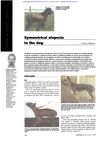
July 1999 in “In Practice” This article discusses the diagnostic approach to symmetrical alopecia in dogs, particularly focusing on conditions affecting the endocrine glands and hair follicles, without presenting new research results.
5 citations
,
September 1998 in “Medical hypotheses” This article discusses the potential of using flutamide and finasteride for complete androgen blockade in early-stage, low-grade prostate cancer and suggests they may improve symptom-free and overall survival compared to observation.
 3 citations
,
September 2014 in “Journal of obstetrics and gynaecology Canada”
3 citations
,
September 2014 in “Journal of obstetrics and gynaecology Canada” Menopause often leads to lower sexual desire and discomfort during sex, but treatment should be personalized and only if it bothers the woman.
 1 citations
,
July 2018 in “Elsevier eBooks”
1 citations
,
July 2018 in “Elsevier eBooks” This review covers androgenetic alopecia's epidemiology, pathogenesis, current management options, and research trends, concluding that no definitive cure exists despite extensive interest and ongoing genetic research efforts.
 April 2024 in “International journal of medical science and clinical research studies”
 In this review, the authors examine current treatments for acne in adult women with polycystic ovarian syndrome, noting that the combination of hyperandrogenism and metabolic issues in PCOS can lead to acne formation on the face, chest, and back.
 February 2025 in “International Journal of Pharmaceutical Research and Applications”
 This article reviews the symptoms, diagnosis, and management of polycystic ovary syndrome, emphasizing lifestyle changes and medical interventions, but presents no new findings.
 May 2019 in “Pakistan Journal of Pharmaceutical Sciences”
 This case report presented a female with PCOS treated with metformin who developed hyperuricemia, migraine, neurological and joint pain, and rheumatic fever, later showing a delayed hypersensitivity reaction to benzathine benzyl penicillin treatment.
 26 citations
,
April 2019 in “Journal of Cosmetic Dermatology”
26 citations
,
April 2019 in “Journal of Cosmetic Dermatology” This review discusses the potential of herbal treatments like Saw palmetto, Green tea, and Rosemary as alternatives to conventional drugs for androgenetic alopecia, noting that these herbs may inhibit the 5-alpha-reductase enzyme and reduce hair loss with fewer side effects.
 224 citations
,
March 2006 in “Seminars in Cutaneous Medicine and Surgery”
224 citations
,
March 2006 in “Seminars in Cutaneous Medicine and Surgery” This article discusses the hair follicle's regenerative cycles and the molecular mechanisms influencing them, emphasizing the need for therapeutic targeting of the "hair cycle clock" to manage hair growth disorders, without reporting new research findings.
 107 citations
,
August 2002 in “Journal of Neurology, Neurosurgery, and Psychiatry”
107 citations
,
August 2002 in “Journal of Neurology, Neurosurgery, and Psychiatry” Women with epilepsy should be monitored for reproductive issues, which can be caused by epilepsy or its treatments, especially when using valproate.
 91 citations
,
April 2017 in “Diabetes & Metabolic Syndrome: Clinical Research and Reviews”
91 citations
,
April 2017 in “Diabetes & Metabolic Syndrome: Clinical Research and Reviews” This review discusses the role of dietary habits and lifestyle modifications in managing polycystic ovary syndrome and reports no clinical results; the authors emphasize the need for tailored diet therapy in affected women.
 75 citations
,
May 1986 in “Clinics in endocrinology and metabolism”
75 citations
,
May 1986 in “Clinics in endocrinology and metabolism” This review explores how androgens and growth hormone influence the development of terminal hairs and sebaceous glands, attributing variability in hirsutism and acne to differing genetic sensitivities to androgens, but reports no new experimental data.
 48 citations
,
July 2009 in “The Journal of Sexual Medicine”
48 citations
,
July 2009 in “The Journal of Sexual Medicine” In this study, 50 mg/day of DHEA supplementation in postmenopausal women did not significantly improve sexual function compared to a placebo over 26 weeks.
 34 citations
,
January 2008 in “International Review of Neurobiology”
34 citations
,
January 2008 in “International Review of Neurobiology” This review discusses the interplay between epilepsy and reproductive endocrine disorders, examining the factors involved and emphasizing the importance of monitoring but reports no new research findings.
 30 citations
,
April 2018 in “Experimental Dermatology”
30 citations
,
April 2018 in “Experimental Dermatology” This review discusses the historical development and current challenges in in vitro hair follicle culture, highlighting a need for advanced models using cell lines and tissue engineering, and reports no new results.
 30 citations
,
March 2010 in “European Journal of Dermatology”
30 citations
,
March 2010 in “European Journal of Dermatology” This article discusses hair loss in postmenopausal women as often being multifactorial, reviewing various conditions affecting this group, but reports no new research findings.
 25 citations
,
June 2017 in “Molecular and Cellular Endocrinology”
25 citations
,
June 2017 in “Molecular and Cellular Endocrinology” This review discusses the negative effects of anabolic androgenic steroids on various organ systems in men and reports no new results, highlighting the need for physician awareness.
 23 citations
,
January 2013 in “Indian Journal of Dermatology, Venereology and Leprology”
23 citations
,
January 2013 in “Indian Journal of Dermatology, Venereology and Leprology” This article reviews the pathophysiology, diagnosis, and treatment of female pattern hair loss, highlighting the importance of early medical intervention to arrest hair loss progression, but reports no new clinical results.
 22 citations
,
October 2018 in “British Journal of Haematology”
22 citations
,
October 2018 in “British Journal of Haematology” This review examines the gender-specific challenges in preventing and treating venous thromboembolism in women and highlights the need for further research on safe and optimal treatment strategies.
 21 citations
,
January 2017 in “European Journal of Obstetrics & Gynecology and Reproductive Biology”
21 citations
,
January 2017 in “European Journal of Obstetrics & Gynecology and Reproductive Biology” This study suggests that acne is often associated with hyperandrogenemia in women, contradicting previous recommendations that acne is not linked to androgen excess disorders.
 21 citations
,
April 2019 in “Endocrinology and Metabolism Clinics of North America”
21 citations
,
April 2019 in “Endocrinology and Metabolism Clinics of North America” This review discusses skin diseases in transgender patients receiving gender-affirming hormone therapy and procedures, highlighting unique conditions and the underdiagnosis that affects their quality of life and mental health.
 20 citations
,
September 2020 in “International journal of computer applications”
20 citations
,
September 2020 in “International journal of computer applications” This study found that the Random Forest machine learning algorithm achieved the highest accuracy, 96%, in diagnosing Polycystic Ovarian Syndrome using patients' clinical data.
 20 citations
,
June 2010 in “International Journal of Dermatology”
20 citations
,
June 2010 in “International Journal of Dermatology” In this study, acne and hirsutism in women were associated with a higher prevalence of polycystic ovary syndrome compared to those without these conditions.
 19 citations
,
February 2012 in “International Journal of Urology”
19 citations
,
February 2012 in “International Journal of Urology” This review discusses gender identity disorder in Japan, highlighting the high prevalence and challenges in accessing appropriate treatment, and calls for wider understanding among medical professionals.
 14 citations
,
January 2001 in “Primary Care Update for Ob/gyns”
14 citations
,
January 2001 in “Primary Care Update for Ob/gyns” This review discusses the challenges in addressing female sexual dysfunction, focusing on the complexities of female sexual response, levels of dysfunction, clinical identification, and existing treatments, but presents no new clinical findings.