 99 citations
,
June 2005 in “Journal of Cosmetic Dermatology”
99 citations
,
June 2005 in “Journal of Cosmetic Dermatology” This article reviews factors influencing hair aging and available treatments like minoxidil and finasteride for androgenetic alopecia but reports no new clinical results.
 98 citations
,
May 2008 in “British Journal of Dermatology”
98 citations
,
May 2008 in “British Journal of Dermatology” This review discusses evidence-based guidance for managing primary cicatricial alopecias but reports no new clinical results, highlighting significant gaps in knowledge and the need for more quality trials.
 91 citations
,
August 2015 in “Anais Brasileiros De Dermatologia”
91 citations
,
August 2015 in “Anais Brasileiros De Dermatologia” This review discusses the clinical, epidemiological, and pathophysiological aspects of female pattern hair loss, reporting no new research findings.
 88 citations
,
January 2013 in “Indian Journal of Dermatology, Venereology and Leprology”
88 citations
,
January 2013 in “Indian Journal of Dermatology, Venereology and Leprology” This article reviews recent advancements in understanding and treating androgenetic alopecia, focusing on new genetic insights, stem cell roles, and diagnostic tools, without reporting new clinical results.
 80 citations
,
April 2018 in “Trends in Molecular Medicine”
80 citations
,
April 2018 in “Trends in Molecular Medicine” This review discusses the roles of interferon-γ and PPAR-γ-mediated signalling in scarring alopecia, suggesting these pathways as potential therapeutic targets, but it reports no new empirical results.
 75 citations
,
October 1996 in “Dermatologic Clinics”
75 citations
,
October 1996 in “Dermatologic Clinics” This review examines chronic telogen effluvium, highlighting its distinctive features and the need for reassurance about its non-progressive nature, but reports no new clinical results.
 72 citations
,
February 2011 in “The American Journal of Dermatopathology”
72 citations
,
February 2011 in “The American Journal of Dermatopathology” This study found that anti-TNF therapy-induced alopecia exhibits distinct clinical and histopathological features and can mimic psoriatic alopecia and alopecia areata, with some patients improving with topical treatment.
 72 citations
,
July 2008 in “Dermatologic Therapy”
72 citations
,
July 2008 in “Dermatologic Therapy” This article reviews central centrifugal cicatricial alopecia in African-descent females, discussing possible causes, associated styling habits, and potential treatments, but reports no new clinical findings; the authors call for further research.
 72 citations
,
March 2005 in “British Journal of Dermatology”
72 citations
,
March 2005 in “British Journal of Dermatology” In this case series, researchers observed androgenetic alopecia in 20 prepubertal children with a strong genetic predisposition, despite the condition typically not occurring before puberty.
 64 citations
,
January 2005 in “International Journal of Dermatology”
64 citations
,
January 2005 in “International Journal of Dermatology” This report discusses cases of frontal fibrosing alopecia developing after hair transplantation for androgenetic alopecia, without presenting new clinical findings.
 62 citations
,
January 2003 in “Dermatology”
62 citations
,
January 2003 in “Dermatology” This review suggests that androgenetic alopecia may be exacerbated by exposure to ultraviolet radiation and proposes considering it as a photoaggravated condition requiring photoprotection.
 59 citations
,
August 1998 in “International Journal of Dermatology”
59 citations
,
August 1998 in “International Journal of Dermatology” Genetics and hormones cause hair loss; finasteride treats it safely.
 58 citations
,
September 2012 in “Dermatologic Clinics”
58 citations
,
September 2012 in “Dermatologic Clinics” This article reviews current knowledge on the causes, diagnosis, and medical treatments for androgenetic alopecia, particularly in men, and reports no new findings.
 57 citations
,
January 2003 in “Clinical and experimental dermatology”
57 citations
,
January 2003 in “Clinical and experimental dermatology” This study identified postmenopausal frontal fibrosing alopecia as a distinct form of scarring alopecia in postmenopausal women, noting a potential link with a history of bilateral oophorectomy.
 56 citations
,
January 2021 in “Clinical and Experimental Medicine”
56 citations
,
January 2021 in “Clinical and Experimental Medicine” This review highlights the challenges in treating alopecia areata, noting that current therapies often lead to relapse and have uncertain long-term effectiveness; it also points to potential future treatments such as JAK-STAT inhibitors and PRP.
 51 citations
,
October 2002 in “British Journal of Dermatology”
51 citations
,
October 2002 in “British Journal of Dermatology” Finasteride increases hair density in female androgenetic alopecia, but individual results may vary.
 46 citations
,
March 2019 in “Journal of Pineal Research”
46 citations
,
March 2019 in “Journal of Pineal Research” The study found that melatonin treatment in early postnatal cashmere goats increased both the quantity and quality of cashmere by promoting secondary hair follicle development and enhancing antioxidant enzyme activities.
 39 citations
,
October 2018 in “Lupus Science & Medicine”
39 citations
,
October 2018 in “Lupus Science & Medicine” This article discusses various patterns of hair loss associated with lupus erythematosus, emphasizing the importance of identifying the specific type to aid in classifying systemic lupus erythematosus.
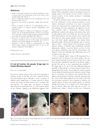 39 citations
,
July 2015 in “British Journal of Dermatology”
39 citations
,
July 2015 in “British Journal of Dermatology” This article discusses the pseudo 'fringe sign' in frontal fibrosing alopecia, highlighting that it is not solely related to traction, and it reports no new clinical results.
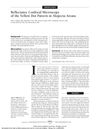 39 citations
,
January 2011 in “Archives of Dermatology”
39 citations
,
January 2011 in “Archives of Dermatology” This study found that the yellow dot pattern observed in dermoscopy of alopecia areata corresponds to inefficient follicular structures containing hair remnants, as corroborated by reflectance confocal microscopy and pathological findings.
 33 citations
,
August 2015 in “F1000Research”
33 citations
,
August 2015 in “F1000Research” This study presents a new model for androgenetic alopecia progression, explaining diffuse hair loss in women through 3D reconstructions of the arrector pili muscle and its relationship with the hair follicle stem cell niche.
 32 citations
,
February 2008 in “Journal of the American Academy of Dermatology”
32 citations
,
February 2008 in “Journal of the American Academy of Dermatology” This case report describes a family with autosomal dominant transmission of keratosis follicularis spinulosa decalvans, with observed treatment refractoriness in multiple topical and systemic therapies.
 30 citations
,
April 2020 in “Stem Cell Research & Therapy”
30 citations
,
April 2020 in “Stem Cell Research & Therapy” This study found that the PI3K-Akt signaling pathway is essential for regenerating new hair follicles when epidermal stem cells and skin-derived precursors are combined, suggesting potential therapeutic applications for hair regeneration.
 29 citations
,
July 2008 in “Journal of Cutaneous Pathology”
29 citations
,
July 2008 in “Journal of Cutaneous Pathology” This study found that follicular streamers are mostly present in non-scarring alopecia cases, and tracking their location can improve diagnosis accuracy.
 27 citations
,
February 2017 in “Biomedicine & Pharmacotherapy”
27 citations
,
February 2017 in “Biomedicine & Pharmacotherapy” This study found that white wax and its extract may promote hair growth in a mouse model of androgenetic alopecia by inhibiting 5α-reductase activity and increasing cell proliferation, with efficacy surpassing finasteride.
 24 citations
,
January 2012 in “Indian Journal of Dermatology, Venereology and Leprology”
24 citations
,
January 2012 in “Indian Journal of Dermatology, Venereology and Leprology” This study suggests that hypersensitivity and increased serum IgE levels might contribute to the pathogenesis of diffuse alopecia areata through intense local inflammatory infiltration.
 22 citations
,
February 2008 in “Journal of Dermatological Science”
22 citations
,
February 2008 in “Journal of Dermatological Science” This research found that spontaneous and depilation-induced hair growth result in biologically distinct telogen phases in murine skin, with variations in thickness, pigment content, and hair follicle composition.
 21 citations
,
March 2015 in “Journal of The American Academy of Dermatology”
21 citations
,
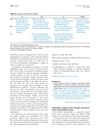
March 2015 in “Journal of The American Academy of Dermatology” In this study, five out of six patients treated with vemurafenib for metastatic melanoma experienced hair loss, which improved after topical steroid treatment.
 20 citations
,
October 2013 in “British Journal of Dermatology”
20 citations
,
October 2013 in “British Journal of Dermatology” The document concludes that clinicians should be aware of common hair and scalp disorders in women of African descent and that more research is needed to develop effective treatments.
 14 citations
,
January 2015 in “Skin appendage disorders”
14 citations
,
January 2015 in “Skin appendage disorders” This study reports that subtle presentations of lichen planopilaris may be mistaken for seborrheic dermatitis in patients with androgenetic alopecia, highlighting the importance of dermatoscopy-guided biopsy for accurate diagnosis.