 December 2017 in “Revista da Sociedade Portuguesa de Dermatologia e Venereologia”
 This report describes a case where a woman developed permanent alopecia after chemotherapy with taxanes for breast cancer, and she showed favorable response to 6 months of minoxidil topical treatment.
 6 citations
,
January 2016 in “Journal of Clinical and Diagnostic Research”
6 citations
,
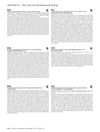
January 2016 in “Journal of Clinical and Diagnostic Research” This case report describes a non-arteritic anterior ischemic optic neuropathy that resolved after discontinuing topical 5% minoxidil treatment.
 April 2017 in “Journal of Investigative Dermatology”
 This study reports a new optimized protocol for isolating and labeling single cells from neonatal mouse skin, enabling high-quality single cell RNA sequencing for lineage-specific cell analysis.
 April 2010 in “The FASEB Journal”
 This study found that topical application of Korean ginseng berry promoted hair follicle development in mice, with a lower dose proving more effective than a higher dose.
 October 2023 in “Journal of Drug Delivery Science and Technology”
 This review highlights the emerging potential of electrospun nanofibers in promoting hair growth for androgenetic alopecia, showcasing their advantages like high porosity and antibacterial activity, and the possibility of integrating active pharmaceuticals.
 3 citations
,
January 2022 in “Journal of Cosmetic Dermatology”
3 citations
,
January 2022 in “Journal of Cosmetic Dermatology” This review highlights bicalutamide as a promising oral therapy for female pattern hair loss, noting its safety, tolerability, and effectiveness in women with hyperandrogenic symptoms like acne and hirsutism, though further trials are needed to confirm its ideal dose and efficacy.
 July 2026 in “IntechOpen eBooks”
 This review highlights the challenges and management strategies associated with persistent chemotherapy-induced alopecia, detailing the psychosocial impacts, follicular pathobiology, and available treatments such as scalp cooling and minoxidil, ultimately proposing a clinical algorithm to transform it into a preventable and manageable condition.
 March 2026 in “International journal of Nutrition Pharmacology Neurological Diseases”
 This study found that hair loss is common in Saudi Arabia, with prevalence rates between 13.8% and 71.3%, and is often untreated despite key risk factors like stress, vitamin D deficiency, and COVID-19.
 September 2024 in “Journal of the American Academy of Dermatology”
 Botulinum toxin is not effective or cost-efficient for treating male pattern baldness.
 2 citations
,
June 2016 in “Journal of Applied Biological Chemistry”
2 citations
,
June 2016 in “Journal of Applied Biological Chemistry” In this study, Glycine soja Siebold et Zucc extracts promoted hair growth and increased cell activity in mice, suggesting potential use for alopecia treatment.
 1 citations
,
July 2019 in “Medicina Clínica (English Edition)”
1 citations
,
July 2019 in “Medicina Clínica (English Edition)” Tofacitinib partially improved hair regrowth in a patient with severe hair loss.
May 2025 in “Biomedicine & Pharmacotherapy” This study found that HPD is a potent activator of hair follicle regeneration, surpassing the efficacy of conventional minoxidil treatment by modulating Wnt/β-catenin signaling and enhancing follicular proliferation, indicating its potential as a non-invasive hair restoration therapy.
 421 citations
,
April 2012 in “The New England Journal of Medicine”
421 citations
,
April 2012 in “The New England Journal of Medicine” Alopecia Areata is an autoimmune condition causing hair loss with no cure and treatments that often don't work well.
10 citations
,
July 1994 in “Journal of Dermatological Science” In this study, cyclosporin was found to prolong the hair-existing phase in nude mice, while corticosteroids inhibited its effect and suppressed hair regrowth.
 7 citations
,
October 2019 in “Klinická onkologie”
7 citations
,
October 2019 in “Klinická onkologie” This review discusses the impact of oncological therapy on hair loss, highlighting that while most alopecia is reversible, it can be permanent depending on treatment type and factors.
April 2026 in “Journal of Biomedicine and Translational Research” In this study, exosomes from hypoxia-conditioned mesenchymal stem cells significantly improved SOCS3 and STAT3 expression in a mouse model of androgenetic alopecia, suggesting they may offer a more effective therapeutic approach than minoxidil by restoring follicular homeostasis.
11 citations
,
July 2018 in “AJGP” This article reviews the clinical assessment of female pattern hair loss and discusses up-to-date treatments, highlighting oral minoxidil combined with oral spironolactone as a promising novel therapy. It emphasizes the crucial role of general practitioners in diagnosis, treatment planning, and managing associated psychosocial issues.
 23 citations
,
November 2015 in “Phytotherapy Research”
23 citations
,
November 2015 in “Phytotherapy Research” This study found that cucurbitacin I from bitter melon most effectively inhibited the growth of lung cancer cells and promoted hair cell growth in cell cultures.
 5 citations
,
November 2020 in “Frontiers in Cell and Developmental Biology”
5 citations
,
November 2020 in “Frontiers in Cell and Developmental Biology” This study introduced a simple and reliable in vitro assay capable of large-scale simultaneous screening of hair growth-promoting compounds using a 3D co-culture system of human dermal papilla and outer root sheath cells.
November 2024 in “Journal of the Philippine Dermatological Society” In this case report, significant hair regrowth was achieved in a young Filipino woman with severe diffuse alopecia areata using a combination of corticosteroids and methotrexate, highlighting the value of traditional therapies in regions with limited access to newer treatments.
1 citations
,
October 2025 in “Journal of the American Society of Nephrology” In this case report, a 56-year-old man developed acute granulomatous interstitial nephritis following Moderna Covid-19 vaccination, with his kidney function improving after steroid treatment but declining upon cessation; the report suggests a vaccine-related cause given his atypical clinical course.
 October 2021 in “Dermatology practical & conceptual”
 High-dose corticosteroids can significantly regrow hair in severe alopecia areata.
 1 citations
,
April 2017 in “Journal of Investigative Dermatology”
1 citations
,
April 2017 in “Journal of Investigative Dermatology” This study found that a novel 15% topical minoxidil solution achieved a clinically significant hair regrowth response in 60% of women with female pattern hair loss who did not respond to 5% minoxidil, without increasing adverse events.
 39 citations
,
February 2021 in “Journal of The American Academy of Dermatology”
39 citations
,
February 2021 in “Journal of The American Academy of Dermatology” In this study, low-dose oral minoxidil for hair loss was associated with infrequent systemic adverse effects, and only 1.7% of patients discontinued treatment due to these effects.
 14 citations
,
August 2020 in “Dermatologic Therapy”
14 citations
,
August 2020 in “Dermatologic Therapy” This study reported that low-dose oral minoxidil is generally safe for treating various types of hair loss, though it may cause hypertrichosis and pedal edema, especially at higher doses.
 12 citations
,
January 2020 in “Skin appendage disorders”
12 citations
,
January 2020 in “Skin appendage disorders” Low-dose oral minoxidil effectively treats female hair loss with good safety.
 2 citations
,
January 2021 in “Journal of The American Academy of Dermatology”
2 citations
,
January 2021 in “Journal of The American Academy of Dermatology” This commentary highlights the consistency of recent findings on low-dose oral minoxidil's tolerability for androgenetic alopecia, noting infrequent side effects except for hypertrichosis.
 4 citations
,
May 2020 in “Medicine in Drug Discovery”
4 citations
,
May 2020 in “Medicine in Drug Discovery” This study found that arylsulfatase enzymes in hair follicles can convert the active form of minoxidil back to its inactive form, potentially affecting its effectiveness in treating androgenetic alopecia.
 54 citations
,
February 1986 in “Archives of Dermatology”
54 citations
,
February 1986 in “Archives of Dermatology” This study found that 5% topical minoxidil solution led to greater hair regrowth in severe alopecia areata patients compared to 1% minoxidil, although most regrowth was not cosmetically acceptable.
 24 citations
,
September 2019 in “Journal of The American Academy of Dermatology”
24 citations
,
September 2019 in “Journal of The American Academy of Dermatology” This study found that using very-low-dose oral minoxidil (0.25 mg/d) led to improvement or stabilization of hair parameters in 40% to 60% of men with androgenetic alopecia, although results were not statistically significant for the overall group.