1 citations
,
October 2025 in “International Journal of Molecular Sciences” This study found that zebrafish with a mutation in the GDP-fucose biosynthesis gene exhibited enhanced and faster regeneration of mechanosensory hair cells, implicating the importance of this gene and Notch signalling regulation in hair cell regeneration mechanisms.
January 2018 in “International Society of Hair Restoration Surgery” This announcement details employment opportunities at the Anderson Center for Hair and includes no clinical research findings.
November 2025 in “The Journal of Immunology” This study found that CD80 expression in wound-activated hair follicle stem cells induces Foxp3 expression in effector T cells, facilitating wound repair by converting them into regulatory T cells.
87 citations
,
March 2007 in “Biological Chemistry” In this study, targeted deletion of the stearoyl-CoA desaturase 1 gene in mice disrupted the epidermal lipid barrier, leading to increased water loss, impaired thermoregulation, and metabolic issues.
 16 citations
,
December 2018 in “ACS Biomaterials Science & Engineering”
16 citations
,
December 2018 in “ACS Biomaterials Science & Engineering” This research found that a biodegradable fibrous membrane incorporating fibroblast-derived ECM accelerated wound healing and improved neovascularization in a mouse model.
December 2025 in “Biomedicines” In this study, researchers identified two person-centered sexual function profiles among women, linked to physical and psychological factors, with PCOS showing greater, though not significant, presence in the dysfunction profile. The dysfunction was associated with higher adiposity and body-image distress.
September 2023 in “Pharmaceutics” In this study, the authors developed a medicated face mask using electrospun fibers to deliver the active compound Eflornithine hydrochloride for managing hirsutism. The mask showed promising drug release characteristics, a high safety profile, and reduced hair growth in mice.
 24 citations
,
July 2017 in “Structure”
24 citations
,
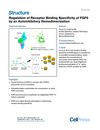
July 2017 in “Structure” In this study, researchers found that ligand homodimerization controls the receptor binding specificity of the FGF9 subfamily, preventing off-target activation of FGFR "b" isoforms.
 179 citations
,
December 2004 in “Journal of The American Academy of Dermatology”
179 citations
,
December 2004 in “Journal of The American Academy of Dermatology” This study observed that frontal fibrosing alopecia in postmenopausal women involves selective follicular inflammation, and finasteride treatment may slow disease progression, suggesting a potential androgen-related component.
 8 citations
,
December 2017 in “Journal of The American Academy of Dermatology”
8 citations
,
December 2017 in “Journal of The American Academy of Dermatology” This correspondence discusses the diagnostic criteria for frontal fibrosing alopecia but reports no new research findings, agreeing with many previously suggested criteria.
 7 citations
,
January 2015 in “Case reports in genetics”
7 citations
,
January 2015 in “Case reports in genetics” This case report illustrates how SNP array testing helped identify a DCAF17 mutation linked to Woodhouse-Sakati syndrome in consanguineous Qatari siblings with shared features including alopecia and hypogonadotropic hypogonadism.
 December 2016 in “Journal of Dermatology and Dermatologic Surgery”
 In this study, the Instant Follicular Hair Unit Transplant technique demonstrated superior hair growth compared to conventional FUE in patients with androgenetic alopecia, although it requires a steeper learning curve for surgeons.
33 citations
,
May 2015 in “JAMA Dermatology” This study identifies comedonal or cystic fibrofolliculomas as novel diagnostic clues for earlier recognition of Birt-Hogg-Dube syndrome, potentially facilitating timely surveillance of associated systemic complications.
2 citations
,
May 2006 in “Archives of Pathology & Laboratory Medicine” This case report describes a 40-year-old woman with Birt-Hogg-Dubé syndrome diagnosed with multiple chromophobe renal cell carcinomas, highlighting the importance of recognizing associated dermatologic lesions for early intervention.
March 2018 in “International Society of Hair Restoration Surgery” This announcement outlines job opportunities at the Anderson Center for Hair and provides no clinical research findings.
 70 citations
,
March 2010 in “The Journal of Steroid Biochemistry and Molecular Biology”
70 citations
,
March 2010 in “The Journal of Steroid Biochemistry and Molecular Biology” This study discusses the potential of targeting 11β-HSD1 for treating metabolic syndrome and highlights emerging promising data from human trials on selective 11β-HSD1 inhibitors.
December 2016 in “Journal of Pakistan Association of Dermatologists” This case study describes a 22-year-old woman with hirsutism who experienced symptom reversal through addressing nonclassical adrenal hyperplasia and polycystic ovaries alongside laser hair removal.
10 citations
,
June 2022 in “Frontiers in Immunology” This study found that sterile fucoidan promotes T cell proliferation but reduces differentiation at higher concentrations and suppresses osteogenic differentiation in co-cultured environments.
 21 citations
,
January 2018 in “Anticancer Research”
21 citations
,
January 2018 in “Anticancer Research” This study suggests that NBCCS and BFHS may be the same genetic condition, which could help improve identification and management of misdiagnosed cases with specific surveillance strategies.
January 2016 in “Indian dermatology online journal” This case study diagnosed a 60-year-old woman with frontal fibrosing alopecia after histopathological analysis showed characteristic scarring patterns in the hairline area.
 6 citations
,
June 2019 in “International Journal of Dermatology”
6 citations
,
June 2019 in “International Journal of Dermatology” This article discusses familial frontal fibrosing alopecia in two male families and reports no new clinical findings.
7 citations
,
August 2019 in “JAAD Case Reports” This article reviews the potential relationship between serum amyloid A and hidradenitis suppurativa, highlighting genetic influences, but reports no new clinical findings.

The document recommends a multidisciplinary approach and experience sharing to advance facial feminization surgery as a medical field.
1 citations
,
October 2021 in “The journal of investigative dermatology/Journal of investigative dermatology” This study found that depleting HIF-P4H-2 in FoxD1-lineage cells in mice led to disrupted hair follicle development, resulting in truncal alopecia but normal cranial hair, suggesting its crucial role in hair homeostasis.
8 citations
,
June 2015 in “Wound Repair and Regeneration” This study found that stem cell factor (SCF) improved wound healing in diabetic mice by enhancing stem cell recruitment and increasing key protein expressions involved in the healing process.
 June 2025 in “Medical alphabet”
 This study found that the manual hair transplantation method HFE may offer better precision and cosmetically satisfying results with minimal tissue trauma for treating androgenetic alopecia in men.
41 citations
,
November 2019 in “Journal of Ultrasound in Medicine” This study found that 70-MHz ultrasound can detect early signs of hidradenitis suppurativa linked to severity, including hair follicle abnormalities and keratin fragmentation, aiding in diagnosis and management.
4 citations
,
June 2017 in “Annales de dermatologie et de vénéréologie” This prospective study in Morocco reported on 20 cases of frontal fibrosing alopecia, finding that dermoscopy played a key role in diagnosing and managing the condition, which can increasingly affect premenopausal women.
January 2012 in “Chinese Clinical Oncology” This study found that for metastatic colorectal cancer patients, substituting calcium folinate with disodium folinate in combination with fluorouracil and oxaliplatin showed similar effectiveness and safety as the mFOLFOX6 regimen.
20 citations
,
December 1994 in “Fertility and sterility” In this study, treatment with flutamide combined with a low-dose oral contraceptive significantly improved hirsutism in women with polycystic ovarian disease who did not respond to oral contraceptive treatment alone.