Modulation of T Cell Responses by Fucoidan to Inhibit Osteogenesis
June 2022
in “
Frontiers in Immunology
”
Studysummary This study found that sterile fucoidan promotes T cell proliferation but reduces differentiation at higher concentrations and suppresses osteogenic differentiation in co-cultured environments. Our plain-language summary of this paper — not a Tressless recommendation.
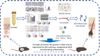
The study investigated the effects of high-temperature autoclave sterilized fucoidan (HFD) on T cell responses and its impact on osteogenesis. HFD was found to increase T cell proliferation at concentrations between 0.4–50 mg/mL but inhibited T cell differentiation, particularly at higher concentrations. This inhibition of T cell differentiation led to a reduction in osteogenesis, as evidenced by reduced ALP expression and mineralized nodule formation. The study highlighted that this was the first report of fucoidan being used in vitro to modulate T cell responses and its effects on osteogenesis, providing new insights into how fucoidan could regulate bone formation through its effects on T cells.