 6 citations
,
October 2012 in “Journal of Heredity”
6 citations
,
October 2012 in “Journal of Heredity” This study identified the Itpr3 gene as responsible for the tufted hair loss phenotype in the BTBR mouse strain.
April 2018 in “Journal of Investigative Dermatology” In this study using a transgenic mouse model, Id2 overexpression in hair follicle stem cells prolonged quiescence by affecting gene expression, partly independent from BMP signaling.
 120 citations
,
August 2008 in “The journal of investigative dermatology/Journal of investigative dermatology”
120 citations
,
August 2008 in “The journal of investigative dermatology/Journal of investigative dermatology” This study found that C8/144B antibody exclusively binds to the hair follicle bulge and not the epidermal stratum basale, with cytokeratin 19 serving as a key marker of certain basal keratinocytes that decrease with age.
1 citations
,
May 2022 in “International journal of molecular sciences” This study found that in Hutchinson–Gilford progeria syndrome, iPSCs committed to the keratinocyte lineage faster than normal cells, with LEF1 expression reduced and a partial rescue of the phenotype achieved through adenine base editing.
8 citations
,
April 2016 in “Experimental dermatology” This study found that the immune-competent B6. Cg‐Tyr c−2J Hr hr /J congenic mouse line had a more pronounced delayed sunburn response and different proliferative skin reactions to UV exposure compared to SKH 1 mice.
15 citations
,
September 1973 in “PubMed” This study observed that in cases of moderately severe male-pattern hirsutism, elevated free plasma androgen levels occur in 85% of patients, suggesting a subtle hyperandrogenic state as a common underlying factor.
May 2021 in “Journal of the Endocrine Society” This case report highlights the adverse effects of unmonitored bioidentical hormone replacement therapy, emphasizing the need for patient education about its safety and efficacy compared to FDA-regulated hormones.
November 2025 in “OPAL (Open@LaTrobe) (La Trobe University)” In this study, researchers conducted additional IHC staining on equine skin sections and found that collagen type III primarily labels the extracellular matrix, while anti-PDGFR-antibody staining highlights cells with long-shaped processes mainly arranged around hair follicles.
5 citations
,
September 2021 in “Journal of Molecular Histology” In this study, the researchers identified LHX2 as a specific marker for hair follicle placodes, differentiating them from eccrine sweat gland placodes through double immunofluorescence staining.
1 citations
,
June 2022 in “Tidsskrift for Den norske legeforening” A young boy's uncombable hair is due to a rare genetic condition that usually improves over time.
412 citations
,
January 1998 in “Science” This study identified a missense mutation in the human hairless gene associated with a rare form of recessively inherited alopecia universalis, pinpointed on chromosome 8p12.
 January 2024 in “Genetics in Medicine Open”
 This case study of a patient with a variant in the extracellular region of IL6ST suggests a potential expansion of the phenotypic spectrum for autosomal dominant hyper-IgE syndrome, warranting further investigation.
 30 citations
,
October 2014 in “PLOS ONE”
30 citations
,
October 2014 in “PLOS ONE” This study found that BAF200, a subunit of the PBAF chromatin remodeling complex, is crucial for heart development and coronary artery formation in mice, as its absence led to embryonic lethality with severe cardiac defects.
 13 citations
,
July 2016 in “BMC Complementary and Alternative Medicine”
13 citations
,
July 2016 in “BMC Complementary and Alternative Medicine” In this study, topical application of Hominis Placenta significantly promoted hair regrowth and increased hair density in C57BL/6 mice, suggesting its potential as a treatment for alopecia.
October 2018 in “The American journal of gastroenterology” This case study highlights the importance of early detection and management of pembrolizumab-induced hepatitis, suggesting that early steroid treatment could potentially prevent severe complications.
 7 citations
,
January 2016 in “Laboratory Investigation”
7 citations
,
January 2016 in “Laboratory Investigation” TR3 is mainly found in hair follicle stem cells and may be involved in hair loss.
 25 citations
,
May 2013 in “Journal of mammary gland biology and neoplasia”
25 citations
,
May 2013 in “Journal of mammary gland biology and neoplasia” This review examines the roles of Hedgehog and Gli proteins in mouse embryonic mammary development and suggests that Gli3-repressor-mediated off-state of Hedgehog signaling determines mammary fate over hair follicle fate.
 September 2023 in “Plant journal”
 This study showed that the zinc finger protein GIS3 is important for root hair growth in Arabidopsis by regulating RHD2 and RHD4 genes, with application of ethylene and cytokinin helping restore root hair presence in mutated variants.
February 2026 in “Psychoneuroendocrinology” Hair cortisol concentration partly reflects HPA axis regulation but doesn't capture all its complexities.
33 citations
,
May 2015 in “JAMA Dermatology” This study identifies comedonal or cystic fibrofolliculomas as novel diagnostic clues for earlier recognition of Birt-Hogg-Dube syndrome, potentially facilitating timely surveillance of associated systemic complications.
 August 2022 in “Frontiers in genetics”
 This study identified a novel bi-allelic missense variant in the DSC3 gene linked to severe Hypotrichosis with Recurrent Skin Vesicles in a Saudi child, supporting its role in the condition.
April 2019 in “Journal of the Endocrine Society” This case report described a 62-year-old postmenopausal woman with hirsutism whose symptoms improved after a hysterectomy and bilateral oophorectomy, revealing bilateral ovarian hyperthecosis.
 7 citations
,
January 2016 in “Methods in molecular biology”
7 citations
,
January 2016 in “Methods in molecular biology” This study describes the process of isolating and analyzing multipotent stem cells from mouse hair follicles for potential use in tissue engineering and regenerative medicine.
1 citations
,
April 2019 in “The journal of investigative dermatology/Journal of investigative dermatology” This study observed significant differences in the skin microbiome between hidradenitis suppurativa patients and healthy individuals, notably with decreased β-diversity and a distinct abundance of certain bacteria in affected skin.
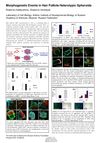
This study found that hyaluronic acid increased the size of hair follicle germ-like aggregates and the number of proliferative cells but did not maintain specific markers during the process.
 March 2022 in “Benha Journal of Applied Sciences”
 This study suggests that the serum marker may play a role in the pathogenesis of tinea capitis and could serve as an independent risk factor for assessing vulnerability, activity, and severity of the condition.
3 citations
,
January 2023 in “Nutrients” This study found that Hordenine promotes hair regrowth and enhances dermal-papilla cell activity in mice by activating the Wnt/β-catenin signaling pathway, suggesting potential for treating alopecia.
79 citations
,
January 2002 in “Nucleic Acids Research” This study found that BMP-2 activates Dlx3 gene transcription in murine keratinocytes by binding with Smad1/Smad4, suggesting a mechanism for BMP signaling's role in skin and hair follicle regulation.
5 citations
,
October 2021 in “American Journal of Medical Genetics Part A” This case report identifies a novel maternally inherited MBTPS2 variant associated with an expanded phenotypic spectrum of BRESHECK syndrome, including cytopenias, bone marrow fibrosis, and chronic diarrhea.

This case report describes a six-year-old child with congenital biotinidase deficiency whose symptoms, including breathlessness, alopecia, and hearing loss, were reversed with biotin supplementation.