 43 citations
,
August 2016 in “International Journal of Nanomedicine”
43 citations
,
August 2016 in “International Journal of Nanomedicine” This study found that a eupafolin nanoparticle delivery system improved water solubility and skin penetration, enhancing its antioxidant and anti-inflammatory effects against particulate matter-induced stress in skin cells.
1 citations
,
March 2009 in “The Journal of Urology” This review discusses trials on therapies for benign prostatic hyperplasia and reports that combination treatment is more effective than monotherapy for symptom relief and slowing disease progression in men with moderate to severe symptoms and enlarged prostate glands.
83 citations
,
February 1991 in “Development” This study found that Fos protein expression is closely linked to epithelial cell differentiation, particularly during cornification and cell death, with overexpression observed in keratinization-blocked mutant epidermis.
 2 citations
,
December 2023 in “Health Technology Assessment”
2 citations
,
December 2023 in “Health Technology Assessment” In this study, researchers found that in the UK, laser treatment for hidradenitis suppurativa had the highest participant eligibility and preference compared to other interventions, highlighting its potential priority in future trials.
 61 citations
,
September 2020 in “Bioactive Materials”
61 citations
,
September 2020 in “Bioactive Materials” This study found that the multifunctional FEA-PCEI dressing significantly accelerated wound healing, reduced scar formation, and promoted hair follicle neogenesis while providing antibacterial and anti-inflammatory benefits.
11 citations
,
June 2010 in “Dermatologic surgery” This article contains information about journal subscriptions and does not report any research findings.
 22 citations
,
January 2019 in “Endocrinology and metabolism”
22 citations
,
January 2019 in “Endocrinology and metabolism” This study found that among Filipino women, a modified Ferriman-Gallwey score of 7 or above indicates hirsutism and is significantly associated with elevated calculated free testosterone.
 130 citations
,
August 2015 in “Experimental Dermatology”
130 citations
,
August 2015 in “Experimental Dermatology” This review provides a comprehensive guide to serum-free human hair follicle organ culture methods, highlighting research opportunities, standardization efforts, and potential applications without reporting new empirical findings.
2 citations
,
June 2024 in “Skin Appendage Disorders” This study identifies specific trichoscopic features such as empty follicles and perifollicular erythema in Caucasians with frontal fibrosing alopecia, which may assist in diagnosis and monitoring, but stresses the need for further research due to limited demographic data.
 January 2024 in “Genetics in Medicine Open”
 This case study of a patient with a variant in the extracellular region of IL6ST suggests a potential expansion of the phenotypic spectrum for autosomal dominant hyper-IgE syndrome, warranting further investigation.
 22 citations
,
October 2020 in “Frontiers in Cell and Developmental Biology”
22 citations
,
October 2020 in “Frontiers in Cell and Developmental Biology” This study found that resveratrol and fisetin promoted hair growth in mice by inducing telomerase reverse transcriptase expression, which activates hair follicle stem cells and transitions follicles from a resting to a growth phase.
 1 citations
,
May 2014 in “European Journal of Inflammation”
1 citations
,
May 2014 in “European Journal of Inflammation” This study found that a topical lotion containing minoxidil, hydrocortisone butyrate, and 17α-estradiol improved or stabilized frontal fibrosing alopecia in 35 out of 40 women over 36 months.
 4 citations
,
December 2022 in “The journal of investigative dermatology/Journal of investigative dermatology”
4 citations
,
December 2022 in “The journal of investigative dermatology/Journal of investigative dermatology” This article discusses the role of human scalp hair follicles in neurohormone production and their model potential for studying neuroendocrine signaling, reporting no experimental results.
 9 citations
,
July 2002 in “Journal of the European Academy of Dermatology and Venereology”
9 citations
,
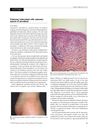
July 2002 in “Journal of the European Academy of Dermatology and Venereology” This article discusses multiple minute digitate hyperkeratosis in a dermatological context and reports no new clinical findings; the authors focus on a descriptive review.
 29 citations
,
April 2004 in “Annals of Pharmacotherapy”
29 citations
,
April 2004 in “Annals of Pharmacotherapy” This review concluded that finasteride may reduce hirsutism scores and hair diameter in women with hyperandrogenism, but concerns about teratogenicity and long-term safety make it a secondary treatment option.
17 citations
,
July 2022 in “BMC Genomics” This study found that overexpression of the FA2H gene in cashmere goats' hair follicle cells may enhance hair proliferation and regulate genes affecting cashmere fineness.
4 citations
,
December 2017 in “Journal of zoo and wildlife medicine” This study proposes that seasonal alopecia and reproductive changes in six female fossas at the San Diego Zoo may be linked to hormonal changes associated with reproductive activity.
 5 citations
,
May 2018 in “Drug Safety”
5 citations
,
May 2018 in “Drug Safety” This study found that using electronic healthcare record data can provide valuable early insights into the clinical context of about half of the new safety signals evaluated within a regulatory environment.
2 citations
,
June 2004 in “Expert review of pharmacoeconomics & outcomes research” This review discusses the causes and treatment options for idiopathic hirsutism and reports that various therapies may reduce hirsutism severity and the Ferriman–Gallwey score by 35–40% after one year.
9 citations
,
March 2008 in “British Journal of Dermatology” This article describes a case of hypertrichosis potentially induced by using efalizumab but provides no new clinical study results.
125 citations
,
August 2003 in “Development” In this study, mice engineered to express human EGFR showed tissue-specific growth defects and neurodegeneration rescue, but developed severe heart issues and accelerated bone cell differentiation.
 August 2021 in “Case Reports”
 This report describes a case where a woman with frontal fibrosing alopecia initially presented with symptoms resembling rosacea, but further investigation led to a diagnosis of FFA, resulting in a treatment change to oral finasteride and hydroxychloroquine.
 106 citations
,
March 2014 in “BioEssays”
106 citations
,
March 2014 in “BioEssays” This review examines current knowledge on human epithelial hair follicle stem cells, their markers, and outlines challenges in translating findings from murine studies to human research, but does not report new experimental results.
October 2022 in “Hair Transplantation” This review discusses the choice between follicular unit transplantation (FUT) and follicular unit excision (FUE) in hair restoration surgery, highlighting their respective advantages and how improved techniques have increased FUE's popularity despite equivalent aesthetic results with FUT.
 1 citations
,
September 2016 in “PubMed”
1 citations
,
September 2016 in “PubMed” This study found that adding topical finasteride 0.5% to diode laser therapy significantly reduced unwanted facial hair in women with idiopathic hirsutism compared to laser treatment with a placebo.
16 citations
,
September 2021 in “Frontiers in Bioengineering and Biotechnology” In this study, chitosan-modified fucoidan/polyethylene oxide nanofibers were developed, showing promise as bio-scaffolds for tissue-engineered blood vessels by enhancing endothelial cell adhesion and inhibiting monocyte attachment.
May 2024 in “NATIONS UNIVERSITY INTERNATIONAL JOURNAL OF MULTI-DISCIPLINARY STUDIES” This study found that Equisetum arvense, or horsetail, water extracts prepared with polyethylene glycol in an ultrasonic bath yielded the highest levels of phenolic compounds, such as hydroxycinnamic acids and flavonoids, indicating that this method improves the release of biologically active substances.
1 citations
,
January 2024 in “Journal of personalized medicine” This narrative review suggests a strong association between abrupt hormonal imbalances and frontal fibrosing alopecia in women, especially related to reduced fertile years and certain hormonal therapies.
 13 citations
,
January 2012 in “International Journal of Trichology”
13 citations
,
January 2012 in “International Journal of Trichology” In this study, idiopathic hirsutism was identified as the most common cause of hirsutism among the participants, with a significant difference in hormone levels between cases of polycystic ovarian syndrome and idiopathic hirsutism.
 27 citations
,
January 2001 in “Endocrine Practice”
27 citations
,
January 2001 in “Endocrine Practice” In this preliminary study, women with facial hirsutism treated with topically applied finasteride cream showed a significant decrease in hair growth and thickness compared to placebo, without adverse effects.