25 citations
,
October 2022 in “Ophthalmic Research” In this study, 650 nm low-level red light therapy may cause a short-term transient increase in retinal fovea perfusion density in children, with no lasting effects observed at 1 hour post-treatment.
 January 2017 in “Clinical approaches and procedures in cosmetic dermatology”
 This review explores clinical studies on low-level laser therapy (LLLT) for alopecia and suggests it may benefit patients unresponsive to conventional treatments, but larger studies are needed to confirm efficacy.
5 citations
,
June 2015 in “The Journal of Dermatology” This study identified "HTLV-1-associated lichenoid dermatitis" as a skin condition in HTLV-1-infected individuals, characterized by reactive eruptions associated with increased immunity toward infected CD4+ T cells.
 64 citations
,
June 2020 in “PLoS ONE”
64 citations
,
June 2020 in “PLoS ONE” This study found that red light exposure significantly enhanced the growth, phytochemical content, and therapeutic potential of Eclipta alba callus cultures compared to other multispectral light exposures.
64 citations
,
October 2020 in “Journal of lasers in medical sciences” This review discusses the benefits and drawbacks of low-level laser therapy for various non-surgical conditions based on existing literature, but reports no new clinical findings and suggests further research is needed.
35 citations
,
December 2014 in “Lasers in surgery and medicine” This study found that red light accelerated the transition from the resting to growth phase in hair follicles faster than green and blue light in mice, suggesting it may stimulate hair growth.
 19 citations
,
September 2011 in “Seminars in Cutaneous Medicine and Surgery”
19 citations
,
September 2011 in “Seminars in Cutaneous Medicine and Surgery” This review discusses home-use laser and light skin devices for various dermatological purposes and reports no new clinical findings; the authors highlight the need for dermatologists to evaluate these devices' clinical value.
 April 2019 in “Journal of Investigative Dermatology”
 This review examines clinical trials on low-level laser therapy for pattern hair loss but reports no definitive conclusions, highlighting the need for more controlled studies to resolve uncertainties.
46 citations
,
December 2000 in “Seminars in Cutaneous Medicine and Surgery” This article discusses the use of lasers and light sources for hair removal and reports no new clinical results; it emphasizes the significance of selecting the appropriate laser system and treatment protocol for effective and safe outcomes.
 April 2018 in “Journal of Investigative Dermatology”
 This study found that DC-HIL+ myeloid derived suppressor cells are increased in the blood and skin of patients with cutaneous lupus erythematosus and show immunosuppressive properties.
 150 citations
,
April 1999 in “Dermatologic Clinics”
150 citations
,
April 1999 in “Dermatologic Clinics” This article reviews the biological and physical principles of laser hair removal and reports that current laser systems do not consistently achieve permanent hair follicle destruction across treated areas.
 11 citations
,
January 2020 in “Skin appendage disorders”
11 citations
,
January 2020 in “Skin appendage disorders” This study reviewed clinical trials and found that low-level laser therapy significantly increased hair diameter or density in both men and women with pattern hair loss compared to a sham device, though the involvement of industry relationships in some studies suggests cautious interpretation.
 1 citations
,
April 2018 in “Lasers in Surgery and Medicine”
1 citations
,
April 2018 in “Lasers in Surgery and Medicine” This review summarizes late-breaking abstracts from the American Society for Laser Medicine and Surgery, 2018, and reports no new clinical findings.
18 citations
,
October 2015 in “Journal of the European Academy of Dermatology and Venereology” In this study, topical eflornithine reduced hair regrowth in hirsute patients following intense pulsed light therapy, suggesting it may maintain IPL-induced hair reduction over six months.
3 citations
,
August 2018 in “Medical Journal Armed Forces India/MJAFI” In this study, IPL treatment for six months significantly reduced hair growth in females with faun tail nevus linked to spinal abnormalities.
 February 2025 in “Cosmetics”
 This narrative review explored how blue light therapy may offer therapeutic benefits for various skin disorders by affecting microbial activity and immune responses, promoting hair growth, and aiding skin rejuvenation and healing.
 2 citations
,
May 2010 in “Actas Dermo-Sifiliográficas”
2 citations
,
May 2010 in “Actas Dermo-Sifiliográficas” This article reviews home-use laser and intense pulsed light systems for hair removal and growth, noting limited efficacy and safety data and emphasizing the need for long-term studies.
14 citations
,
November 2022 in “Archives of Dermatological Research” This study found that a green-light LED microneedle patch enhanced hair growth in mice with the best results among tested wavelengths, showing increased hair follicles and no serious side effects, suggesting its potential for treating androgenetic alopecia.
 45 citations
,
June 2004 in “Lasers in Medical Science”
45 citations
,
June 2004 in “Lasers in Medical Science” This study found that non-coherent intense pulsed light (IPL) treatment significantly reduced hair growth by about 80% in patients with skin type III-V without causing side effects.
 May 2023 in “Elsevier eBooks”
 This study found that low-level laser/light therapy is effective and safe for treating mild to moderate androgenetic alopecia in individuals with certain skin types, especially when combined with other treatments, although further research is needed to refine protocols and verify long-term outcomes.
 23 citations
,
September 2011 in “Journal of Dermatological Science”
23 citations
,
September 2011 in “Journal of Dermatological Science” This study explored the effects of a new narrow-band red LED light on hair growth in mice, showing potential benefits compared to existing laser therapies.
 6 citations
,
December 2017 in “Journal of Cosmetic and Laser Therapy”
6 citations
,
December 2017 in “Journal of Cosmetic and Laser Therapy” This study evaluated low-level laser therapy for treating Androgenic alopecia and suggested it may effectively stimulate hair growth and improve patient satisfaction, although more efficient treatments are needed.
 April 2019 in “Archives of aesthetic plastic surgery”
 This study evaluated an 808-nm diode laser at different fluences for permanent axillary hair removal in Korean women and found that high-fluence treatment (14 J/cm2) effectively reduced hair density and thickness, with no significant difference in comfort compared to lower fluences.
 38 citations
,
January 2023 in “International Journal of Medical Sciences”
38 citations
,
January 2023 in “International Journal of Medical Sciences” This review discusses the potential of repeated low-level red-light therapy to inhibit myopia progression through metabolic effects, highlighting its molecular and cellular impact, but reports no new clinical results.
 9 citations
,
May 2013 in “JAMA Dermatology”
9 citations
,
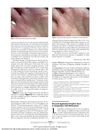
May 2013 in “JAMA Dermatology” This report documents two cases of eruptive nevi occurring in the skin folds of children with Langerhans cell histiocytosis.
1 citations
,
October 2025 in “Journal of Clinical Medicine” In this systematic review, researchers reported that various types of laser therapy effectively treat hidradenitis suppurativa at different severity stages, with each laser offering specific benefits such as lesion removal, inflammation reduction, and improved quality of life.
91 citations
,
July 1997 in “Dermatologic Clinics” This article compares traditional nonlaser hair removal methods with newly developed laser-assisted techniques, discussing their applications but not presenting new research findings.
 2 citations
,
January 2022 in “Hair transplant forum international”
2 citations
,
January 2022 in “Hair transplant forum international” This article introduces the Follicular Unit Excision-Linear Ellipse (FUE-LE) technique, which integrates both FUE and the linear ellipse method for optimal hair restoration, but presents no new clinical results.
This study found that low-level laser therapy (LLLT) may enhance hearing recovery after noise-induced hearing loss in rats.
 207 citations
,
January 2011 in “Dermatologic Therapy”
207 citations
,
January 2011 in “Dermatologic Therapy” This article discusses the factors involved in optimizing laser hair removal, emphasizing patient selection, laser safety, and understanding laser–tissue interactions, but presents no new clinical findings.