 February 2020 in “Journal of emerging technologies and innovative research”
 This study developed a multipurpose herbal hair emulgel incorporating aloe vera, tea extract, coconut oil, and castor oil, aimed at promoting hair growth and controlling dandruff, hair fall, and greying. Evaluation found the product to be stable.
 July 2026 in “International Journal of Drug Delivery Technology”
 This study evaluated a Piper betle leaf emulgel for topical use and found it to have good stability, non-irritant properties, and significant hair growth activity in albino mice, suggesting its potential for dermatological and hair growth applications.
 June 2026 in “Research Square”
 This study evaluated an herbal emulgel formulation containing extracts from Wedelia chinensis and Cassytha filiformis for hair growth promotion in rats, finding that the combined formulation significantly increased hair growth compared to both individual extracts and the control group.
 January 2019 in “International Journal of Herbal Medicine”
 This study concluded that a hair emulgel formulation combining extracts from four medicinal plants demonstrated desirable characteristics of spreadability, viscosity, pH, and safety, making it effective, harmless, and economical for potential hair care use.
 May 2026 in “International Journal of Drug Delivery Technology”
 This source describes how androgenic alopecia, or pattern hair loss, affects about 70% of men and is linked to factors like stress, hormonal imbalances, and lifestyle issues, which can also impact psychological well-being and potentially contribute to severe health conditions such as heart disease.
 June 2023 in “MPI (Media Pharmaceutica Indonesiana)”
 This systematic literature review identified kale leaf hair tonic (Ipomoea aquatica Forsk.) at 5% concentration as an effective herbal cosmeceutical preparation for enhancing hair growth, showing an average increase in hair length over 21 days, while meeting established pharmaceutical standards.
 January 2026 in “Lumbung Farmasi Jurnal Ilmu Kefarmasian”
 This study found that a topical emulsion containing purified extracts of sidr leaves and roasted candlenut seeds significantly increased hair growth compared to the base and 2% minoxidil, potentially through their antioxidant and anti-inflammatory properties.
 26 citations
,
April 2019 in “Journal of Cosmetic Dermatology”
26 citations
,
April 2019 in “Journal of Cosmetic Dermatology” This review discusses the potential of herbal treatments like Saw palmetto, Green tea, and Rosemary as alternatives to conventional drugs for androgenetic alopecia, noting that these herbs may inhibit the 5-alpha-reductase enzyme and reduce hair loss with fewer side effects.
 December 2021 in “Jurnal ilmiah Manuntung”
 This study tested a hair tonic containing gotu kola and garlic extracts on rabbits, finding that the formulation with 5% gotu kola and 0.04% garlic showed promising hair growth results and remained stable during storage.
 August 2025 in “Journal of Applied Pharmaceutical Research”
 This study found that the polyherbal gel formulations F4 and F6 demonstrated superior in vitro performance in hair care, showing promise as cosmeceutical candidates, although further in vivo and clinical studies are necessary to confirm their efficacy and safety.
 January 2025 in “International Journal of Herbal Medicine”
 This review highlights that while dandruff affects over 50% of humans and cannot be fully eradicated, it can be controlled through chemical treatments that may cause side effects or herbal remedies such as Neem and Tea tree oil, which have longstanding use in hair care.
 May 2026 in “Jurnal Riset Kefarmasian Indonesia”
 This study measured caffeine content in ethanolic extracts of robusta coffee beans, finding 221.58 mg of caffeine per gram of extract, which aligns with known levels for Coffea canephora.
 April 2023 in “International journal of pharmaceutical sciences review and research”
 This study concluded that an Emulgel formulation containing Tridax procumbens extract showed promising wound healing and antimicrobial activity, with improved physical properties in the F2 formulation.
September 2020 in “Eureka: Health Sciences” In this study, the researchers developed an optimal emulgel formulation for treating androgenic alopecia, determining that a base with 0.3% Carbomer Ultraz 10, 0.1% potassium sorbate, and 0.2% triethanolamine offered the best properties for drug release, application compliance, safety, and stability.
 March 2023 in “International journal of pharmaceutical sciences review and research”
 In this study, an Emulgel containing Tridax procumbens extract was formulated and found to have promising physical properties and antimicrobial activity for wound healing.
This review highlights the therapeutic potential of Hibiscus rosa-sinensis, detailing its significant medicinal value for treating various conditions such as wounds, infections, and diabetes, attributed primarily to its bioactive compounds like flavonoids and tannins.
 December 2024 in “Asian Journal of Pharmaceutical and Clinical Research”
 This study reviews the performance and safety of synthetic medications like minoxidil and finasteride compared to herbal remedies such as saw palmetto for treating alopecia, highlighting the need for more research to better understand their therapeutic roles and optimize patient care.
 June 2026 in “Discover Nano”
 This review discusses current treatment strategies for alopecia and highlights the potential of lipid-based nanoparticles to improve drug delivery to the scalp and hair follicles, noting their ability to enhance skin penetration and drug stability while outlining associated challenges and the need for further research.
 3 citations
,
January 2023 in “Journal of Pharmaceutical Negative Results”
3 citations
,
January 2023 in “Journal of Pharmaceutical Negative Results” This study reports that fluconazole emulgel formulations, using jojoba oil and liquid paraffin, showed effective drug release and improved characteristics for treating skin diseases compared to traditional oral formulations.
 May 2023 in “Pharma xplore : jurnal sains dan ilmu farmasi”
 In an animal study, researchers found that a hair tonic containing a 1:1 ratio of kelor and rambutan leaf extracts led to similar hair growth in rabbits compared to a minoxidil control, with average hair lengths of 3 cm versus 2.025 cm, respectively.
 10 citations
,
January 2022 in “Scholars international journal of anatomy and physiology”
10 citations
,
January 2022 in “Scholars international journal of anatomy and physiology” This review discusses Aloe Vera's traditional uses and active components but reports no new clinical results, emphasizing its potential benefits from wound healing to hair growth.
August 2018 in “Farmatsevtychnyĭ zhurnal” This study developed an emulgel containing Saw Palmetto extract and Sophora Japonica tincture for treating androgenic alopecia, optimizing its preparation process to enhance dispersion and rheological properties.
 1 citations
,
May 2022 in “Scientific African”
1 citations
,
May 2022 in “Scientific African” In this study, oleogels containing rosemary oil significantly enhanced hair growth in albino rats, showing similar effects to 2% minoxidil after six weeks.
5 citations
,
January 2022 in “Asian Journal of Pharmaceutical and Clinical Research” In this review, the authors highlight that emulgels, a combination of gel and emulsion, provide an effective topical drug delivery system for hydrophobic drugs, offering benefits like controlled release and versatility in treating various dermatological conditions.
3 citations
,
July 2020 in “International Journal of Applied Pharmaceutics” This study evaluated shampoo formulations containing banana corm extract and found that they possess favorable physical and stability characteristics, suggesting potential as a natural haircare product.
 January 2025 in “Journal of Applied Pharmaceutical Science”
 This study examined the effectiveness of peppermint essential oil formulated into a nanoliposome gel for enhancing hair growth, finding that this preparation increased hair growth in male Sprague Dawley rats without causing irritation, suggesting it may improve delivery of these active ingredients.
 November 2024 in “Pharmaciana”
 This study found that the optimum formula for chia seed oil nanoemulsion hair serum, composed of 33.52% Tween 80 and 46.48% propylene glycol, meets good physical characteristics and stability requirements.
 57 citations
,
October 2021 in “Journal of ethnopharmacology”
57 citations
,
October 2021 in “Journal of ethnopharmacology” This review compiled by the authors emphasizes the traditional use of medicinal plants for dermatological disorders in India, highlighting the need for further scientific studies to validate their effectiveness and suggesting potential for drug development based on ethnodermatological practices.
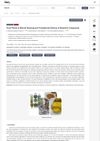
This review highlights the potential of plant-derived natural compounds as biocompatible and biodegradable materials in dermal and transdermal delivery systems, emphasizing their unexplored benefits and detailing recent advances in isolation techniques and drug delivery technologies.
 December 2024 in “Research Journal of Pharmacy and Technology”
 This review discusses recent advances in understanding the molecular mechanisms of androgenic alopecia and developments in its pharmacotherapy, with a focus on factors influencing hair follicle regeneration in genetically predisposed individuals.