6 citations
,
March 2018 in “The American journal of dermatopathology/American journal of dermatopathology” This study found that immunohistochemistry can effectively distinguish between tricholemmoma and basal cell carcinoma, with BerEP4 and CD34 serving as key differentiators.
15 citations
,
January 1991 in “Mammalian Genome” 6 citations
,
June 2016 in “Journal of cellular biochemistry” This study found that the mammalian Hr protein can interact with the p53 pathway by binding to a specific p53 response element, influencing the regulation of genes involved in cell cycle control.
 August 2013 in “Nature Reviews Drug Discovery”
 New cancer treatments show promise in reducing tumor growth and improving skin regeneration in mice.
 9 citations
,
January 2007 in “Endocrine Practice”
9 citations
,
January 2007 in “Endocrine Practice” This case report describes a 60-year-old postmenopausal woman with virilization and hirsutism caused by hilus-cell hyperplasia, which was confirmed following bilateral salpingo-oophorectomy.

A 73-year-old woman's unusual hair loss and growth led to the discovery of a rare condition causing too much testosterone, which improved after her ovaries were removed.
 January 2012 in “Journal of Investigative Dermatology”
 Some Greek melanoma patients have gene mutations linked to increased cancer risk, a new color feature helps diagnose melanoma, the incidence of a skin condition in the Netherlands is rare, and a gene possibly affects male-pattern baldness.
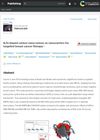 January 2025 in “Nanoscale”
 This study reports that a new boron/nitrogen-doped carbon nano-onion-based delivery system for doxorubicin enhanced its uptake and anticancer effects in specific cancer cell types, while reducing cardiotoxicity in human heart cells.
December 2024 in “AACE Clinical Case Reports” This study highlights a rare case of ovarian hyperthecosis in a 58-year-old postmenopausal woman, presenting with polycythemia and severe hyperandrogenism symptoms, with resolution of symptoms following laparoscopic bilateral oophorectomy.
 May 2021 in “Journal of the Endocrine Society”
 This case report describes a 48-year-old woman with a history of PCOS and chemotherapy-induced menopause who was found to have a rare ovarian steroid cell tumor causing postmenopausal hyperandrogenism.
 56 citations
,
February 2006 in “American journal of physiology. Cell physiology”
56 citations
,
February 2006 in “American journal of physiology. Cell physiology” This study observed that in hormone-starved prostate cancer cells, the androgen 5alpha-dihydrotestosterone rapidly induces matriptase activation and shedding, which involves androgen receptor signaling and requires both transcription and protein synthesis.
October 2025 in “Journal of the Endocrine Society” In this case study, a 62-year-old woman with ovarian hyperthecosis experienced normalization of elevated testosterone levels and improvement in hirsutism and hair loss following bilateral salpingo-oophorectomy.
 1 citations
,
February 2022 in “Case reports in endocrinology”
1 citations
,
February 2022 in “Case reports in endocrinology” This case report describes a 64-year-old postmenopausal woman with hirsutism due to a rare case of bilateral diffuse ovarian Leydig cell hyperplasia, leading to normalized testosterone levels and improved glycaemic control following surgery.
 April 2023 in “Cancer research”
 This study suggests that KRTAP2-3 may serve as a novel biomarker to identify cells in the polyaneuploid cancer cell state, which is linked to therapy resistance and poor prognosis in prostate cancer.
 April 2020 in “Journal of the Endocrine Society”
 This case report highlights Leydig cell hyperplasia as a rare cause of increased testosterone and postmenopausal hirsutism, resolved after bilateral salpingo-oophorectomy in a 64-year-old woman.
46 citations
,
May 1995 in “Proceedings of the National Academy of Sciences” This study demonstrated that a specific 9-kbp fragment of the bovine keratin 6 gene effectively directs tissue-specific and inducible expression in transgenic mice, suggesting potential applications for targeted gene therapy in hyperproliferative skin conditions.
125 citations
,
August 2003 in “Development” In this study, mice engineered to express human EGFR showed tissue-specific growth defects and neurodegeneration rescue, but developed severe heart issues and accelerated bone cell differentiation.
 68 citations
,
November 2011 in “The American journal of pathology”
68 citations
,
November 2011 in “The American journal of pathology” This review discusses the role of the hedgehog signaling pathway in hematological cancers and its potential as a therapeutic target; it reports no new clinical findings.
August 2020 in “bioRxiv (Cold Spring Harbor Laboratory)” This study found that KrasG12D mutant cells are typically cleared from adult pancreas tissues through mechanisms involving the EphA2 receptor, suggesting its role as a tumor suppressor in pancreatic cancer.
1 citations
,
August 2022 in “Pigment Cell & Melanoma Research” This study presents two new mouse models using the CreER T2-loxP system to target and study melanocytic cells, with implications for melanoma research.
9 citations
,
November 2013 in “Gynecological Endocrinology” This case study identified a probable pure testosterone-secreting ovarian tumor in a woman with increased facial hair and elevated testosterone levels, confirmed by histological examination as Leydig cells hyperplasia, which normalized testosterone and symptoms post-surgery.
 93 citations
,
June 2001 in “The Journal of Clinical Endocrinology and Metabolism”
93 citations
,
June 2001 in “The Journal of Clinical Endocrinology and Metabolism” This study found that serum androgen levels in premenopausal women may be influenced by genetic variants of the androgen receptor and estrogen receptor β genes.
 October 2024 in “Journal of the Endocrine Society”
 This case report details a postmenopausal woman whose hyperandrogenism was attributed to ovarian stromal hyperplasia, ultimately resolved with bilateral salpingo-oophorectomy.
 36 citations
,
October 2000 in “British Journal of Dermatology”
36 citations
,
October 2000 in “British Journal of Dermatology” This study identified a distinct gene near the hairless locus on chromosome 8p that is responsible for hereditary Marie Unna type hypotrichosis in a German family.
 2 citations
,
October 2015 in “The New England Journal of Medicine”
2 citations
,
October 2015 in “The New England Journal of Medicine” This case report describes a 57-year-old woman with hirsutism, hair loss, and vocal changes, who was found to have elevated testosterone levels but normal dehydroepiandrosterone sulfate levels.
89 citations
,
May 2005 in “Stem Cells” This study found that keratinocyte stem cells in mouse skin are closely related to side population or BCRP1-positive cells based on their localization and marker expression.
 4 citations
,
June 2019 in “Revista brasileira de ginecologia e obstetrícia”
4 citations
,
June 2019 in “Revista brasileira de ginecologia e obstetrícia” This article discusses the prevalence of hirsutism in women and highlights that many cases exhibit normal androgen levels, suggesting a need for broader diagnostic approaches.
 January 2023 in “Mastology”
 This literature review reports prevalent sexual dysfunctions, notably vaginal dryness, in women undergoing endocrine therapy for hormone-dependent breast cancer, highlighting the need for more multidisciplinary research and care to improve patient well-being.
 March 2007 in “Journal of Obstetrics and Gynaecology Canada”
 This review discusses the diagnosis and treatment of hyperandrogenism in women, emphasizing that cyproterone acetate is effective for severe hirsutism, though it reports no new clinical findings.
 178 citations
,
October 2001 in “Genes & Development”
178 citations
,
October 2001 in “Genes & Development” This study found that the mammalian hairless gene encodes a corepressor protein that interacts with thyroid hormone receptors, providing insights into hair loss syndromes in humans and mice.