37 citations
,
September 2009 in “JEADV. Journal of the European Academy of Dermatology and Venereology/Journal of the European Academy of Dermatology and Venereology” This study found that diphencyprone is an effective and safe treatment for extensive alopecia areata, especially with long-term therapy and maintenance to reduce relapse risk.
1 citations
,
August 2015 in “PubMed” This case study reports an Asian female with congenital adrenal hyperplasia presenting atypically with polymenorrhagia, who showed improvement with oral dexamethasone, despite no change in hirsutism or clitoromegaly.
 27 citations
,
April 2018 in “Scientific Reports”
27 citations
,
April 2018 in “Scientific Reports” This study found that in psoriasis patients, the K17 protein probably functions as an autoantigen, with the HLA-Cw*06:02 risk genotype strongly linked to the T cell response size.
6 citations
,
June 2016 in “Journal of cellular biochemistry” This study found that the mammalian Hr protein can interact with the p53 pathway by binding to a specific p53 response element, influencing the regulation of genes involved in cell cycle control.
 97 citations
,
March 2002 in “Molecular and cellular biology”
97 citations
,
March 2002 in “Molecular and cellular biology” This study found that mice with a mutant CDP/Cux protein lacking the homeodomain showed severely impaired growth, high postnatal mortality, and reduced fertility, highlighting CDP/Cux's role in developmental regulation.
17 citations
,
January 1984 in “Psychotherapy and psychosomatics” This study reported that 44% of hirsute women undergoing cyproterone acetate treatment experienced impaired sexual enjoyment, highlighting the need to inform patients about potential side effects.
19 citations
,
July 2020 in “EBioMedicine” In this study, the researchers identified a variant in the CCHCR1 gene associated with an alopecia areata subtype characterized by impaired keratinization and autoimmune events.
 20 citations
,
July 2011 in “PLoS ONE”
20 citations
,
July 2011 in “PLoS ONE” This study found that HPV-150 and HPV-151 are rare genotypes with a preference for skin tissue, detected in some cases of skin lesions with generally low viral loads.

This abstract contains subscription and access information for Wolters Kluwer Health journals but reports no research findings.
2 citations
,
February 2000 in “International Journal of Dermatology” This article presents four case reports of men with porphyria cutanea tarda and hepatitis C, highlighting associations with polysubstance abuse, primarily alcohol.
19 citations
,
September 2021 in “British journal of dermatology/British journal of dermatology, Supplement” This study suggests that pretreatment with a PPAR-γ modulator may prevent damage to hair follicle stem cells caused by a chemotherapy metabolite, potentially offering a strategy to mitigate permanent chemotherapy-induced alopecia.
 4 citations
,
April 2016 in “Journal of The American Academy of Dermatology”
4 citations
,
April 2016 in “Journal of The American Academy of Dermatology” This case report details the first known instance of interferon-induced lichen planus in a seronegative HCV patient with metastatic renal cell carcinoma.
17 citations
,
November 1967 in “American Journal of Anatomy” This study observed that the catagen phase in hairless mice displayed a slower shortening of the mutant epithelial column, resulting in longer total follicle length and abnormalities in the connective tissue sheath and glassy membrane.
 7 citations
,
December 2015 in “International Journal of Dermatology”
7 citations
,
December 2015 in “International Journal of Dermatology” In this study, researchers identified a novel and two previously reported pathogenic mutations in the HR gene associated with atrichia with papular lesions in five Pakistani families.
 January 2007 in “대한피부과학회지”
 In this clinical trial, the topical agent AP-FHG0604T significantly increased hair counts and growth rates in women with female pattern hair loss compared to a placebo, though some reported mild local irritation.
 1 citations
,
December 2004 in “Hepatology”
1 citations
,
December 2004 in “Hepatology” This study found that in lamivudine-resistant hepatitis B patients, tenofovir significantly reduced HBV DNA levels faster and more consistently than adefovir, reaching undetectable levels in all treated patients by 44 weeks.
 25 citations
,
May 1994 in “Journal of Investigative Dermatology”
25 citations
,
May 1994 in “Journal of Investigative Dermatology” This study identified a novel gene, hacl-1, that is specifically expressed in the hair follicles of ICR mouse skin and is associated with their active state.
September 2024 in “Journal of the American Academy of Dermatology” Alopecia areata often recurs after treatment with diphenylcyclopropenone.

This study found that the long non-coding RNA lnc056 promotes the proliferation of hair follicle stem cells by upregulating TRIP6 expression through interaction with the transcription factor HNRNPUL1, suggesting a potential target for hair loss treatment.
September 2019 in “Journal of Investigative Dermatology” CCCA in women of African ancestry may be caused by PADI3 gene mutations and intense hair grooming.
30 citations
,
August 2005 in “British journal of dermatology/British journal of dermatology, Supplement” This study identified a novel CDH3 mutation associated with sparse hair and pigmentary macular changes in two siblings with hypotrichosis but no visual symptoms.
3 citations
,
April 2025 in “International Journal of Pharmaceutics” Nanocrystals improve alopecia areata treatment by better targeting hair follicles.
 December 2024 in “Journal of Clinical Research in Pediatric Endocrinology”
 This study explains that congenital adrenal hyperplasia due to 21-hydroxylase deficiency presents as a continuous phenotype and involves symptoms ranging from virilization to accelerated growth in children, with diagnosis relying on clinical, biochemical, and genetic evaluation.
 July 2008 in “Hair transplant forum international”
 This announcement highlights an upcoming conference on hair restoration, emphasizing new ideas and debates but presenting no new research findings.
19 citations
,
June 2020 in “General and comparative endocrinology” This study found that hair cortisol concentration is a promising stress indicator in cattle but not in pigs, where external factors and lower cortisol response may interfere with its validity.
 November 2025 in “Clinical Cosmetic and Investigational Dermatology”
 LIPH mutations cause woolly hair in some Chinese people.
 February 2025 in “Cureus”
 This case report describes a 37-year-old female with non-classical congenital adrenal hyperplasia who presented with severe acne, progressive hair loss, and primary infertility, managed with prednisolone.
 October 2022 in “The Journal of Family Practice”
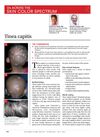
 This article describes cases of tinea capitis in young Black and Latina children, highlighting the condition's diverse presentations such as erythema, scaling, and subtle signs like comma hairs, but reports no new clinical results.
9 citations
,
July 2007 in “Circulation Research” This study found that disruptions in planar cell polarity signaling are implicated in congenital heart defects and cardiomyopathy in developing mouse hearts, associated with early cardiomyocyte disorganization and improper heart looping.
April 2017 in “The journal of investigative dermatology/Journal of investigative dermatology” This case report identified a 6-month-old girl with congenital generalized hypertrichosis and gingival hyperplasia, where a de novo CNV on chromosome 17q24.2-24.3 was associated with reduced expression of ABCA5 and SOX9.